
TL;DR

Get garden gear delivered free with Prime
- Fast, free delivery on millions of items
- Prime Video, Amazon Music and more included
- Member-only deals all year
Palo verde, especially hybrid varieties like ‘Desert Museum,’ offer faster, broader shade but need more space. Desert willow grows narrower, is easier to fit in small yards, and attracts hummingbirds. Both trees are drought-tolerant and produce filtered, light shade ideal for desert landscapes.
In the desert, shade isn’t just a luxury — it’s a necessity. But in a small yard, you need trees that grow fast, provide meaningful relief from the sun, and don’t turn your space into a jungle. Choosing the right tree can make your outdoor living cooler and more inviting, without overwhelming your yard.
Today, we’re comparing two popular options: the palo verde and the desert willow. Both are low-water, heat-loving trees that bring color and relief, but they behave very differently. Knowing their growth habits, size, and maintenance needs helps you pick what fits best with your space and lifestyle.
Hybrid palo verdes, especially ‘Desert Museum,’ can develop a broad canopy in just 3–5 years with proper watering.
Desert willow generally fits small yards better due to its narrower, upright growth and fewer structural issues.
Both trees require thoughtful placement, considering mature size and root zones, to prevent conflicts with structures.
Deep, infrequent watering after planting keeps drought-tolerant trees healthy and encourages good growth habits.
Select seedless desert willow cultivars to minimize winter litter and maintenance headaches.
Palo Verde vs Desert Willow
Two heat-loving trees can deliver filtered shade with very little water—but their shapes tell two different stories. Choose broad and fast, or narrow and manageable.
Same climate strategy, different footprint
Both tolerate drought after establishment. The decisive variable is often not water—it is how much usable width your yard can give the mature canopy.
Hybrid Palo Verde
A thornless hybrid such as ‘Desert Museum’ grows quickly, blooms bright yellow, and spreads into a wide, airy umbrella.
Desert Willow
Chilopsis linearis grows upright or vase-shaped, carries trumpet-like flowers, and draws hummingbirds into compact landscapes.
What changes after planting?
Desert willow leads on containment and wildlife appeal. Palo verde leads on the speed and breadth of its shade footprint.
| Feature | Palo verde | Desert willow |
|---|---|---|
| Small-yard fit | ~ Needs adequate width | ✓ Usually the better fit |
| Shade speed | ✓ Rapid broad canopy | Steady, narrower development |
| Flowers | Bright yellow, often spectacular in spring | Pink, purple, burgundy, or white from late spring into summer |
| Winter character | Semi-deciduous; green bark remains visible | Usually deciduous |
| Water after establishment | ✓ Very low | ✓ Low; occasional deep irrigation supports flowering |
| Litter | Flowers, tiny leaves, twigs, and sometimes pods | Flowers, leaves, and long pods; seedless cultivars reduce cleanup |
| Maintenance focus | Train strong branch structure; avoid topping | Manage multiple trunks, suckers, and seedpods |
| Wildlife value | Pollinator flowers and sheltering canopy | ✓ Hummingbirds and pollinators |
Speed comes with a structural tradeoff
These timelines are planning ranges, not guarantees. Soil drainage, irrigation, nursery stock, heat, and pruning all influence establishment.
Start with available width
Plant for the mature tree—not the tidy nursery silhouette. Repeated size-control pruning can create weak structure and permanent maintenance.
Keep the canopy contained
An upright form is easier to guide away from a walkway, roof edge, or property line.
Choose desert willowBuild broad shade sooner
A thornless ‘Desert Museum’ palo verde can form a substantial spreading crown in favorable conditions.
Choose hybrid palo verdeNeither reaches full size comfortably
Consider a smaller ornamental tree or large shrub instead of forcing either canopy into an undersized space.
Choose a smaller speciesGrow shade without growing weak wood
Fast growth is useful only when roots and branches develop well. Deep watering and selective training produce a more resilient canopy.
Place for mature size
Map canopy width, roots, structures, utilities, and pedestrian clearance before digging.
Water deeply
Soak the root zone thoroughly during establishment instead of using frequent shallow irrigation.
Extend the interval
Shift toward deep, infrequent watering as the tree establishes and roots spread outward.
Train selectively
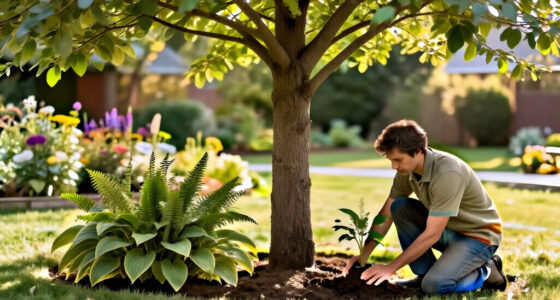
Develop well-spaced branches. Avoid topping, overwatering, and unnecessary high-nitrogen fertilizer.
Five rules for a cooler, calmer yard
The right tree is the one that delivers useful shade while staying structurally sound and manageable in the space available.
Choose the canopy your yard can sustain.
For tight spaces, desert willow is usually the smarter long-term choice. Where width is available and shade speed matters, a thornless hybrid palo verde is difficult to beat.
Which Tree Fits Your Yard? Quick Guide
If your yard is narrow or you want a tree that fits in tight spaces, desert willow often wins. It’s easier to prune, stays narrower, and still offers great flowers and wildlife value. If space isn’t a concern and you want quick, broad shade, a thornless hybrid palo verde like ‘Desert Museum’ delivers fast growth and a wide canopy. However, in very small yards—less than 10 feet wide—neither tree will reach full size comfortably without extensive pruning, which can weaken the structure over time. For such tight spaces, consider smaller ornamental trees or shrubs that can provide some shade without the risk of overgrowth. Ultimately, selecting a tree that matches your yard’s dimensions ensures a healthier, more manageable landscape, and allows you to enjoy the shade and beauty without the stress of overgrowth or maintenance challenges.
hybrid palo verde tree for small yard
As an affiliate, we earn on qualifying purchases.
As an affiliate, we earn on qualifying purchases.
Understanding Growth Rates and Development
Knowing how quickly each tree grows is essential for planning your landscape. Hybrid palo verdes like ‘Desert Museum’ are known for their rapid development, often reaching a substantial size within 3–5 years with adequate watering. This rapid growth translates into faster shade coverage, which is especially valuable if immediate relief from the desert heat is a priority. Conversely, desert willow tends to grow more slowly but steadily, often taking longer to reach full size, typically around 5–8 years. This slower pace means it may not provide immediate shade but can still become a valuable part of your landscape over time. The tradeoff here is between quick gratification versus long-term stability and ease of management. Fast-growing trees like hybrid palo verdes may require more pruning and space to accommodate their rapid expansion, which is a consideration for smaller yards or tight spaces.
desert willow tree seedless cultivar
As an affiliate, we earn on qualifying purchases.
As an affiliate, we earn on qualifying purchases.
Why Size and Spreading Habits Matter
Size and spreading habits directly impact how well a tree fits into your yard and how much maintenance it will require. A broad, spreading palo verde can provide excellent shade quickly, but it needs ample space to grow without interfering with structures or underground utilities. If space is limited, this can become a challenge, necessitating regular pruning that might weaken the tree’s structure over time. Desert willow, with its narrower, upright growth, tends to stay more contained, making it a better choice for small or constrained yards. Understanding these habits helps prevent future conflicts and ensures the tree remains healthy and manageable. Additionally, considering root spread is crucial—aggressive roots can interfere with foundations or underground pipes, so selecting appropriately sized trees for your landscape is key to avoiding costly issues later.
As an affiliate, we earn on qualifying purchases.
Frequently Asked Questions
Which grows faster, palo verde or desert willow?
Hybrid palo verdes like ‘Desert Museum’ tend to grow faster and develop a wider canopy in 3–5 years, especially with good watering. Desert willow also grows steadily but usually takes longer to reach full size.Is desert willow better for small yards?
Yes, desert willow generally fits better in small yards because it stays narrower and is easier to prune into a manageable shape. It also produces less litter if you choose seedless cultivars.Which provides more shade?
A mature palo verde usually offers a broader shade footprint, while desert willow provides a narrower, filtered shade that’s perfect for patios or side yards.Are these trees evergreen?
No. Desert willow is deciduous, shedding leaves in winter, while palo verde is semi-deciduous, dropping tiny leaves during drought or heat but keeping its green bark visible year-round.Do palo verdes or desert willows make a mess?
Palo verde drops yellow flowers, small leaves, and twigs, while desert willow sheds flowers, leaves, and seedpods. Seedless desert willow reduces seed pod litter, making cleanup easier.As an affiliate, we earn on qualifying purchases.
Conclusion
Choosing between palo verde and desert willow comes down to your yard size, how quickly you want shade, and how much effort you’re willing to put into maintenance.
If space is tight, desert willow is often the smarter pick. But if you have room and need fast shade, a thornless hybrid palo verde can deliver — with a little patience and pruning.
Remember, the best shade tree is the one you can care for confidently, in the right spot, with a little planning. Let the desert’s heat be your cue to plant smart — and enjoy your cooler, more inviting yard.
Fall Picks
fall essentials
As an affiliate, we earn on qualifying purchases.