TL;DR

Get garden gear delivered free with Prime
- Fast, free delivery on millions of items
- Prime Video, Amazon Music and more included
- Member-only deals all year
Planet Natural’s fall-garden guidance recommends confirming aphids and checking how widely they have spread before treating kale or broccoli. For small colonies, it advises a directed water rinse, repeat checks and protection of natural predators; pesticides are a later option when crop damage or harvest contamination warrants escalation.
Planet Natural’s guidance for fall kale and broccoli recommends confirming an aphid colony, checking the crop for spread and starting with a directed rinse of water rather than spraying. The advice matters to gardeners weighing pest control against damage to beneficial insects and the risk of making edible leaves or broccoli heads harder to harvest.
The report lays out a five-step response: identify aphids, inspect likely hiding places, wash off small colonies, preserve natural predators and escalate only if the crop is at risk. Aphids are described as small, soft-bodied insects that can be green, gray, black or pinkish. They often cluster on tender stems, new leaves, leaf undersides and folds around developing broccoli heads. Curled growth, sticky honeydew and pale shed skins can also be clues, but the report advises turning leaves over and checking before deciding to act.
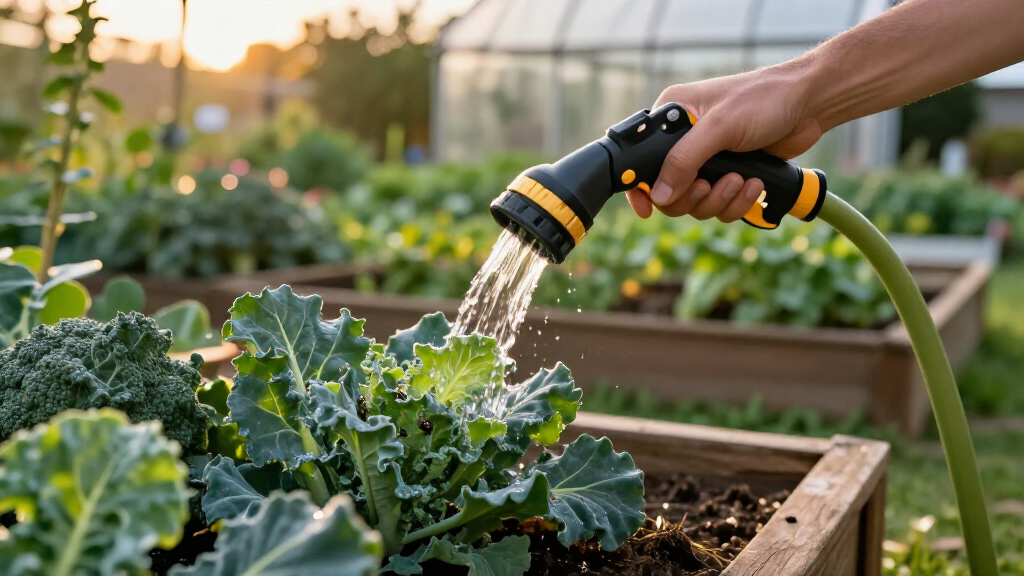
For a small colony, Planet Natural recommends directing plain water at the affected area, supporting leaves so their undersides can be reached without shredding tender foliage. Morning is suggested so leaves have time to dry. Gardeners should avoid forcing water into a tight broccoli head and revisit the same spots in two or three days. A badly curled kale tip or heavily infested leaf may be pruned if removal is cleaner than rinsing; the clipping should be discarded or placed in contained green waste rather than left beside the bed.
The report advises looking for lady beetles, lacewing larvae, hoverfly larvae and parasitoid wasps, as well as tan, swollen aphid remains known as “mummies.” These can indicate natural control is at work. If aphids continue spreading, distort new growth or threaten to contaminate a near-term harvest, the guidance says to repeat physical removal and consider fine insect mesh over clean plants, with edges sealed to limit new arrivals. Any pesticide should be labeled for both the edible brassica and the pest, used according to its label, and applied with attention to harvest intervals and beneficial insects.
Protecting Brassicas and Beneficial Insects
The advice gives gardeners a way to respond to visible pests without treating every cluster as an emergency. That distinction matters because aphids can affect the appearance and marketability of kale leaves or broccoli heads even when a plant is not facing an immediate health crisis. Repeated checks help determine whether a colony is isolated or spreading across a bed.
Starting with water and preserving predators can also limit unnecessary pesticide exposure in a garden where pollinators and other helpful insects may be active. The report cautions that broad-spectrum insecticides can kill aphid predators along with pests, potentially leaving fewer natural checks. Its practical threshold is crop-focused: move beyond rinsing and observation when repeated scouting shows expanding colonies, badly distorted new growth or a likely harvest-quality problem.
Harvest handling remains part of the response. The guidance recommends checking kale folds and leaf undersides as outer leaves are picked, and inspecting between broccoli florets after cutting compact heads with closed buds. It says a small number of aphids on otherwise sound produce is generally a cleaning issue, not by itself a reason to discard the crop.
organic aphid control for kale and broccoli
As an affiliate, we earn on qualifying purchases.
As an affiliate, we earn on qualifying purchases.
A Stepwise Fall Garden Response
The source frames aphid control as a sequence rather than a one-time treatment. First establish that the insects are aphids, since beneficial larvae and other insects can be mistaken for pests. When identification is uncertain, the report suggests taking a clear photograph or asking a local nursery before applying a product.
Scouting should focus on growing tips and the undersides of young kale leaves. For broccoli, gardeners are advised to part leaves around the developing head and inspect sheltered folds before buds loosen. The report recommends repeating checks every few days in warm fall weather, when small colonies may grow into a harvest-quality concern. It also warns against overfertilizing in an attempt to outgrow aphids, because lush, soft new growth can attract them.
If nonchemical steps are insufficient, the source says insecticidal soap must contact aphids to work and may injure foliage in hot or stressful conditions. It advises testing a small area, avoiding homemade dish-soap mixtures and following the product label, including its harvest interval. The guidance also says not to spray flowers, which provide food for pollinators and beneficial insects.
As an affiliate, we earn on qualifying purchases.
When Rinsing Will Not Be Enough
The source does not give a numerical threshold for how many aphids, affected leaves or plants should trigger escalation. It instead ties the decision to observed spread, distorted new growth and the likelihood that aphids will contaminate a harvest. Gardeners must assess those conditions on their own crops.
The source also provides no field trial results, comparative treatment data or publication date. Its recommendations are presented as practical guidance, not as a guarantee that rinsing will control every infestation. Results may depend on colony size, crop condition and whether predators are present. Any product choice, crop eligibility and pre-harvest waiting period must be checked against the specific label.
beneficial insect attractants for vegetable gardens
As an affiliate, we earn on qualifying purchases.
As an affiliate, we earn on qualifying purchases.
Recheck Before Choosing Treatment
Gardeners following the advice should inspect the same growing tips, leaf undersides and broccoli folds again within a few days of rinsing, watching for returning colonies and new distortion. If aphids are contained and predators are present, the report’s approach is to allow time for those natural enemies to work rather than immediately spraying again.
If colonies keep expanding or threaten the edible portion, the next steps are to remove the worst affected tissue, consider insect mesh over clean plants and, only if needed, select a product labeled for the crop and pest. The label should guide application and harvest timing. At harvest, inspect produce and rinse leaves and broccoli thoroughly under clean running water before eating.
garden water spray nozzles for pest removal
As an affiliate, we earn on qualifying purchases.
As an affiliate, we earn on qualifying purchases.
Key Questions
Should I spray as soon as I see aphids on kale or broccoli?
Not necessarily. Planet Natural advises confirming the insects and checking how many plants are affected first. For a small colony, it recommends a directed rinse and another inspection in two or three days.
How can I tell whether insects are aphids?
Aphids are described as small, soft-bodied and often pear-shaped, and may be green, gray, black or pinkish. They commonly cluster on new growth and leaf undersides. Lady beetles, lacewing larvae, hoverfly larvae and tiny parasitoid wasps are beneficial insects, not treatment targets; if identification is uncertain, the report suggests a clear photo or advice from a local nursery.
How should I rinse aphids off a plant?
Use a directed stream of plain water, reaching the underside of the affected leaf while avoiding damage to tender foliage. The source recommends working in the morning, avoiding water pushed into a tight broccoli head, and checking the same spots again in two or three days.
When does the guidance say to consider a pesticide?
It suggests escalation when repeat checks show colonies spreading, new growth badly distorted or aphids likely to contaminate a near harvest. Any product should be labeled for the edible brassica and aphid pest, applied exactly as directed, and used with attention to the harvest interval and beneficial insects.
Do aphids mean kale or broccoli must be discarded?
The report says a small number of aphids on otherwise sound produce is usually a cleaning issue, not a reason to discard the harvest. Inspect kale folds and broccoli florets, then rinse produce thoroughly under clean running water before eating.
Source: rss
Columbus Day / Indigenous Peoples' Day Picks
long weekend sales
As an affiliate, we earn on qualifying purchases.