TL;DR

Get garden gear delivered free with Prime
- Fast, free delivery on millions of items
- Prime Video, Amazon Music and more included
- Member-only deals all year
Herbs like rosemary, lavender, and sage thrive in low desert heat with minimal water, while cilantro and parsley tend to bolt quickly. Using shade, timing planting right, and deep watering help keep herbs healthy and productive.
Choose drought-tolerant herbs like rosemary, lavender, sage, and heat-tolerant basil varieties for best results.
Plant early spring or late fall to avoid the desert’s hottest months and extend your herb harvest.
Use shade, mulch, and deep watering to protect herbs from extreme heat and prevent bolting.
Regular harvesting and providing microclimate shade significantly delay flowering and keep herbs flavorful.
Native herbs and herbs adapted to desert conditions require less water and are more resilient long-term.
Low-desert field guide · heat-smart growing
Growing Herbs in the Low Desert: What Thrives and What Bolts
Desert gardening is not about fighting the heat—it is about working with it. Choose herbs built for dry conditions, plant into cooler seasonal windows, and use shade, mulch, and deep watering to keep every harvest productive.
Rosemary, lavender, sage, thyme, and oregano naturally conserve water.
Cool-season herbs flower early when heat and long days signal stress.
Protect midday foliage while encouraging roots below the hot surface.
Plant selection · top five
Built for blazing summers
The strongest performers carry their own survival technology: woody stems, small leaves, aromatic oils, deep roots, or heat-adapted genetics. That means less intervention, lower water demand, and a longer useful life.
Rosemary
Needle-like leaves and woody structure minimize moisture loss in sun and dry air.
Excellent resilienceLavender
Fragrant oils help limit transpiration and deter pests. Excellent drainage is essential.
Excellent resilienceSage
Extensive roots tap deeper moisture, helping established plants bridge dry spells.
High resilienceThyme
Tiny leaves reduce the surface area available for evaporation and heat damage.
High resilienceHeat Basil
Heat-tolerant varieties better withstand strong UV exposure and temperature spikes.
Moderate–high resilienceAt-a-glance comparison
Match the herb to the heat
Use this matrix to balance heat tolerance, water demand, and bolting risk. Even resilient herbs benefit from afternoon protection during exceptional heat.
| Herb | Heat fit | Water need | Bolt risk | Best desert move |
|---|---|---|---|---|
| Rosemary | ✓ Excellent | Low | ✓ Low | Fast drainage; avoid wet roots |
| Lavender | ✓ Excellent | Low | ✓ Low | Gravel mulch and open airflow |
| Sage / thyme | ✓ Strong | Low | ✓ Low | Deep watering after establishment |
| Heat-tolerant basil | ~ Moderate | Moderate | ~ Medium | Afternoon shade; harvest often |
| Cilantro | ✗ Poor | Moderate | ✗ Very high | Grow only in cool seasons |
| Parsley / chervil | ✗ Poor | Moderate | ✗ High | Fall planting plus filtered shade |
Five-step care cycle
Keep herbs productive in the heat
Each action lowers a different source of stress. Together, they keep roots stable, foliage cooler, and plants focused on flavorful leaf growth instead of emergency seed production.
Time it
Plant in early spring or late fall so roots establish before extreme temperatures arrive.
Shade it
Block the fiercest midday and afternoon sun with cloth, containers, or taller plants.
Water deep
Soak thoroughly once or twice weekly to pull roots below the rapidly drying surface.
Mulch roots
Use gravel, rock, or organic mulch to slow evaporation and buffer soil temperature.
Harvest
Cut regularly to encourage branching and delay the shift from leafy growth to flowers.
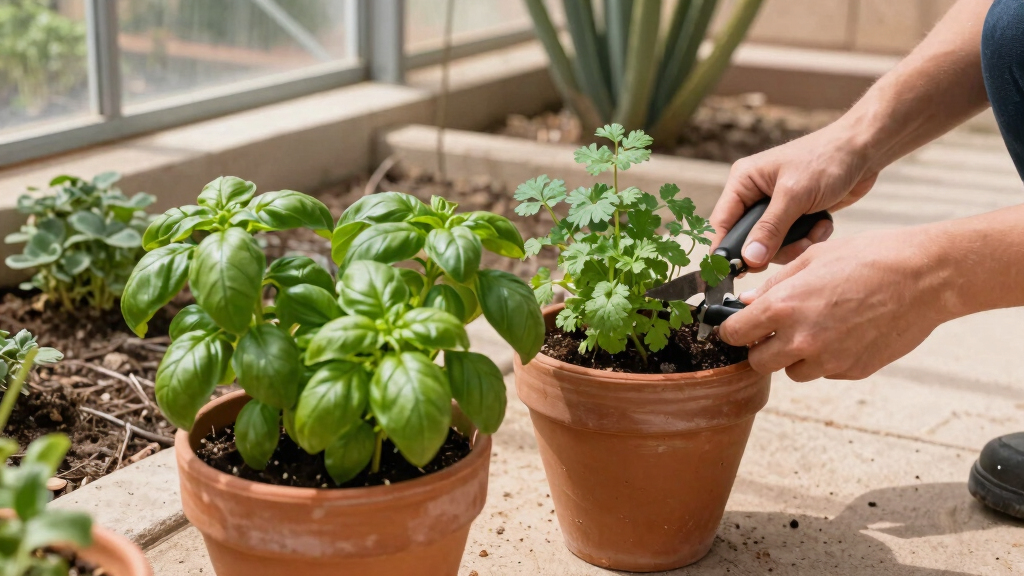
A practical microclimate: shade cloth over heat-tolerant basil, drip irrigation at the root zone, and consistent harvesting can preserve flavor and productivity through the hottest days.
Stress response · bolt risk
Why cool-season herbs race to seed
Bolting is a survival response. Heat, long days, and inconsistent moisture tell a plant that conditions are worsening, so it flowers early. The leaves then become scarcer and more bitter.
Delay the survival alarm
Plant in cool weather. Add afternoon shade, maintain even root-zone moisture, and harvest before flower stalks develop. These steps require attention, but they significantly extend the limited desert harvest window.
Water + soil system
Build resilience below ground
Water is both ally and hazard. A successful desert root zone drains quickly but holds enough moisture between deep irrigations—without remaining saturated around sensitive roots.
Deep soak
Water slowly so moisture penetrates downward. Surface sprinkling produces shallow, heat-vulnerable roots.
Goal: stable moistureOpen soil
Blend sandy or rocky material with organic matter to balance aeration and water retention.
Goal: no waterloggingFeed gently
Use compost or a balanced, low-nitrogen fertilizer. Excess nitrogen can push weak, rapid growth.
Goal: steady growthUse drip
Target the root zone to reduce evaporation, conserve water, and keep foliage drier.
Goal: precise irrigationTry pots
Containers make soil, shade, and seasonal relocation easier—though they dry faster than beds.
Goal: flexible microclimateTraceability · from choice to harvest
The desert-success chain
Why Some Herbs Flourish While Others Faint in the Desert
Herbs are like people—some handle the heat and drought like pros, others struggle and bolt. The secret lies in their natural traits. Herbs like rosemary, lavender, and sage are native or adapted to dry environments. They tolerate sun and minimal water, often thriving with just a splash now and then.
Understanding these traits matters because it guides your planting choices and watering strategies. For instance, choosing drought-adapted herbs reduces the need for frequent watering, conserving water and energy. Conversely, planting less adapted herbs in harsh conditions can lead to rapid decline or bolting, which shortens your harvest window and wastes resources. Recognizing the implications of these traits helps you balance effort and success, especially since some herbs may appear hardy but still need protection during extreme conditions. The tradeoff is that while drought-tolerant herbs are low-maintenance, they may produce less lush foliage compared to more water-dependent herbs, but their resilience makes up for it in survival and long-term productivity.
drought-tolerant herb garden tools
As an affiliate, we earn on qualifying purchases.
As an affiliate, we earn on qualifying purchases.
The Top 5 Herbs That Handle Desert Summers Like Champs
If you want herbs that survive and even thrive in the low desert, focus on these five. They’re tough, drought-tolerant, and stay productive with minimal fuss. Their success comes from evolutionary adaptations that allow them to conserve water, withstand high temperatures, and resist stress—traits that directly impact your gardening effort and the herb’s lifespan. For example, rosemary’s woody structure minimizes water loss, while lavender’s aromatic oils act as natural deterrents to pests and reduce transpiration. Sage varieties like Russian sage have extensive root systems that tap deep water sources, giving them an edge during droughts. Thyme’s small leaves reduce surface area for evaporation, and heat-tolerant basil varieties have genetic traits that enable them to handle high UV exposure and temperature spikes. Choosing these herbs means you’re investing in plants that are inherently built for desert life, resulting in a garden that requires less intervention, saves water, and offers a longer harvest period—even during the hottest months.
As an affiliate, we earn on qualifying purchases.
How to Keep Herbs Happy and Productive in the Heat
Growing herbs in the desert isn’t just about choosing the right plant. It’s about how and when you plant, water, and care for them. Here’s a simple step-by-step, with insights into why each step is crucial for plant health and productivity:
- Plant early spring or late fall: Avoid the peak summer heat, which can scorch tender herbs and cause stress responses like bolting. Timing your planting ensures herbs establish before extreme temperatures hit, leading to stronger, more resilient plants.
- Create shade: Use shade cloths or plant near taller plants to block the hottest sun during midday. This reduces leaf scorch and water loss, helping herbs maintain cooler temperatures and reducing stress-induced bolting.
- Deep, infrequent watering: Water deeply once or twice a week, encouraging roots to grow downward into moist soil. Deep roots are less affected by surface heat and drought, providing a stable water source during dry spells. Shallow watering encourages surface roots that dry out quickly, making plants more vulnerable to heat stress.
- Mulch liberally: Use gravel, rocks, or organic mulch to retain moisture and insulate roots from temperature extremes. Mulching also suppresses weeds that compete for water and nutrients, further supporting plant health.
- Harvest regularly: Cutting herbs encourages bushier growth and delays flowering, especially for herbs prone to bolting. Consistent harvesting signals the plant to stay in its vegetative stage longer, maintaining flavor and productivity during hot months.
For example, in July, a gardener in Phoenix uses shade cloths over her basil and keeps the soil moist with drip irrigation. This targeted care allows her herbs to stay healthy, flavorful, and productive through the hottest days, illustrating how strategic care makes a tangible difference in desert gardening success.
As an affiliate, we earn on qualifying purchases.
Why Some Herbs Bolt and How to Stop It
Bolting is when herbs flower early, turning bitter and going to seed. It’s a survival instinct triggered by stress—like relentless desert heat—that signals the plant it’s time to reproduce quickly before conditions worsen. Herbs like cilantro, parsley, and chervil are especially sensitive because their natural growth cycle is tuned to cooler, wetter seasons. When exposed to high temperatures and long days, these herbs interpret the signals as a cue to flower and produce seeds prematurely, which shortens their harvest window and diminishes flavor. Preventing bolting is about managing environmental stress and understanding plant physiology. For instance, planting at the right time—early spring or late fall—avoids the critical heat period. Providing shade during peak heat reduces temperature stress, and consistent watering keeps plants from experiencing drought stress that accelerates flowering. Regular harvesting also tricks the plant into thinking it’s still in the vegetative stage, delaying flowering. The tradeoff of these strategies is that they may require extra effort—such as shading or more attentive watering—but they significantly extend the harvest period and keep herbs flavorful longer, which is especially valuable in a desert setting where the window for fresh herbs is limited.
As an affiliate, we earn on qualifying purchases.
Best Watering & Soil Tips for Desert Herb Gardens
Water is the desert gardener’s best friend—and worst enemy. Too much and roots rot; too little and plants wither. The key is deep, infrequent watering combined with soil that drains well. Proper watering not only sustains plants but also influences their growth cycle and stress levels. Shallow watering can lead to surface-rooted plants that dry out quickly and are more prone to bolting, while deep watering encourages roots to grow deeper, making plants more drought-resistant and less likely to bolt in extreme heat. Soil amendments like sandy or rocky mixes with organic matter improve moisture retention without becoming waterlogged, balancing drainage and water availability. Incorporating compost or cactus mix adds nutrients and improves soil structure, which supports healthy root systems. Setting up drip irrigation or soaker hoses ensures consistent, targeted watering—reducing waste and preventing dry patches that stress plants. Imagine a small herb patch watered twice a week with a drip system—roots extend deeper into the dry soil, producing more resilient plants that can withstand heat and drought, ultimately leading to a more productive herb garden with less effort and water.
Native and Drought-Resistant Herbs You Should Try
Native herbs are built for desert life, and planting them cuts down on water and effort. They have evolved traits that optimize water use, withstand high temperatures, and thrive in poor soils—traits that directly translate to easier maintenance and greater resilience in your garden. For example, desert marigold, desert sage, and local sages have extensive root systems that tap into underground water sources and produce flowers with less water input. Growing native herbs also supports local ecosystems by attracting pollinators and beneficial insects, creating a balanced garden environment. Plus, their natural adaptations mean they often require less fertilization and are more resistant to pests and diseases, reducing your gardening workload and chemical use. As an example, a gardener in Nevada planted desert marigold in a rocky, sun-exposed patch—by late summer, it bloomed vibrantly without additional watering or shade, demonstrating how native plants can offer reliable, low-maintenance beauty in harsh conditions.
Frequently Asked Questions
Which herbs are best suited for low desert climates?
Herbs like rosemary, lavender, sage, thyme, and some heat-tolerant basil varieties are best suited. They’re naturally adapted to dry, hot conditions and often need less water to thrive.
How can I prevent herbs from bolting in the heat?
Plant early or late in the season, provide shade during the hottest part of the day, water deeply, and harvest regularly. These steps help keep herbs in their vegetative, flavorful stage longer.
What watering practices work best in the desert?
Deep, infrequent watering encourages deep roots, reducing drought stress. Use drip irrigation or soaker hoses, and amend soil with organic matter for better moisture retention.
Can I grow herbs in containers in the desert?
Absolutely. Containers allow better control of soil, water, and shade. Use well-draining cactus mix and position containers where they get some protection from the intense midday sun.
When is the best time to plant herbs in the low desert?
Plant in early spring or late fall to avoid the extreme summer heat. If you must plant in summer, provide shade and keep soil moist to protect young plants.
Conclusion
In the desert, success with herbs isn’t about fighting the heat—it’s about working with it. Select native and drought-tolerant varieties, give them some shade, and water deeply but infrequently. Your herb garden will reward you with fresh flavors, even under the blazing sun. Keep it simple, stay consistent, and the desert will become your herb sanctuary.Fall Picks
fall essentials
As an affiliate, we earn on qualifying purchases.