TL;DR

Get garden gear delivered free with Prime
- Fast, free delivery on millions of items
- Prime Video, Amazon Music and more included
- Member-only deals all year
Gopher damage usually shows up as fresh, plugged fan-shaped or crescent-shaped mounds, wilted plants, and roots or irrigation lines damaged underground. Ground squirrels typically leave open burrow entrances, often in groups, and may be seen feeding aboveground in daylight. Check several clues before acting, because local species and rules affect which controls are appropriate.
One morning, a squash plant is upright; by afternoon, it droops in the dry heat, and fresh soil has appeared beside it. That may point to a gopher working underground. An open hole beneath the fence, with a ground squirrel darting into it at noon, tells a different story.
Knowing which animal is at work matters in an Arizona or other desert garden, where a damaged root system or buried drip line can waste precious water. This guide shows you how to read mounds, open entrances, and plant damage together, so one suspicious hole does not send you toward the wrong response.
You’ll learn what to check first, how each animal tends to feed and move, and when to call for local help. The signs are useful clues, not a guarantee: soil, moisture, season, and the local species all change what a burrow looks like.
A plugged, fan- or crescent-shaped mound often points to a gopher; an open entrance, especially among several, often points to a ground squirrel.
Gophers mainly damage roots, underground plant parts, and buried irrigation; ground squirrels also eat visible growth, seeds, fruit, and vegetables.
Pair the burrow sign with plant symptoms and daytime observations; one hole or mound cannot reliably identify the animal.
Protect vulnerable plants, irrigation, paths, and structures while you confirm the species.
Check local wildlife rules and product labels before trapping or using pesticides; wear the protective equipment the label requires.
Gopher vs Ground Squirrel Damage: Telling the Tunnels Apart
Fresh plugged mounds, wilting plants, and hidden root or drip-line damage often point to gophers. Open burrow entrances, groups of holes, and daylight feeding suggest ground squirrels. Read several clues together before choosing a response.
01 / Read the evidence
A short field check for fresh burrow activity
One morning a squash plant stands upright; by afternoon it droops in the dry heat and fresh soil lies nearby. That may indicate a gopher working underground. An open hole beneath a fence, with a ground squirrel entering at noon, suggests a different pattern. Soil, moisture, season, and local species can change how signs look, so treat them as clues rather than proof.
Plugged or open?
Gopher tunnel openings are commonly plugged and sit off to one side of a fan- or crescent-shaped mound. Ground squirrel entrances generally remain open for animals to enter and leave.
Compare morning to later
New soil or a fresh plug may show activity. Sun can crust loose earth quickly; recent watering can keep it soft, while a leak or slumping sand can distort the shape.
Count entrances and clues
Several open holes, nearby clipped leaves, or a daylight visitor add context. Observe from a distance and avoid disturbing a burrow while you document signs.
02 / Compare the pattern
The same garden can show two very different signatures
Gophers spend most of their lives underground, so their work often appears as mounds, ridges, and hidden root damage. Ground squirrels are commonly visible in daylight, with open burrows that may cluster. These are tendencies, not guarantees; burrows can be reused or enlarged.
| Clue | Pocket gopher | Ground squirrel |
|---|---|---|
| Burrow sign | Often a plugged entrance beside a fan- or crescent-shaped mound | Usually an open entrance; several may occur in one area |
| Tunnel pattern | Mostly underground, with branches to feeding areas | Visible entrances; burrows may extend beneath banks, fences, or sheds |
| Plant damage | Roots and underground plant parts; plants may wilt, disappear, or be pulled belowground | Seeds, fruit, vegetables, bulbs, young plants, and visible growth |
| Surface activity | Rarely seen; look for fresh soil, ridges, or soft spots | Often seen entering and leaving burrows during daylight |
| Social pattern | Generally solitary outside breeding and raising young | Often lives in groups or colonies |
Pattern A · Likely gopher clues
A soft ridge under a drip line, collapsed peppers, and a plugged mound fit belowground activity. Inspect roots and buried irrigation first.
Pattern B · Likely squirrel clues
Several open holes along a sunny fence and a squirrel carrying fallen tomato suggest aboveground feeding. Protect produce and young growth.
03 / Follow the feeding zone
Plant damage helps show where to inspect
Root damage belowground is a classic gopher clue; missing leaves, clipped stems, or eaten fruit point more toward ground squirrel feeding. Habits can overlap, so check the irrigation system too: a clogged emitter in desert heat can wilt a plant, and a chewed line can mimic a watering failure.
Roots and water lines
Gophers feed on roots and underground plant parts. Tunnels can sever roots, bulbs, and buried irrigation, even when the animal is rarely seen.
Leaves, fruit, and seedlings
Ground squirrels eat a broad menu that includes seeds, fruits, vegetables, bulbs, and young plants. Look for visible feeding near open burrows.
Rule out irrigation failure
Test emitters and inspect lines before blaming wildlife. Separate a leak or clogged emitter from root loss to avoid unnecessary watering or plant replacement.
04 / Decide what to do next
Identify first. Protect while you confirm.
A control aimed at the wrong animal can fail and disturb useful evidence. Photograph burrows and damage, note where feeding occurs, and consult a local extension service or wildlife agency when identification is uncertain.
Record whether openings are plugged or open, how many there are, and when fresh soil appears.
Check roots, visible growth, drip lines, paths, and nearby structures for matching damage.
Safeguard vulnerable plants and irrigation while confirming the local species.
Check current wildlife rules and product labels before trapping or using pesticides.
05 / Keep the clues connected
From sign to sensible response
A single mound or hole cannot reliably identify an animal. Combine the opening, feeding pattern, and surface activity, then use local guidance where species or protections are uncertain.
Start with the mound: a plugged opening often points to a gopher
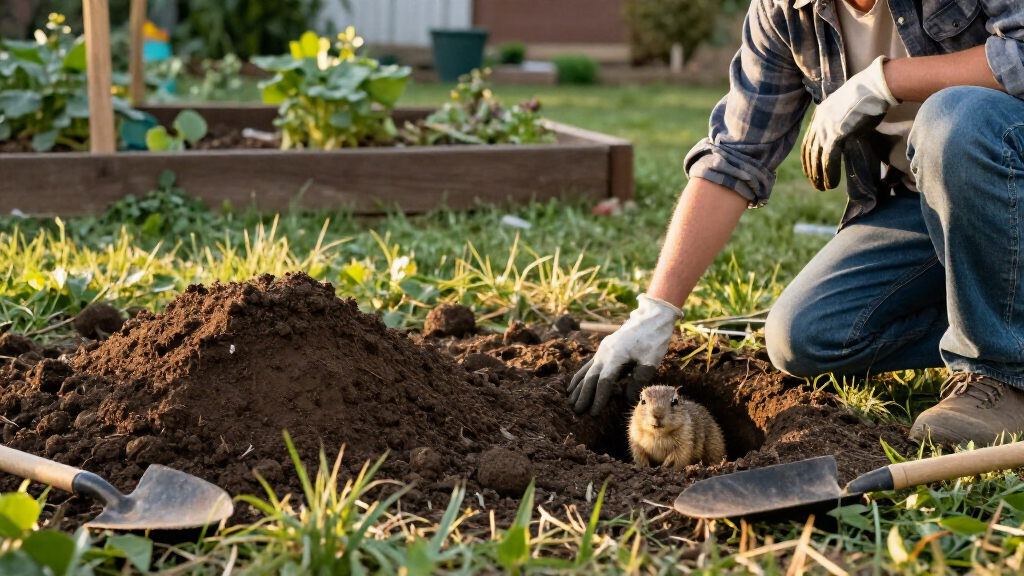
A fresh, plugged mound with its opening off to one side often points to a pocket gopher, especially when you find a fan or crescent of loose soil rather than an open hole. Look at how the soil sits: gophers push earth up from underground tunnels and commonly close the opening behind them. The plug matters because it reflects the animal’s way of working belowground; it also means you may not see the entrance even when the tunnel is active. A single mound is not proof, but its shape and plug give you a strong first clue.
In a dry yard, the loose soil may crust over quickly beneath the sun, while a mound beside a recently watered bed stays darker and softer. Check it in the morning and again later; new soil or a fresh plug can show that the tunnel system remains active. This timing helps distinguish a fresh sign from an old mound, though watering can soften or reshape soil and make the comparison less certain. A ground squirrel entrance, by contrast, usually stays open enough for the animal to enter and leave, and you may see excavated earth scattered around it.
Do not classify every pile by its silhouette alone. Sandy soil can slump, and a sprinkler leak can make a gopher mound look unusually soft. Look for the opening, nearby entrances, and plant symptoms as a set. For example, a plugged crescent-shaped mound beside wilting tomatoes is more consistent with gopher activity than an open hole surrounded by clipped leaves. Combining clues reduces the risk of choosing a control that targets the wrong animal, which can waste time and disturb useful evidence.
These signs help you choose what to inspect next; they do not identify every local species. If you find several openings, watch from a distance during daylight before approaching. An unused-looking entrance may connect to a larger system, or another animal may have enlarged an older burrow. Keeping your distance preserves the signs and avoids disturbing wildlife while you decide whether local expertise is needed.
Popular right now

KitchenAid Artisan Series 5-Quart Tilt-Head Stand Mixer, Dried Rose (KSM150PS)

TCL QM64L 85-Inch QD-Mini LED 4K Smart Fire TV

Bose QuietComfort Wireless Noise-Cancelling Over-Ear Headphones, Black
As an affiliate, we earn on qualifying purchases.
Compare the signs side by side before you act
Gopher vs ground squirrel damage is easiest to distinguish when you compare several signs at once: opening shape, feeding pattern, and whether you see animals aboveground. Gophers spend most of their lives below the surface, so their work often appears as soil mounds and hidden root damage. Ground squirrels are commonly visible in daylight, and their burrows often have open entrances in groups. These are tendencies, not guarantees: a quiet observation period may miss an animal, and burrows can be reused or changed by other wildlife.
| Clue | Pocket gopher | Ground squirrel |
|---|---|---|
| Burrow sign | Often a plugged entrance beside a fan- or crescent-shaped mound | Usually an open entrance, sometimes several in one area |
| Plant damage | Roots and underground plant parts are a main target | Seeds, fruit, vegetables, young plants, and some underground foods |
| Surface activity | Rarely seen; look for fresh soil or soft ridges | Often seen entering and leaving burrows during daylight |
| Social pattern | Generally solitary outside breeding and raising young | Often lives in groups or colonies |
Imagine that you discover a soft ridge beneath the drip line, two collapsed peppers, and a plugged mound. Those clues fit a gopher better than a ground squirrel: the ridge and wilt suggest activity belowground, while the plug fits how gophers close tunnel openings. If you instead spot several open holes along a sunny fence and a squirrel carrying a fallen tomato, the second pattern deserves closer attention. In either case, the consequence for your garden differs: hidden root or line damage calls for inspecting the bed, while visible feeding may point you toward protecting produce and young growth.
This comparison gives you a starting point, not a verdict. “Ground squirrel” includes many species, and burrows can be reused or enlarged. Soil and moisture change how clearly a mound holds its shape. Photograph the signs and note where you see feeding; those details will help a local extension service or wildlife agency identify the animal if you remain uncertain. That confirmation matters because controls and legal protections can vary by species, and acting on a mistaken identification can harm wildlife without solving the garden problem.
Follow the plant damage to find the animal’s feeding zone
Root damage belowground is a classic gopher clue; missing leaves, clipped stems, or eaten fruit point more toward ground squirrel feeding. Gophers eat roots and other underground plant parts, and their tunnels can sever roots and buried irrigation. Ground squirrels eat a broader menu, including seeds, fruits, vegetables, bulbs, and young plants, so their damage may be visible both above and below the soil. The location of the damage is useful because it indicates where to inspect first and what may need protection, but feeding habits overlap enough that it should not be the only clue.
A young citrus tree that wilts despite a working emitter may have lost roots to a tunnel. A tomato with half its fruit missing and small bites from nearby seedlings suggests an animal feeding aboveground. In either case, check the drip system before blaming wildlife: a clogged emitter in desert heat can wilt a plant on its own, and a chewed line can make a bed look like it has a watering problem. Separating irrigation failure from root loss helps avoid replacing a healthy plant or repeatedly watering one that cannot take up water; extra watering in a damaged bed can also conceal where a leak is occurring.
Gophers can pull plants down into their tunnels, leaving little behind at the surface. They can also make a lawn feel uneven as shallow tunnels approach the topsoil, raising ridges or soft spots. Ground squirrels may take seeds and fruit while leaving open entrances nearby. This difference is especially useful in a vegetable patch, where you can compare a vanished plant with the damage on its neighbors. If only exposed fruit is affected, protecting harvests may be the most direct first step; if several plants wilt along a buried line, inspect the soil and irrigation route for underground damage.
For a practical check, gently examine a damaged plant’s root zone and look for fresh mounds or a nearby open burrow. Avoid digging blindly into a tunnel network or disturbing an occupied burrow; it can damage roots and erase the pattern you need to identify the cause. Record which plants were affected, whether leaves were eaten, and whether the roots look cut or exposed. That short account of damage can make diagnosis easier and help prevent wasting water on a plant whose roots are already gone.
Use a short field check to identify fresh burrow activity
A quick, repeatable check can help you separate an active burrow from an old hole or a different pest’s work. Start by observing from a safe distance; you can learn a lot from the opening and nearby plants without putting a hand or tool into a burrow. Check again later in the day, when ground squirrels are more likely to appear aboveground. Repeating the observation matters because a single quiet visit can make an active site look abandoned, while activity over time helps you decide whether the damage needs prompt attention.
- Photograph the sign. Include the mound or opening and a nearby object for scale, such as a hand trowel left on the ground.
- Look for a plug. A closed opening beside a fan- or crescent-shaped mound favors a gopher clue; an unobstructed entrance favors a ground squirrel clue.
- Check the plants and irrigation. Note missing growth, clipped leaves, wilt, soft ridges, and any damaged drip line.
- Watch for daytime traffic. From a distance, see whether an animal enters or leaves an open hole.
- Ask locally if the evidence conflicts. Share your photos with an extension office or wildlife agency before choosing a control.
For example, you might find one open hole near a shed but no animal and no fresh feeding. A single glance cannot tell you whether it is occupied, old, or part of a larger system. Checking at midday the next day may reveal a squirrel, while fresh soil beside the hole could instead signal burrowing activity nearby. The point of the follow-up is to reduce uncertainty before spending effort on a control; if the observations remain mixed, expert identification is safer than guessing.
Do not pour water into a tunnel or seal an entrance just to see what happens. Animals may reopen it elsewhere, and you can make diagnosis harder by disturbing the sign. A few clear photos and notes about when you saw activity are a better record to bring to a local expert. This preserves evidence and avoids turning a small, uncertain sign into a larger disturbance.
Protect roots, drip lines, and paths before damage spreads
Protect the vulnerable spot first: a young plant, a buried water line, and a path beside open burrows all need different attention. Gophers can damage roots and irrigation out of sight, while extensive ground squirrel burrows can weaken soil beneath banks, paths, or structures. In a water-wise yard, a cut line can soak a small patch of ground while the rest of the bed stays bone-dry. Prioritizing the immediate vulnerability limits wasted water and reduces the chance that a soft or undermined area becomes a hazard while you investigate.
Walk the garden in the cool part of the morning and look for damp soil, sunken areas, fresh mounds, or plants that wilt despite irrigation. Repair a leaking line and shield vulnerable young plants with locally recommended barriers suited to the plant and soil. A barrier that blocks roots or water from reaching a plant can create a new problem, so follow regional extension guidance for installation and depth. There is a practical tradeoff: a barrier may protect a specific planting, but installing it takes effort and can interfere with watering or root growth if it is poorly placed.
Keep people and pets away from open holes, especially near a walkway where a foot can slip or a child can trip. If burrows appear beside a foundation, driveway, retaining bank, or utility route, watch for sinking, cracks, or uneven ground. The risk depends on burrow size, soil, and location; a cluster far from structures is different from repeated settlement beside a path. Visible changes in the ground are a reason to seek an assessment, since simply filling an entrance may leave the underlying void or active tunnel system in place.
Picture a drip line running along a bed where fresh mounds keep appearing. Mark the wet and dry spots, inspect visible connectors, and protect new plantings while you confirm the animal. These prevention steps buy time and reduce waste, but they do not remove a burrow system. If the ground settles or the damage reaches a structure, ask a qualified local professional to assess it; that may cost more than a quick patch, but it addresses the condition beneath the surface rather than just its visible entrance.
Choose control only after you confirm the local species
Identification comes before control because a method aimed at the wrong animal can fail, and rules differ by species and location. Some ground squirrels have legal protections; trapping, relocation, and pesticide use may be restricted. A familiar-looking burrow does not tell you which regulations apply, especially where multiple species live in the region. Confirming first can take longer, but it reduces the chance of spending money on an ineffective method or causing harm that local rules prohibit.
Start with your state or provincial wildlife agency and local extension service. Ask them to confirm the likely species and recommend current options for your area. Prevention, barriers, and habitat changes may help protect a garden, but their usefulness depends on the animal, the layout, and local conditions. A trap or other control that is lawful and suitable in one place may not be allowed nearby. Choosing among options involves tradeoffs: barriers may protect particular plants without removing the animal, while direct controls can carry greater legal, safety, and non-target risks.
Never place poison or fumigants casually in a burrow. Check local rules and follow the product label exactly; use protective equipment the label requires. Misuse can expose people, pets, wildlife, and groundwater, a serious concern in hot, dry landscapes where water is scarce. Keep children and pets away from any treated area as the label directs, and do not use a product in a way its label does not permit. These precautions matter because a product placed underground can still affect animals that were not the target, and mistakes may be difficult to detect once the material is out of sight.
If you are unsure, share photos of openings, mounds, and feeding damage with a local expert before setting traps or changing the burrow. For instance, a gardener who sees open holes and assumes “gopher” may waste time on a method designed for a different animal. Careful identification makes the next step more effective and helps you avoid harming wildlife or creating a safety problem. It also lets you choose a response that fits the scale of the damage, from protecting one vulnerable bed to getting professional help where burrows affect a structure.
Frequently Asked Questions
How can I tell a gopher mound from a ground squirrel burrow?
A gopher mound is often fan- or crescent-shaped, with the tunnel opening plugged and set off to one side. A ground squirrel burrow usually has an open entrance, sometimes with several openings nearby. Check plant damage and watch from a distance for daylight activity before deciding.
Do gophers or ground squirrels eat plant roots?
Gophers mainly feed on roots and other underground plant parts, while ground squirrels eat a wider mix that includes seeds, fruits, vegetables, and some underground foods. A wilted plant with damaged roots and fresh mounds fits gopher activity, though watering faults and other pests can cause similar symptoms.
Why are my plants disappearing or wilting?
Root loss from a gopher tunnel is one possibility, especially if you find fresh mounds or a plant pulled belowground. Ground squirrels may clip visible growth or eat produce. Check the emitter and drip line too, since a clogged or damaged line can mimic wildlife damage in desert heat.
Can I identify the animal from one hole?
Often, no. A hole may be old, reused, or enlarged by another animal, and soil conditions change its appearance. Photograph the opening, note whether it is plugged, look for feeding signs, and check for daytime activity; a local extension office can help when clues conflict.
Will filling a burrow solve the problem?
Usually not by itself. The animal may reopen the entrance or create another one, and filling a hole can erase useful signs before you identify the burrow system. First confirm the likely species and ask your local wildlife agency about suitable, lawful options.
Can ground squirrel burrows damage a house or driveway?
Extensive burrows near a structure can weaken soil or contribute to uneven ground, but the risk depends on their size, location, and soil. Watch for settling, cracks, or sinking beside paths and foundations. Ask a qualified local professional to assess signs of undermining.
Are gophers and ground squirrels protected, and can I trap them?
Rules depend on your location and the exact species, especially because “ground squirrel” covers many species. Check current guidance from your state or provincial wildlife agency before trapping, relocating, or using pesticides. If a control product is allowed, follow its label and protective-equipment directions.
Conclusion
Remember the pattern: plugged mound plus hidden root trouble leans toward a gopher, while open burrow plus daylight feeding leans toward a ground squirrel. Check more than one sign, because desert soil, watering, and local species can blur the clues.
Photograph what you find, protect the thirsty plants and drip lines, and ask your local wildlife agency or extension office before choosing a control. In a desert garden, a few minutes of careful observation can save a season’s water—and leave the ground safer under your feet.