TL;DR

Get garden gear delivered free with Prime
- Fast, free delivery on millions of items
- Prime Video, Amazon Music and more included
- Member-only deals all year
Young citrus trees face sunscald risks from direct sunlight and temperature swings. Applying reflective trunk paint or wraps early in the season creates a protective shield, reducing bark damage and increasing survival chances. Combining physical barriers with cultural care boosts overall protection.
Imagine a bright winter morning. The sun shines fiercely on your young citrus, and you notice the bark on the south side turning a sickly, sunburned brown. Sunscald is more than a cosmetic problem — it weakens trees, inviting pests and diseases to attack. If you’ve planted citrus in a hot, sunny climate, protecting those tender trunks becomes a must. Early intervention with trunk paint or wraps can turn potential disaster into a thriving, healthy tree.
This guide will show you exactly how to shield your citrus from sunscald. No fluff, just the practical steps and real-world tips that work in desert gardens and warm zones. You’ll learn what types of protection are best, when and how to apply them, and how to keep your trees safe year after year.
Apply trunk paint or wraps early in the season, ideally during late winter or early spring, before intense sun exposure begins.
A combination of reflective trunk paint and physical wraps offers the strongest protection for young citrus bark.
Reapplication every 2-3 years or after weather damage keeps protection effective and prevents bark damage.
Monitoring sun exposure with sensors or visual checks helps tailor protection needs and avoid unnecessary treatments.
Good cultural practices like watering, mulching, and pruning complement physical protection and boost tree resilience.
Trunk Paint and Wraps for Tender Citrus Bark
Young citrus trees face their highest sunscald risk when direct sunlight meets fast temperature swings. A reflective trunk coating, breathable wrap, or combined shield can reduce bark damage before it opens the door to pests, disease, and slow growth.
Reflect first. Shield second. Support the tree with steady water, mulch, and smart pruning.
Field rule for desert gardens and warm zonesWhy Sunscald Hits Young Citrus Hard
Thin young bark heats quickly in direct sun, then contracts as temperatures drop. Repeated expansion and cooling can cause bleached patches, cracks, necrotic tissue, and weak points that pests and pathogens can exploit.
Southwest Sun
Damage commonly appears on the south and southwest sides where low winter sun and afternoon heat strike the trunk directly.
Thin Protection
Young citrus bark is not fully developed, so the first few years after planting are the most important window for prevention.
Open Entry Points
Cracked or necrotic bark weakens natural defenses, increasing vulnerability to insects, infections, girdling, and poor fruiting.
Paint Reflects. Wraps Block. Care Builds Resilience.
Trunk protection works best when it lowers thermal stress without trapping moisture. The strongest programs pair a physical shield with cultural care that keeps the tree hydrated, mulched, and structurally balanced.
Cooler Bark Surface
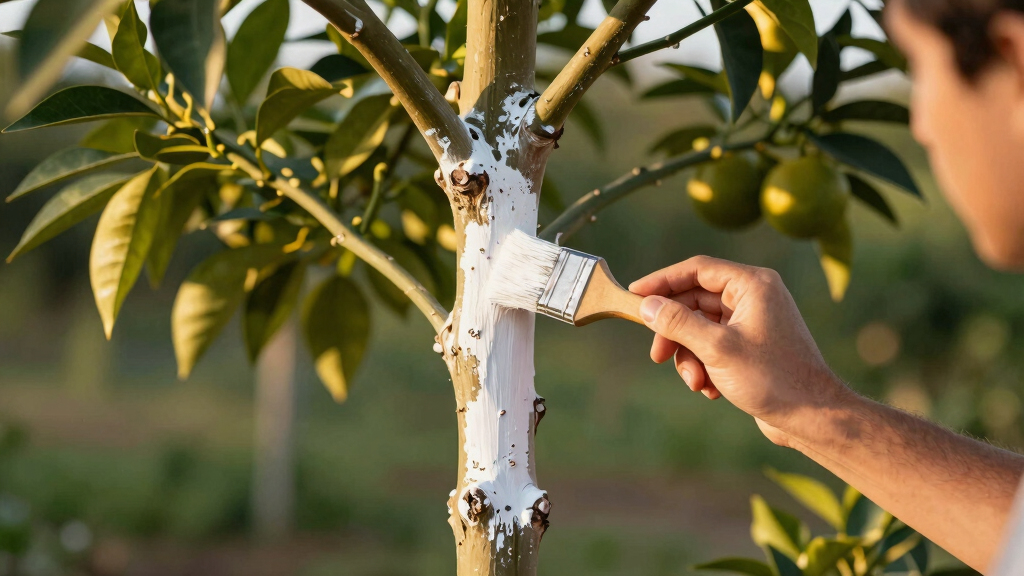
Use non-toxic white or reflective latex tree paint to bounce sunlight away from the trunk and reduce overheating during bright days.
Physical Sun Barrier
Install wraps snugly, but never tightly. Airflow matters because trapped moisture can invite pests, decay, and bark injury.
Stress Reduction
Consistent watering, mulch, and pruning discipline help the tree recover, grow, and resist secondary damage after heat events.
Inspect
Check the lower trunk for bleached, brown, cracked, or sunken bark, especially on the sun-facing side.
Apply Early
Paint or wrap in dormancy, late winter, or early spring before intense sunlight begins.
Cover Smart
Protect the trunk up to at least 3 feet, giving extra attention to south and southwest exposure.
Review
Refresh paint after weathering and remove or loosen wraps after the risk window to prevent moisture buildup.
Paint, Wrap, or Combine?
The right answer depends on climate intensity, tree age, wind, abrasion, and how closely you can monitor the trunk. In very hot sunny zones, a combined approach gives the widest margin of protection.
| Method | Best Use | Sun Reflection | Moisture Risk | Maintenance |
|---|---|---|---|---|
| Reflective Trunk Paint | Young trees in intense sun; long-lasting seasonal protection. | ✓ Strong | ✓ Low when breathable | Reapply every 2-3 years or after peeling. |
| Tree Wraps or Guards | Windy sites, abrasion risk, or temporary high-exposure periods. | ~ Moderate | ~ Watch closely | Loosen, remove, or reset after risk passes. |
| Paint + Wrap | Very young, thin-barked, or newly planted citrus in harsh climates. | ✓ Strongest | ~ Manage airflow | Inspect frequently and prevent tight wrapping. |
| No Protection | Mature trunks or mild climates with low temperature swings. | ✗ None | ✓ None added | Monitor bark for early warning signs. |
Sunscald Protection Intensity
Move right on the scale as sun exposure, bark thinness, and winter-to-spring temperature swings increase.
From Bright Sun to Healthy Bark
Protection is not a single product. It is a simple sequence: identify exposure, interrupt heat stress, keep the barrier breathable, and support the tree with steady care.
Common Questions From Growers
Most sunscald prevention decisions come down to timing, material choice, and inspection. The goal is protection without suffocation, moisture buildup, or unnecessary treatment.
When should protection start?
Start as soon as the citrus is planted in sunny warm climates. Late winter or early spring is ideal because it precedes the strongest sun exposure.
What paint is best?
Use non-toxic white or reflective latex paint formulated for trees. It should be breathable, light colored, and applied according to the label.
Do wraps beat paint?
Both can work. Paint reflects sunlight; wraps add a physical barrier. Combining them is useful for very young or highly exposed trunks.
When do wraps come off?
Remove or loosen wraps after the risk period so the trunk can dry and expand normally. This helps prevent moisture buildup and pest habitat.
Why Sunscald Damages Young Citrus and How to Spot It
Sunscald is a form of bark injury caused by intense sunlight and temperature swings. It looks like cracked, bleached, or necrotic patches on the trunk, often on the south and southwest sides where the sun hits hardest. For young trees, the bark is thinner and more vulnerable, especially during their first 3-5 years.
Understanding why sunscald causes such damage helps clarify the importance of protection. When the bark is exposed to direct sunlight, it heats up significantly during the day and then cools rapidly at night. This cycle causes the bark to expand and contract repeatedly, leading to cracks and necrosis. These injuries compromise the tree’s natural defenses, making it more susceptible to pests, infections, and structural weakness. If left unprotected, the damage accumulates, potentially girdling the trunk or creating entry points for pathogens. Recognizing early signs, like cracked bark or sun-bleached patches, enables timely intervention, which can prevent long-term health issues and preserve the tree’s vitality.
Young citrus trees are particularly at risk because their bark is thinner and less developed, offering less natural resistance. The implications are significant: unprotected trees experience slower growth, reduced fruit production, and a higher likelihood of disease. Therefore, proactive protection strategies are critical, especially in regions with intense sun and temperature fluctuations.
Beyond physical damage, sunscald can weaken the overall health of your citrus trees. The exposed and damaged bark becomes an entry point for pests and diseases, which can further compromise the tree’s vigor and productivity. Monitoring your young trees regularly for signs of sun damage allows you to act quickly, applying protective measures before the damage becomes severe.
reflective trunk paint for citrus trees
As an affiliate, we earn on qualifying purchases.
As an affiliate, we earn on qualifying purchases.
How Trunk Paint Prevents Sun Damage — A Simple, Effective Shield
Trunk paint acts as a reflective barrier that moderates the temperature fluctuations experienced by the bark. By reflecting sunlight, it prevents the trunk from overheating during the day, which is crucial because excessive heat can cause the bark to crack and necrotize. The paint’s light color, often white or a reflective hue, bounces back solar radiation, creating a cooler microenvironment around the trunk. This reduction in thermal stress is vital for maintaining bark integrity, especially in young trees with delicate bark.
For example, in Arizona’s harsh sun, a grower applies a non-toxic, reflective latex paint on her young orange trees early in the season. She observes that the trunks stay noticeably cooler during peak heat, which correlates with fewer sunscald incidents. This simple step helps preserve the bark’s protective layer, reducing the risk of pests and disease entry points that often exploit sun-damaged tissue. The tradeoff is that if applied improperly or in excess, the paint could potentially interfere with the bark’s natural breathing or moisture exchange. However, when used correctly, it offers a cost-effective, low-impact method to extend the tree’s health and longevity.
To maximize effectiveness, follow these steps:
- Use a non-toxic, reflective latex paint formulated for trees, ensuring it’s safe and breathable.
- Apply during dormancy or early spring, before the intense sun and heat arrive.
- Paint the entire trunk up to at least 3 feet high, with special attention to south and southwest-facing sides where sun exposure is greatest.
- Reapply every 2-3 years or as needed, especially after peeling, heavy rain, or weathering that reduces reflectivity.
This approach not only reduces immediate thermal stress but also helps prevent long-term structural damage, ultimately supporting healthier, more resilient citrus trees.
As an affiliate, we earn on qualifying purchases.
Choosing the Right Protection Method for Your Trees
Deciding between trunk paint, wraps, or a combination of both depends on your specific climate, tree age, and personal preference. Each method offers unique benefits:
- Trunk Paint: Reflects sunlight, reduces temperature swings, and is easy to apply. Ideal for young trees and regions with intense sun.
- Physical Wraps: Provide a direct barrier against sun exposure and mechanical damage. Useful in areas with strong winds or where physical abrasion is a concern.
- Combining Both: Applying paint and wraps together offers maximum protection, especially for very young or vulnerable trees.
Consider your local climate conditions and the specific needs of your citrus trees. For example, in extremely hot and sunny environments, a combination approach can be most effective. In milder climates, a good quality reflective paint alone may suffice. Always ensure that any protection method used does not trap moisture or cause damage to the bark, and remove or reapply as needed to maintain effectiveness.
Consult local gardening resources or extension services for tailored recommendations based on your region’s weather patterns and soil conditions. Proper protection, combined with good cultural practices, will help your young citrus thrive and produce abundant fruit for years to come.
sunscald protection for young citrus
As an affiliate, we earn on qualifying purchases.
As an affiliate, we earn on qualifying purchases.
Frequently Asked Questions
When should I start protecting my young citrus trees from sunscald?
Begin protection as soon as you plant your citrus, especially in regions with intense sunlight. Early application during late winter or early spring helps prevent damage before the sun’s strongest days arrive.What type of paint is best for trunk protection?
Use a non-toxic, white or reflective latex paint formulated for trees. These paints reflect sunlight and are safe for trees when applied as directed.Are wraps or paints more effective?
Both work well; paints reflect sunlight, while wraps provide a physical barrier. Many growers combine both for maximum protection, especially for young or thin-barked trees.Can I remove the wraps or paint after the risk period?
Yes, typically late winter or early spring, once the danger of sunscald has passed. Removing them prevents moisture buildup and pest habitat.Are there environmental concerns with trunk paints?
Most commercial trunk paints are environmentally safe when used properly. Always follow manufacturer instructions to minimize any impact.As an affiliate, we earn on qualifying purchases.
Conclusion
Protecting your young citrus from sunscald isn’t complicated — it’s about timing, technique, and a little care. Using reflective trunk paint or wraps creates a shield that keeps bark healthy and strong, especially during those blistering desert days. Your trees will thank you with lush growth and abundant fruit.
Remember, early and consistent protection turns vulnerable young trees into hardy, productive citrus. Keep an eye on the weather, stay proactive, and your garden will flourish under the sun’s warmth.
Columbus Day / Indigenous Peoples' Day Picks
long weekend sales
As an affiliate, we earn on qualifying purchases.