TL;DR

Get garden gear delivered free with Prime
- Fast, free delivery on millions of items
- Prime Video, Amazon Music and more included
- Member-only deals all year
In Zone 9b’s warm climate, buried clay ollas deliver water directly to plant roots more efficiently than drip irrigation. They cut water waste by up to 50%, are low-maintenance, and promote healthier roots, especially in heavy or clay soils.
Water-wise gardeners in Zone 9b know that every drop counts. Yet, traditional drip systems often waste water through evaporation and runoff. There’s a simple, ancient trick that beats drip — buried unglazed clay pots, called ollas, quietly releasing moisture right where your plants need it. If you’re tired of clogging emitters or constant fiddling, this low-tech method might be your new best friend.
In this guide, you’ll see exactly why ollas often outperform drip systems in Zone 9b’s hot, dry climate. I’ll walk you through how they work, when they shine, and how to get the most out of this old-school watering secret.
Buried ollas deliver water directly to roots, reducing waste and evaporation by up to 50%.
They are simple to install—just bury, fill, and forget—making them ideal for busy or low-maintenance gardens.
Ollas excel in clay or heavy soils, where drip emitters clog or run off. They’re also great in drought or water-restricted scenarios.
In hot, dry zones like 9b, ollas promote healthier, sweeter plants by maintaining steady moisture levels.
DIY options are plentiful, using unglazed clay pots available at most garden centers or online.
Olla Irrigation in Zone 9b: When Buried Clay Pots Beat Drip
In warm Zone 9b gardens, buried unglazed clay pots release water slowly at root level, reducing evaporation, runoff, emitter clogs, and constant system tuning. For vegetables, herbs, clay soils, drought limits, and small beds, ollas often make every refill count harder than a conventional drip line.
Ancient clay, modern water math.
Ollas work passively through porous clay, keeping moisture close to roots during hot afternoons without spraying, splashing, or pushing water across the surface.
Why Ollas Outperform Drip
Drip irrigation can be excellent, but in heavy, uneven, or neglected beds it can lose efficiency through clogged emitters, runoff, evaporation, and poor distribution. Ollas solve the problem at the source by storing water underground and releasing it only as nearby soil dries.
Water stays below the splash zone.
Porous clay sends moisture into the surrounding root area instead of wetting exposed soil, foliage, paths, or mulch surfaces.
Roots avoid feast-or-famine cycles.
A filled olla provides a slow reserve that helps tomatoes, herbs, squash, and flowers stay hydrated through scorching afternoons.
No emitters to tune every week.
Gardeners skip flushing lines, adjusting pressure, replacing tiny parts, and chasing leaks through rocky or weed-filled beds.
How to Use Ollas for Maximum Savings
Think of the olla as a buried reservoir. It performs best when the size, position, refill rhythm, and lid all match the plant’s root zone and the local heat pattern.
Choose Size
Use about 1 gallon for herbs and vegetables; scale toward 3 gallons for larger beds, shrubs, or young trees.
Bury Close
Set the pot near the root zone, usually 4-6 inches deep, with the opening just above soil level.
Fill Often
Check daily during hot, dry, windy spells; refill every few days when weather cools or soil stays damp.
Cover Top
Use a stone, saucer, or lid to reduce evaporation and keep debris from blocking pores or entering the pot.
Inspect
Replace cracked ollas and watch for root intrusion, sediment buildup, or buried openings after soil shifts.
Ollas vs. Drip: The Practical Stack-Up
For large, highly varied gardens, drip can still be precise. For small food gardens, community plots, heavy soils, and drought-conscious Zone 9b beds, ollas win by being simpler, quieter, and harder to mismanage.
| Feature | Ollas | Drip Irrigation | Zone 9b Read |
|---|---|---|---|
| Water efficiency | ✓Reduces waste by 30-50% and releases water directly to roots. | ~Efficient when tuned, but runoff and evaporation can creep in. | Ollas are strongest when every gallon matters. |
| Setup cost | ✓Low, especially with DIY unglazed clay pots. | ✗Higher start-up cost for tubing, filters, emitters, and fittings. | Small beds and containers favor clay pots. |
| Maintenance | ✓Check for cracks, debris, and refill timing. | ✗Flush lines, clean filters, adjust emitters, and repair leaks. | Ollas are friendlier for busy gardeners. |
| Soil compatibility | ✓Excellent in heavy clay where moisture stays near roots. | ~Emitters may clog in dirty systems; sandy soils can drain fast. | Clay and uneven beds make ollas shine. |
| Ease of use | ✓Bury, fill, cover, and monitor moisture. | ~Requires layout planning and periodic tuning. | Simple wins when heat adds pressure. |
When Buried Clay Pots Beat Drip
Use ollas when the garden’s limiting factor is water retention, maintenance time, or system reliability. They are especially compelling for vegetables, herbs, small orchards, and containers in dry-season heat.
Drought limits or high water bills
Ollas reduce exposed wet soil, limit evaporation, and help stretch stored water during restrictions or peak summer demand.
Heavy clay, rocky beds, or clogging issues
Instead of forcing water through tiny emitters, ollas release moisture through clay walls into the soil surrounding each plant.
Small plots and community gardens
Clay pots are easy to install one plant at a time, with no pressure regulators, filters, timers, or long tubing runs.
Consistent flavor and root health
Even moisture encourages deeper roots and can help crops like tomatoes and zucchini avoid stress swings that reduce quality.
Traceability: From Pot to Plant
The method works because each link is simple: stored water, porous clay, dry soil pull, root access, and fewer surface losses. Break any link with poor placement or debris, and performance drops.
How deep?
Usually 4-6 inches, with the opening above soil level and the body near active roots.
How often?
Daily during peak heat may be needed; cooler periods can stretch refills to every few days.
Sandy soil?
Yes, but water drains faster, so use closer spacing and more frequent refills than in clay.
Why Buried Clay Pots (Ollas) Outperform Drip in Zone 9b
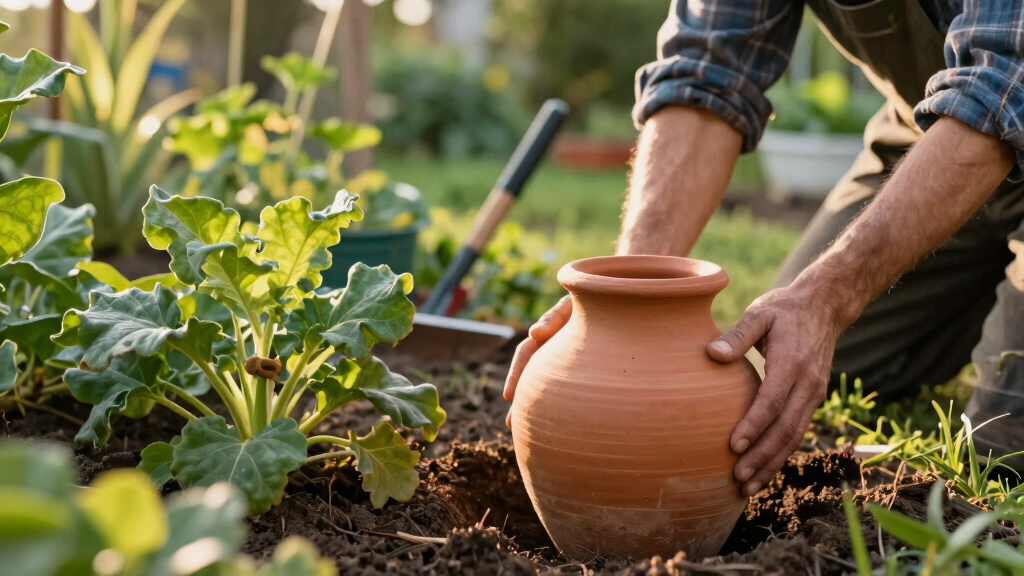
Ollas are unglazed clay pots buried near your plants. Filled with water, they slowly seep moisture through their porous walls, keeping roots consistently moist. Unlike drip emitters that can clog or waste water through runoff, ollas deliver water directly to the root zone, with minimal loss.
For example, a gardener in Phoenix reports that switching to ollas cut her water bill by nearly 40%. The soil stays evenly moist, and her tomatoes produce sweeter, juicier fruit. Plus, once installed, ollas demand less daily attention than drip lines.
In hot climates like Zone 9b, this steady drip of moisture prevents plants from drying out during scorching afternoons. It’s like giving your plants a glass of cool water, every few days, without the splash and spray of traditional hoses.
Understanding why ollas excel in these conditions involves recognizing how they maintain soil moisture more consistently than drip systems. Drip emitters, while efficient in theory, often face challenges like clogging, uneven distribution, or runoff, especially in heavy, clay, or uneven soils common in Zone 9b. Ollas, by contrast, provide a slow, steady supply of water directly at the root zone, ensuring plants receive moisture when they need it most, without excess. This consistency reduces stress on plants, encourages deep root growth, and minimizes water waste. Additionally, because ollas work passively once buried and filled, they reduce the need for frequent adjustments, making them a low-maintenance option that supports soil health by preventing overwatering or drought stress.
As an affiliate, we earn on qualifying purchases.
How to Use Ollas for Maximum Water Savings
- Choose the right size: Small ollas (~1 gallon) suit herbs and vegetables; larger ones (~3 gallons) work for trees or bigger beds. Selecting the appropriate size ensures the water supply matches the plant’s root zone, reducing waste and runoff.
- Plant placement: Bury ollas about 4-6 inches deep, with the opening just above soil level, near the root zone. Proper placement ensures water reaches the roots directly and minimizes evaporation.
- Fill regularly: During hot spells, check daily and refill as needed—especially in dry, windy conditions. Consistent refilling maintains soil moisture without over-saturating the roots.
- Cover the top: Place a flat stone or soil over the opening to prevent debris from clogging pores and reduce evaporation. This simple step prolongs the effectiveness of each fill.
- Maintain: Replace cracked or broken ollas and keep an eye out for root intrusion or debris entry. Regular inspection prevents blockages and ensures longevity.
Imagine you’re planting a row of zucchinis. You bury a small olla next to each one, fill it up, and forget about it. The soil stays moist, the plants thrive, and you save water and time. This method works because it creates a consistent moisture environment around each plant’s roots, reducing the need for frequent manual watering and preventing the extremes of drought or oversaturation that can stress plants and degrade soil health.
As an affiliate, we earn on qualifying purchases.
Ollas vs. Drip: How Do They Stack Up?
| Feature | Ollas | Drip Irrigation |
|---|---|---|
| Water efficiency | Reduces waste by 30-50%, delivers water directly to roots | Can waste water through runoff or evaporation if not tuned properly |
| Setup cost | Low, especially if DIY | Higher initial investment for tubing, emitters, filters |
| Maintenance | Minimal—check for cracks and debris | Regular flushing, filter cleaning, and emitter adjustment needed |
| Soil compatibility | Works well in most soils; heavy clay retains moisture | Clogs common in heavy or clay soils; runoff in sandy soils |
| Ease of use | Very simple—bury, fill, forget | Requires careful installation and monitoring |
In many cases, ollas offer a straightforward, low-cost, low-maintenance watering method that outperforms drip in hot, dry soils. Think of ollas as a silent, steady drip, versus the more fiddly drip system that needs constant tuning.
Understanding the tradeoffs helps gardeners decide which system fits their needs best. Ollas excel in simplicity and soil compatibility, especially in challenging soils or drought conditions. Drip systems, while customizable, require more attention and maintenance but can be more precise in evenly watering large, diverse gardens. Recognizing these differences allows for smarter choices tailored to your soil type, plant needs, and available time.
As an affiliate, we earn on qualifying purchases.
When Do Buried Clay Pots Beat Drip? Spot These Winning Moments
Ollas shine in situations where water conservation is a priority, or where dirt clogs drip emitters. If your garden’s in heavy clay soil or you’re managing a small plot, ollas often outperform drip systems.
For instance, in a community garden in Tucson, gardeners switched to ollas during drought conditions. Water use dropped sharply, and plants stayed healthier without constant fuss. If you’re trying to stretch scarce water resources or want a set-it-and-forget-it approach, ollas are your best bet.
Another scenario? When you want to avoid the maintenance of drip lines in rocky or weed-choked beds. Ollas sit quietly underground, delivering moisture without the hassle of cleaning emitters or repairing leaks.
Additionally, in environments where water restrictions are strict or water sources are limited, ollas provide an efficient solution by minimizing runoff and evaporation. They are particularly advantageous for small-scale or container gardens, where precise moisture control enhances plant health and reduces water waste. Recognizing these situations helps gardeners deploy ollas effectively, ensuring they deliver maximum benefit with minimal fuss.
As an affiliate, we earn on qualifying purchases.
Got Questions? Your Olla & Drip Watering FAQs Answered
- How deep should I bury the olla? Usually, about 4-6 inches deep so the opening is just above the soil, near the roots. Adjust based on plant size and soil type.
- How often do I refill the olla? During peak summer, daily refills might be needed; in cooler weather, every few days works fine.
- Will an olla work in sandy soil? Yes, but water drains faster, so you’ll need to refill more often. In clay soil, water stays longer, reducing refill frequency.
- Are ollas safe around pets and kids? Unglazed clay is non-toxic, but ensure the opening is covered to prevent accidental ingestion or drowning.
- Can I DIY my own olla? Absolutely. Use unglazed clay pots or planters, and seal any cracks before burying. Just avoid glazed or painted pots that may contain harmful chemicals.
Remember, the depth at which you bury your olla influences how effectively it delivers moisture. Too shallow, and it might evaporate quickly; too deep, and it may not reach the roots efficiently. Refill frequency depends on climate, soil type, and plant demand—monitor your garden to find the sweet spot. Safety is also key: ensure the opening is covered to prevent accidental ingestion by children or pets, and use non-toxic, unglazed clay for DIY projects. These practical tips help maximize the benefits of ollas while minimizing potential issues.
Frequently Asked Questions
Can I use ollas for large trees or shrubs?
Yes, but opt for larger ollas or multiple ones spaced around the root zone. They’ll deliver steady moisture to the deep roots, especially during hot, dry summers.
How can I prevent debris from clogging the olla pores?
Place a flat stone or a small piece of landscape fabric over the opening. Regularly check for debris or root intrusion, and replace cracked or damaged ollas promptly.
Are ollas worth the investment for a small vegetable garden?
Absolutely. They cut down watering time, reduce water waste, and keep plants consistently moist, leading to better yields and healthier produce.
What’s the best way to DIY my own olla?
Use unglazed clay pots or planters, avoid glazed or painted ones, and seal any cracks. Bury them so the opening is accessible, and fill regularly during dry spells.
Conclusion
If your garden’s in Zone 9b and water is precious, don’t overlook the humble olla. It’s a no-fuss, water-saving miracle that keeps roots happy without the constant fuss of drip lines.
Next time you plant, consider burying a clay pot. Your plants will thank you with lush growth, and your water bill will thank you too. Sometimes, the simplest tools are the best.
Columbus Day / Indigenous Peoples' Day Picks
long weekend sales
As an affiliate, we earn on qualifying purchases.