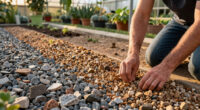
TL;DR

Get garden gear delivered free with Prime
- Fast, free delivery on millions of items
- Prime Video, Amazon Music and more included
- Member-only deals all year
Caliche is a dense calcium carbonate layer that blocks water in soil, making subsurface drip irrigation tricky under Bermuda lawns. Proper assessment, soil treatments, and installation tweaks are key to success.
Test your soil for caliche before planning an irrigation system. It’s better to find out early than face surprises during installation.
Installing drip lines below caliche improves water delivery and lawn health, but requires extra soil prep and labor.
Soil amendments like gypsum and mechanical methods such as soil ripping can help break down caliche layers over time, leading to more effective irrigation and…
Regular system maintenance—flushing, filtering, soil monitoring—extends your drip irrigation’s lifespan in caliche soils and prevents costly clogs and leaks.
In tough caliche zones, consider alternative watering methods like deep hoses or hand watering to keep your Bermuda grass thriving without extensive soil modif…
Subsurface Drip Under Bermuda Lawns: Caliche Complications to Expect
Caliche is a cement-like calcium carbonate layer that interrupts water movement, restricts roots, and complicates buried irrigation. Success depends on finding the layer early, preparing the soil, choosing line depth carefully, and maintaining pressure and filtration.
Resistance and uneven wetting can demand more from the system.
The hard layer may sit surprisingly close beneath Bermuda turf.
Water pools above the barrier while deeper roots remain stressed.
Map depth and hardness before trenching or buying components.
Know what is beneath the lawn
Caliche behaves like a rigid sheet inside a sponge: water enters the upper soil, meets a dense carbonate layer, then spreads sideways or pools. That pattern creates dry roots, saturated patches, uneven turf, and misleading irrigation demand.
Abrupt resistance
Push a sturdy soil probe into several lawn zones. A repeated hard stop at a similar depth suggests a continuous caliche layer rather than an isolated stone.
Wet here, dry there
Persistent dry spots beside oversaturated areas indicate poor vertical infiltration. Bermuda may look patchy even when total water use keeps climbing.
Cement-like material
During test digging, look for a pale, dense, carbonate-rich layer. Record its depth and thickness because both can change across the property.
Map multiple zones. Caliche can be shallow in one area, fractured in another, and deep enough to avoid elsewhere.
Installing over or below caliche is a game of inches
Placement above the layer is faster but can trap water in shallow soil. Placement below it demands more preparation, yet it supports deeper rooting and stronger drought resilience when site conditions allow.
| Strategy | Installation | Water delivery | Long-term result |
|---|---|---|---|
| ~ Above caliche | Less disturbance, less excavation, quicker setup | Water may spread laterally instead of entering the deeper root zone | ✗ Shallow roots and greater drought stress risk |
| ✓ Below caliche | Ripping, drilling, trenching, or soil replacement may be needed | Water reaches deeper soil when installation and drainage are properly designed | ✓ Deeper roots and more resilient Bermuda turf |
| ~ Bypass channels | Targeted fractures or drainage paths reduce full-area excavation | Flow moves through prepared paths around or through the barrier | ~ Effective only when channels remain open and evenly spaced |
Four ways to manage the barrier
The right treatment depends on layer depth, thickness, continuity, soil chemistry, budget, and the size of the lawn. A site-specific recommendation from a local extension office or qualified soil professional can prevent expensive over-treatment.
Gypsum
A soil amendment used to support structure and infiltration in appropriate conditions. It is gradual—not an instant way to dissolve a thick cemented layer.
Soil ripping
Mechanical ripping or deep aeration fractures the layer and creates vertical routes for water and roots before the SDI network is installed.
Drainage bed
A designed gravel or drainage layer can route water around dense zones when amendment alone cannot produce adequate permeability.
Targeted design
Soil testing, zone mapping, filtration, pressure regulation, and moisture sensors align the irrigation plan with actual field conditions.
Where effort pays off
A qualitative decision chart based on the risks described: investigate first, prepare before installation, and protect the finished system.
Protect flow from source to root zone
Caliche is only one part of the system. Mineral deposits, soil particles, pressure variation, and unnoticed dry zones can shorten SDI life unless filtration, flushing, and monitoring are designed into routine operation.
Test
Confirm chemistry, depth, thickness, drainage, and variation across zones.
Map
Mark shallow barriers, fractured areas, slopes, and recurring wet or dry patches.
Prepare
Amend, rip, aerate, excavate, or create drainage paths where required.
Install
Set suitable depth, pressure regulation, filters, flush points, and zones.
Verify
Measure moisture distribution and correct uneven delivery before turf stress appears.
cycle
Watch the lawn pattern
Investigate new dry bands, soggy patches, pressure loss, or unusually long run times instead of simply adding more water.
Filter and flush
Use suitable filtration and flush lines regularly to limit mineral and particle buildup. Quarterly flushing proved useful in the supplied Las Vegas example.
Probe soil moisture
Check more than one depth and location. Smart controllers work best when sensor placement reflects the actual caliche map.
Repeat soil checks
Track structure, salinity, infiltration, root depth, and pressure behavior so maintenance changes before failures become expensive.
When full SDI modification is not practical
Difficult caliche does not eliminate every watering option. Smaller areas, severe barriers, or limited budgets may favor direct, observable methods that avoid extensive excavation.
Deep-root hose
Delivers water to selected depths through prepared access points, helping bypass shallow barriers in targeted areas.
Best for targeted dry zonesSoaker hose
Offers visible, adjustable surface watering without a permanent buried network, though infiltration still requires close observation.
Best for flexible coverageHand watering
Labor-intensive but precise for small lawns, repairs, establishment periods, and locations where trenching would be excessive.
Best for compact areasThe caliche cause-and-effect chain
The winning strategy is diagnosis before design.
Probe and test the site, place water where Bermuda roots can use it, prepare the barrier where necessary, and build filtration, flushing, and moisture monitoring into the system from day one.
What Exactly Is Caliche, and Why Does It Matter?
Caliche is a dense, cement-like layer rich in calcium carbonate that forms in arid soils. It’s like a natural barrier, often just a few inches below the surface. For Bermuda lawns, this layer can block water from reaching roots deep enough. Imagine trying to pour water into a sponge with a hard plastic sheet in the middle—that’s what caliche does to your soil’s water movement.
When installing a subsurface drip system, if you hit caliche at the wrong depth, water can pool above it, leaving roots dry and stressed. This can lead to poor turf health, uneven growth, and increased water usage as you attempt to compensate. Additionally, water accumulating above caliche can cause pressure buildup, risking leaks or system failure. Understanding whether caliche exists in your soil isn’t just about knowing what’s underground; it’s about recognizing how it will impact water delivery and system longevity. This knowledge allows you to make informed decisions on installation depth and soil treatment, ultimately saving time, money, and frustration.
subsurface drip irrigation system for Bermuda lawn
As an affiliate, we earn on qualifying purchases.
As an affiliate, we earn on qualifying purchases.
How to Spot and Confirm Caliche in Your Soil
- Start with a soil test or probe. Push a sturdy metal rod or soil probe into your lawn. If it stops abruptly and feels like hitting a rock, caliche might be present. Recognizing this early prevents surprises during installation and helps you plan appropriate soil treatments.
- Look for signs of poor drainage or uneven watering. If some areas stay dry while others are oversaturated, caliche could be the culprit. These symptoms indicate that water isn’t infiltrating evenly, which can lead to turf stress and increased water bills.
- During digging or installing irrigation lines, note if you encounter a hard, cement-like layer a few inches below the surface. This tangible obstacle confirms caliche’s presence, allowing you to adjust your approach accordingly.
For example, a homeowner in Phoenix found caliche just 3 inches below her Bermuda turf after probing. She noticed her sprinkler system struggled with pressure, and her grass was uneven. Soil testing confirmed a caliche layer, prompting her to consider soil amendments and deeper soil preparation before installing SDI. Recognizing caliche early saved her from costly rework and ensured better water penetration for her lawn.
As an affiliate, we earn on qualifying purchases.
Why Installing Drip Lines Over Caliche Is a Game of Inches
| Strategy | Pros | Cons |
|---|---|---|
| Install above caliche | Less soil disturbance, easier installation, quicker setup | Water may not penetrate deeply, roots stay shallow, risking drought stress during dry periods |
| Install below caliche | Water reaches deeper roots, promoting a healthier, more drought-tolerant lawn | Requires extensive soil prep, digging through caliche, potentially increased costs and labor |
Imagine trying to water a tree with roots 12 inches deep. If your drip lines are just above a caliche layer at 4 inches, the roots won’t get enough water, leading to weak, shallow-rooted turf vulnerable to drought. Installing lines below caliche demands extra effort—digging, soil loosening, or soil amendments—but this investment pays off by encouraging deeper root growth, improving water efficiency, and enhancing turf resilience. The tradeoff is clear: shallow installation is easier but less effective long-term, while deeper installation requires more work upfront but results in a healthier lawn that can withstand drought and heat stress better.
drip line installation tools for caliche soil
As an affiliate, we earn on qualifying purchases.
As an affiliate, we earn on qualifying purchases.
Smart Ways to Deal with Caliche Before Installing Your Drip System
- Use gypsum to break down calcium carbonate. This natural soil amendment slowly loosens caliche over time, improving water infiltration and root penetration. Recognizing that this is a gradual process helps manage expectations and plan for ongoing soil management.
- Employ soil ripping or deep aeration. These mechanical methods create channels that bypass or weaken the caliche layer, allowing water to reach roots more effectively. While labor-intensive, these techniques can significantly improve soil permeability and reduce long-term irrigation issues.
- Construct a drainage layer or gravel bed below the drip lines. This encourages water to flow around the caliche barrier, reaching roots without forcing water through the dense layer. It’s a practical solution when soil amendments alone aren’t enough.
- Consider soil testing and consultation. A local extension office can recommend tailored soil treatments for your area, ensuring you choose the most effective and environmentally appropriate approach. Proper diagnosis leads to targeted solutions, saving money and effort.
For instance, a homeowner in Tucson layered gravel below her Bermuda turf after soil ripping. Within a season, she noticed improved water penetration and healthier grass, despite caliche lurking beneath. These strategies, combined with patience, can turn a challenging soil into a manageable one.
soil amendments for caliche layers
As an affiliate, we earn on qualifying purchases.
As an affiliate, we earn on qualifying purchases.
Maintenance Tips to Keep Your Drip System Working Over Caliche
- Regularly flush your lines to prevent mineral deposits from clogging emitters. This simple maintenance extends system longevity and maintains consistent watering.
- Install filters on your system to catch soil particles and prevent clogging, especially important when soil tends to break down or shift over caliche layers.
- Monitor soil moisture regularly with sensors or probes to catch dry spots early. This helps you adjust watering schedules and avoid over- or under-watering, which can stress turf and waste water.
- Conduct periodic soil tests to track caliche buildup and adjust watering practices accordingly. Recognizing changes over time allows for proactive management, reducing repair costs and prolonging system lifespan.
A gardener in Las Vegas found that flushing her SDI system quarterly kept clogging minimal. She also added a second filter and saw fewer pressure drops, which translated into fewer repairs and healthier turf. Consistent maintenance is key to overcoming soil challenges and ensuring your irrigation system remains effective over years.
Can I Avoid Caliche Challenges? Alternative Watering Options
If caliche seems insurmountable, you’re not out of options. Hand watering, using soaker hoses, or deep-root watering with hoses can bypass some of the soil barriers. These methods allow you to deliver water directly to roots, reducing the impact of caliche’s impermeability.
For example, a homeowner with thick caliche layers in Phoenix switched to deep watering with a garden hose and a wand. She found it more reliable and less costly than trying to break through caliche with heavy equipment. While these alternatives may require more time and effort, they often provide more consistent results in tough soils, especially for small patches or established lawns.
Frequently Asked Questions
How do I confirm if my soil has a caliche layer?
Start by probing your soil with a sturdy rod or soil probe. If it stops abruptly or feels like hitting a rock, caliche is likely present. Recognizing this early prevents surprises during installation and helps you plan appropriate soil treatments.Will my drip system work if I install it over caliche?
It can, but you’ll need to modify your approach—either install above caliche with shallower lines or prepare the soil to penetrate or bypass the caliche layer. Proper planning is essential for reliable watering.What’s the best way to break down caliche before installing irrigation?
Using gypsum to slowly loosen the layer, combined with soil ripping or deep aeration, is effective. Recognizing that these methods take time and effort is important, but they significantly improve water infiltration and root growth over the long term. Patience and consistent application are key, as these techniques gradually weaken the caliche layer, making future irrigation more effective and reducing stress on your turf.Are there risks to installing drip irrigation over caliche?
Yes. Without proper preparation, water may not reach roots effectively, pressure can build up, and emitters may clog faster. Regular inspection, soil management, and possibly soil amendments can mitigate these risks and ensure system reliability. Ignoring these risks can lead to system failure, water wastage, and turf stress, so proactive management is essential.Can I just hand-water if caliche blocks my drip lines?
Yes, hand-watering or using hoses with deep wands can be a practical alternative. This approach often provides more control and reliability in tough soil conditions, especially for small lawns or patches where installing deep lines isn’t feasible. While more labor-intensive, it ensures water reaches deep roots directly, which can be more effective in soils with caliche layers that resist standard irrigation methods.Conclusion
Dealing with caliche when installing subsurface drip under Bermuda lawns isn’t simple, but it’s manageable. The key is understanding your soil, planning for extra effort, and using the right tools. Think of caliche as a challenge you can conquer, not an obstacle you must accept as permanent. With patience and preparation, your lawn will stay lush and water-wise, even in the toughest soils.Fall Picks
fall essentials
As an affiliate, we earn on qualifying purchases.