
TL;DR

Get garden gear delivered free with Prime
- Fast, free delivery on millions of items
- Prime Video, Amazon Music and more included
- Member-only deals all year
Ultrasonic repellers rarely work long-term on desert rodents. While they might scare them temporarily, habitat modification, trapping, and exclusion are far more effective for desert pest control.
Imagine hearing a high-pitched whine in your desert garden and wondering if it’s enough to scare away the local rodents. The idea sounds promising—send out sound waves they can’t ignore, and problem solved. But reality isn’t so simple.
In this guide, you’ll learn whether ultrasonic repellers truly work on desert rodents like kangaroo rats, pocket mice, and gerbils. Spoiler: science points to limited success, especially over time. Understanding what does and doesn’t work can save you money and frustration in managing pests in your water-wise, desert landscape.
Ultrasonic repellers have limited or no long-term effect on desert rodents due to their adaptability and habitat openness.
Desert animals like kangaroo rats quickly habituate to high-frequency sounds, ignoring ultrasonic signals within days.
Open landscapes diminish ultrasonic sound effectiveness, as signals fade rapidly and background noise masks them.
Physical barriers, habitat cleanup, and trapping outperform ultrasonic devices for controlling desert rodents.
Use ultrasonic repellers only as part of a broader, integrated pest management plan—not the sole solution.
How Do Ultrasonic Repellers Claim to Deter Desert Rodents?
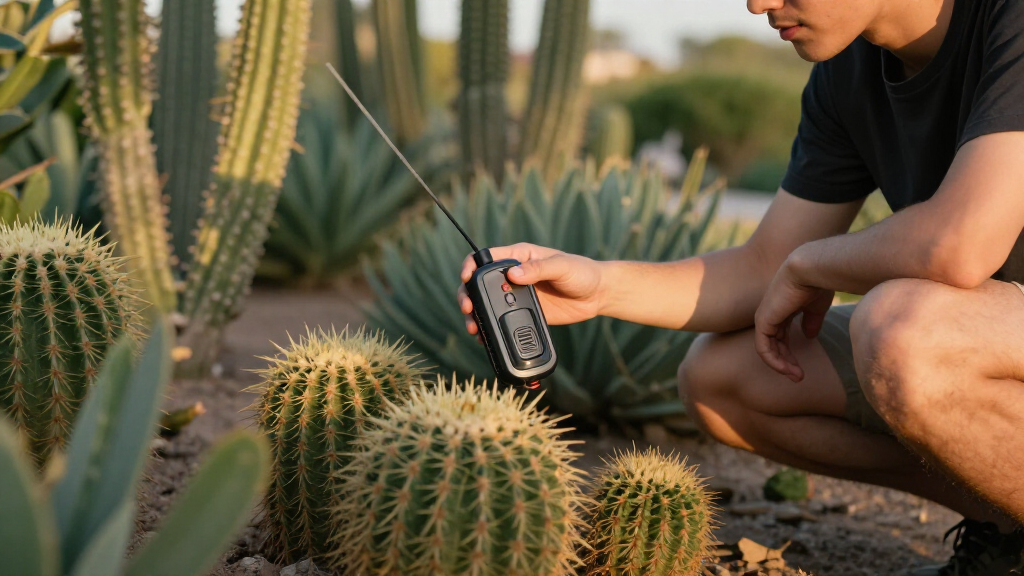
Ultrasonic pest repellers emit high-frequency sound waves—above the range of human hearing—that are supposed to irritate or disorient rodents. The idea is simple: the sound creates an uncomfortable environment, making rodents want to flee.
Most devices advertise a broad range of frequencies, often between 20 kHz and 65 kHz. They’re small, plug into outlets or run on batteries, and are marketed as a chemical- and trap-free solution.
For desert rodents, this sounds perfect. No poisons, no traps—just a device that keeps pests at bay without disturbing your native wildlife. Or so the pitch goes.
ultrasonic rodent repeller for desert rodents
As an affiliate, we earn on qualifying purchases.
As an affiliate, we earn on qualifying purchases.
Why Desert Rodents Might Not Be Scared of Ultrasound
Desert rodents have evolved in harsh, open environments where survival depends on adaptability. Their sensory systems are tuned differently from urban rodents.
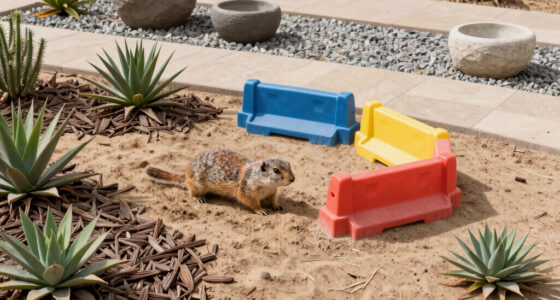
Unlike city rats, desert dwellers like kangaroo rats are highly alert and can filter out environmental noise. Their hearing is adapted to detect predators, not necessarily high-frequency sounds from gadgets.
Research shows that these animals often ignore or habituate quickly to ultrasonic sounds. If they don’t perceive a threat, they won’t bother fleeing—especially if the sound is only intermittent or low in volume.
For example, a Gardener AZ field test of ultrasonic devices in a desert garden found that after a few days, rodents continued their usual foraging patterns despite the noise.
desert rodent trap and exclusion kit
As an affiliate, we earn on qualifying purchases.
As an affiliate, we earn on qualifying purchases.
Does Scientific Research Say Ultrasonic Repellers Are Worth It?
Most recent studies suggest ultrasonic repellers are not a reliable way to control desert rodents. According to an anonymous researcher, “the evidence points to limited or no long-term impact.”
Field experiments with desert environments, which are open and vast, show that sound waves dissipate quickly and don’t create a lasting deterrent.
One study found rodents returned to the same areas within days, unaffected by the ultrasonic signals. In contrast, urban rodent control often only sees short-term results—hardly a win for desert settings.
Manufacturers have tried to improve devices with variable frequencies and motion sensors, but scientific validation remains scarce. Basically, the more they try to “tune” these gadgets, the less evidence there is that they work.
habitat modification tools for rodent control
As an affiliate, we earn on qualifying purchases.
As an affiliate, we earn on qualifying purchases.
Environmental Challenges Make Ultrasonic Repellers Less Effective in the Desert
The desert’s expansive, open terrain makes ultrasonic signals fade quickly. Unlike enclosed spaces, sound waves don’t bounce off walls—they just leak into the atmosphere.
This means a device placed near a burrow or garden might only affect a small, immediate area. Rodents can simply move out of range or hide in underground tunnels beyond the sound’s reach.
Plus, desert environments feature a lot of background noise—wind, distant animal calls, even the hum of solar panels—that can mask ultrasonic signals.
Consider a scenario: you set up a repeller near your cactus patch, but a kangaroo rat simply scurries into its burrow, out of the sound’s reach. The open landscape works against the device’s intended effect.
desert pest control physical barriers
As an affiliate, we earn on qualifying purchases.
As an affiliate, we earn on qualifying purchases.
Habituation and Adaptation: Why Ultrasonic Devices Fail Over Time
Even if ultrasonic repellers startle desert rodents, they rarely keep them away long-term. Rodents are quick learners. Once they realize there’s no real threat, they ignore the noise.
Habituation can happen within days or weeks, especially if the device emits sounds at a constant frequency. The rodents’ survival instincts tell them: ‘No danger here.’
For example, a homeowner in Arizona reported that after a week of using ultrasonic devices, the rodents kept returning to their yard, unbothered.
Some manufacturers claim their latest models change frequencies or activate randomly to prevent habituation, but these claims lack independent scientific backing.
Understanding this failure mode is crucial because it highlights a fundamental tradeoff: investing in devices that attempt to vary frequencies increases cost and complexity, yet the core issue remains—the animals learn to ignore the sound, rendering these efforts ineffective over time. This underscores that ultrasonic devices, no matter how advanced, face inherent limitations due to animal learning and environmental factors.
What Are Better Ways to Keep Desert Rodents Out of Your Garden?
Ultrasonic repellers might be a quick fix, but they rarely provide lasting control. Instead, focus on proven methods like physical barriers, habitat modification, and trapping.
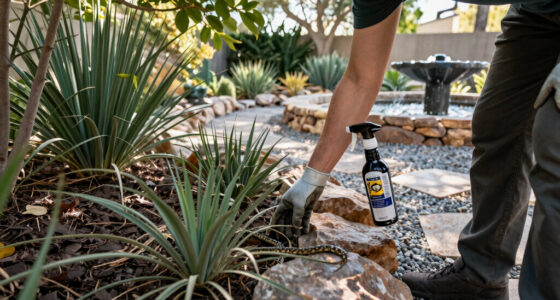
Physical exclusion: Use mesh fencing buried a few inches underground to block burrow entrances. This keeps rodents from sneaking in or returning.
Habitat management: Remove debris, dense brush, and excess ground cover where rodents hide and breed. Less cover means fewer safe spots for them.
Trapping: Live traps or snap traps placed near activity zones can control populations effectively if checked regularly.
For instance, a gardener in New Mexico reduced rodent activity by installing hardware cloth around vulnerable plants and clearing brush piles—no fancy gadgets needed.
While these methods require effort and ongoing maintenance, they address the root causes of infestation and offer a sustainable, long-term solution. They also help prevent future problems by reducing habitat suitability, which ultrasonic devices cannot do effectively due to their limited range and animal habituation.
Combining Strategies for Real Results
The best approach combines multiple methods—habitat modification, physical barriers, and trapping—rather than relying on a single gadget.
Think of it like a layered defense. Ultrasonic repellers can be part of the toolkit, but not the main weapon.
For example, install fencing, eliminate hiding spots, and set traps. In a desert garden, this integrated method drastically cuts down rodent problems more reliably than any ultrasonic device.
Remember: patience and consistency pay off. No quick fix beats a well-planned, multilayered approach.
Frequently Asked Questions
Do ultrasonic repellers actually work on desert rodents?
Most scientific studies show limited or no long-term success. Desert rodents tend to ignore or habituate to ultrasonic sounds, making them unreliable for lasting control.Are ultrasonic devices safe for pets and children?
Yes, ultrasonic sounds are generally inaudible to humans and most pets. However, some small animals or sensitive individuals might notice the high-frequency noise, so use caution.What methods work best to control desert rodents?
Physical barriers like fencing, habitat modification by clearing debris, and trapping are far more effective than ultrasonic repellers in desert settings.Can ultrasonic repellers be part of an integrated pest management plan?
Yes, but they should supplement, not replace, physical exclusion, habitat cleanup, and trapping strategies for reliable results.Are there new technologies for desert rodent control?
Research continues into humane, eco-friendly options, but as of 2023, no revolutionary new technology has proven superior to traditional methods for desert pests.Conclusion
Ultrasonic repellers aren’t the desert’s pest control miracle. Their effectiveness is fleeting at best, thanks to the cleverness and resilience of desert rodents. Focus on physical exclusion, habitat management, and trapping—these methods have proven themselves over time.
Picture your garden, free of sneaky critters, with a sturdy fence and clear ground. That’s a real, lasting solution. Don’t rely on a gadget to do what nature, patience, and good habits can accomplish.
Halloween Picks
halloween
As an affiliate, we earn on qualifying purchases.