
TL;DR

Get garden gear delivered free with Prime
- Fast, free delivery on millions of items
- Prime Video, Amazon Music and more included
- Member-only deals all year
Removing pack rat nests beneath cacti safely involves wet cleaning, habitat modification, and targeted trapping. Poison and harsh chemicals pose risks to pets, wildlife, and your plants. Prevention and exclusion are the best long-term strategies.
If you’ve spotted a bulky, messy nest beneath your cactus, you’re not alone. These pack rat middens often hide in plain sight, tucked beneath the spines and pads, quietly building up trash, bones, and plant bits. The good news? You don’t need poison to clear them out—just some patience and the right approach.
Understanding how to handle these nests safely can save your plants, protect your family, and keep your desert landscape healthy. In this guide, you’ll learn how to identify active middens, clean them without risking dust exposure, and prevent future visits—all without toxic chemicals.
Always verify if a midden is active before removal—look for fresh droppings, recent plant clipping, or footprints.
Use wet disinfectant and long-handled tools to clean out nests safely—avoid dry sweeping or vacuuming dust that can carry disease.
Protect your cactus with gentle, tool-assisted removal and support for fragile stems—don’t yank or force debris away.
Eliminate attractants like fallen fruit, birdseed, and clutter—habitat modification is key to preventing future nests.
Opt for humane traps and exclusion methods over poison—targeted, non-lethal control protects wildlife and pets and reduces secondary poisoning risks.
Pack Rat Middens in Your Cactus: Clearing Nests Without Poison
A bulky nest beneath prickly pear, cholla, agave, or yucca needs more than a quick pull. Verify activity, control contaminated dust, protect fragile stems, and remove the shelter conditions that invite rebuilding.
Is the midden active, abandoned, or shared?
Inspect quietly from a safe distance around dusk or dawn. A motion-activated camera can confirm repeated nighttime use without forcing you close to the cactus.
Fresh droppings
Dark, recent waste near a maintained entrance suggests current activity. Do not touch or stir it.
Green clippings
Newly cut cactus or plant fragments indicate recent gathering rather than an old debris pile.
Fresh tracks
Small footprints, clear travel lanes, or repeated entry captured on camera confirm use.
Maintained entrance
A clear tunnel through otherwise tangled material often means the shelter is being kept open.
Recent food remains
Fresh seeds, fruit, chewed vegetation, or newly moved objects can reveal an active pantry.
Young or other wildlife
Pause if dependent young or a protected animal may be present. Check local wildlife rules.
Control the dust, then remove the midden in small sections.
Suit up
Keep children and pets away. Wear disposable gloves, long sleeves, closed footwear, eye protection, and a well-fitting N95.
Wet thoroughly
Do not disturb dry material. Saturate droppings and debris with a suitable ready-to-use surface disinfectant.
Lift gently
After the stated contact time, use long-handled tongs, a grabber, or a rake. Work from the clearest side.
Seal and clean
Double-bag waste, wet-clean tools and hard surfaces, remove gloves carefully, and wash hands with soap and water.
Do not sweep, vacuum, blow, pressure-wash, or burn dry nesting material. These methods can aerosolize contaminated dust, spread smoke, or ignite dry landscaping. Never mix bleach with ammonia, acids, or other cleaners.
The cactus is not a handle.
Pack rats weave material around pads, stems, roots, and irrigation tubing. Pulling the mass in one piece can tear pads or uproot the plant. Support unstable growth, loosen one small area at a time, and inspect for damage after cleanup.
Approach from open ground
Choose the clearest route instead of reaching through spines or leaning over the plant.
Support fragile stems
Brace unstable sections with a sturdy object before easing woven sticks away.
Use tools, not hands
Long handles increase distance from contaminated debris and easily detached cholla spines.
Inspect after removal
Check pads, roots, irrigation lines, and nearby wiring; clean tools before using them elsewhere.
Choose targeted control over broad harm.
Simply removing the nest rarely solves the problem. Combine sanitation, exclusion, habitat changes, and carefully placed mechanical traps when necessary.
| Method | Recommended role | Pet and wildlife risk | Long-term value | Important limitation |
|---|---|---|---|---|
| Habitat modification | ✓ First line | ✓ Low | ✓ High | Requires consistent yard maintenance. |
| Metal exclusion | ✓ Core strategy | ✓ Low | ✓ High | Never seal an animal or young inside. |
| Enclosed snap trap | ~ Targeted use | ~ Controlled | ~ Medium | Protect the station and check it daily. |
| Live trap and relocation | ~ Check local law | ~ Variable | ✗ Low | Relocation can cause stress, predation, or death. |
| Rodenticide | ✗ Avoid | ✗ High | ✗ Low | Can poison pets, predators, and scavengers. |
| Ultrasonic or scent repellent | ✗ Unreliable | ~ Variable | ✗ Low | Animals often adapt or ignore the signal. |
Make rebuilding harder than moving on.
Integrated pest management starts with the conditions you control. Remove food, water, clutter, and access before relying on traps. Durable metal barriers outperform chewable foam or plastic.
One decision supports the next.
Safe removal, summarized.
Local public-health and wildlife rules take priority. If conditions exceed what you can safely control, use a qualified wildlife-control or hazardous-cleanup professional.
Inspect at dusk or dawn and verify whether the midden is active.
Keep people and pets away; wear appropriate protective equipment.
Wet debris thoroughly and respect the disinfectant contact time.
Lift small sections with long-handled tools and double-bag waste.
Protect stems, pads, roots, irrigation lines, and nearby wiring.
Prevent return through sanitation, metal exclusion, and monitoring.
How to Spot an Active Pack Rat Midden in Your Cactus
Wondering if that bulky pile is still in use? Active middens show signs like fresh droppings, green plant clippings, recent sticks, or a trail of footprints. Nighttime activity, captured with a motion-activated camera, confirms current use.
Recognizing these signs is crucial because disturbing an active midden can harm dependent young or protected wildlife. For example, a homeowner in Arizona noticed new green fragments in her prickly pear’s base. A quick check at dusk revealed tiny paw prints and fresh droppings—a sure sign the midden was active. This knowledge allows you to plan your cleanup during safe times, minimizing disturbance to the animals that rely on these structures for shelter and survival. Understanding activity patterns also helps you gauge how persistent the problem might be, informing whether more extensive exclusion measures are necessary.
As an affiliate, we earn on qualifying purchases.
Step-by-Step: Safely Cleaning a Pack Rat Midden Without Poison
- Don disposable gloves, long sleeves, eye protection, and a respirator like an N95 mask to prevent inhaling dust or pathogens.
- Thoroughly spray droppings and nest debris with a disinfectant labeled for use on surfaces. Wait about five minutes to allow it to deactivate pathogens and loosen debris.
- Gently lift the wet material with long-handled tools—tongs, a rake, or a grabber—being careful to avoid disturbing fragile parts of the nest or cactus roots.
- Drop everything into sturdy, double-bagged trash bags. Seal tightly to prevent odor escape and reduce the risk of disease transmission.
- Wipe down tools and nearby surfaces with disinfectant after use to prevent cross-contamination.
- Carefully remove your gloves, wash your hands thoroughly, and dispose of the waste responsibly in accordance with local regulations.
This wet cleaning approach is essential because it minimizes dust and pathogen dispersal, which are common concerns with dry sweeping or vacuuming. It also prevents the spread of zoonotic diseases like hantavirus, which can be transmitted through dried droppings and contaminated dust. Using long-handled tools keeps you at a safe distance from spines and debris, reducing injury risk. Remember, patience and caution protect both you and the wildlife involved, ensuring a humane and effective cleanup process.
As an affiliate, we earn on qualifying purchases.
How to Protect Your Cactus During Midden Removal
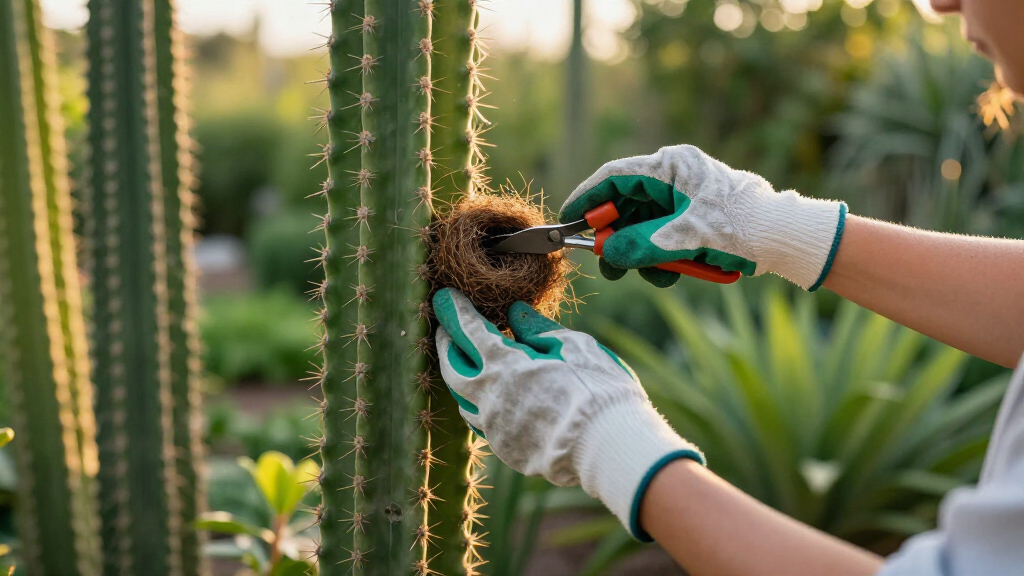
Removing debris around a cactus isn’t just about cleaning—it’s about safeguarding your plant’s health. Approach from the clearest side, avoiding spines, and use tools instead of hands. Support unstable cactus parts with a stick or a sturdy object before pulling away debris.
For example, a gardener gently pried loose sticks woven around a cholla with a long-handled grabber, supporting the cactus stem with her free hand. After cleanup, she inspected irrigation lines for damage and disinfected her pruning tools.
Remember: forceful removal can rip pads or uproot the plant. Small, careful sections are best. The more delicate your approach, the less likely you are to cause damage that could lead to infection or structural weakness, which can compromise the cactus’s resilience. Using gentle, tool-assisted techniques preserves the plant’s natural defenses and reduces recovery time after disturbance, ensuring your cactus remains healthy and vigorous.
wet disinfectant spray for garden cleaning
As an affiliate, we earn on qualifying purchases.
As an affiliate, we earn on qualifying purchases.
Long-Term Habits to Keep Pack Rats Out of Your Cactus Area
Prevention beats cleanup. Make your yard less inviting by removing clutter—fallen branches, old pots, cardboard, and wood piles. Store firewood off the ground and away from the cactus to cut down shelter options.
Pick up fallen fruit, birdseed, pet food, and compost that can attract these rodents. Fix leaks and eliminate standing water, which provides hydration for thirsty pack rats.
Seal all gaps in sheds, garages, and utility spaces with durable metal materials. Use fine hardware cloth to cover small openings—metal flashing works better than foam or plastic that rats can chew through. These exclusion strategies directly impact the rats’ ability to find shelter and resources, making your yard less attractive and reducing the likelihood of new middens forming. Consistent habitat modification is a key investment in long-term control, ultimately decreasing the need for repeated cleanup and disturbance.
long-handled gardening tools for nest removal
As an affiliate, we earn on qualifying purchases.
As an affiliate, we earn on qualifying purchases.
Humane, Poison-Free Ways to Keep Pack Rats Away
Poison and glue traps aren’t your only options. Enclosed snap traps placed along known travel routes are more humane and targeted. Set them in protected stations, out of reach of children and pets, and check daily.
For instance, a gardener set snap traps inside a metal box near a cactus. She baited them with sunflower seeds and checked them every morning. No poison, no risk to wildlife, just a quick, clean catch. This method minimizes suffering and prevents unintended harm to non-target animals, making it a more ethical choice. Live traps are an option but tricky—many animals die from stress or predation after relocation, and some jurisdictions prohibit trapping and relocating wildlife altogether. Ultrasonic repellents, predator urine, mothballs, and flashing lights are unreliable because animals quickly adapt or ignore these signals, reducing their long-term effectiveness and potentially wasting your resources. Prioritizing humane, non-lethal methods aligns with ethical wildlife management and ensures your control efforts are sustainable and responsible.
Emerging Best Practices in Managing Pack Rats Without Harm
Integrated pest management (IPM) is the way forward. It combines habitat modification, exclusion, sanitation, and mechanical traps before considering pesticides. This approach reduces secondary poisoning risks to predators like owls and coyotes, which play vital roles in controlling rodent populations naturally.
Newer, wildlife-friendly exclusion products such as fine mesh barriers and enclosed traps are becoming popular because they physically prevent rats from entering nesting sites without harming them. Public-health guidelines now emphasize wet disinfection over sweeping or vacuuming contaminated areas dry, to prevent dust inhalation and disease spread. Adopting these practices not only ensures more humane control but also aligns with ecological conservation efforts. Always check local laws before trapping or relocating animals, as regulations vary widely; consulting a professional wildlife control expert can help you develop a tailored, effective plan that minimizes ecological disruption while protecting your property.
Frequently Asked Questions
Is the pack rat living inside the cactus itself?
Usually not. Pack rats tend to nest beneath or among cactus stems rather than inside living tissue. The thorny structure offers a natural defense, making the nest more likely to be beneath the pads or in the root zone.How can I tell if the midden is still active?
Look for recent droppings, fresh green plant bits, new sticks, visible entrances, or tracks. Using a motion-activated camera at night can help confirm activity without disturbing the site.Can I remove an active midden right away?
You can, but it’s best to check for young animals or other wildlife first. If the nest is near structures or presents a fire hazard, consulting a wildlife professional is wise. Avoid disturbing dependent young or protected species.Will removing the midden make the pack rat leave?
Not necessarily. If the site still offers shelter, food, and water, the rat may rebuild nearby or return to the same cactus. Long-term prevention depends on habitat modification and exclusion, not just removal.Can pack rat droppings transmit hantavirus?
Yes, they can carry hantavirus and other diseases. Always handle droppings with wet disinfectant, never dry sweep or vacuum, and wear protective gear to reduce exposure risk.Conclusion
Managing pack rat middens beneath your cactus doesn’t have to involve poisons or harmful chemicals. The real secret is a combination of gentle cleanup, habitat modification, and smart exclusion. These steps protect your plants, your family, and the desert’s natural balance.
Next time you spot a midden, remember: patience and prevention are your best tools. Think of your yard as a delicate puzzle—every piece, from your cactus to your trash, plays a role in wildlife management. Keep it safe, keep it clean, and let nature thrive—without the risk of poisons.
Halloween Picks
halloween
As an affiliate, we earn on qualifying purchases.