TL;DR

Get garden gear delivered free with Prime
- Fast, free delivery on millions of items
- Prime Video, Amazon Music and more included
- Member-only deals all year
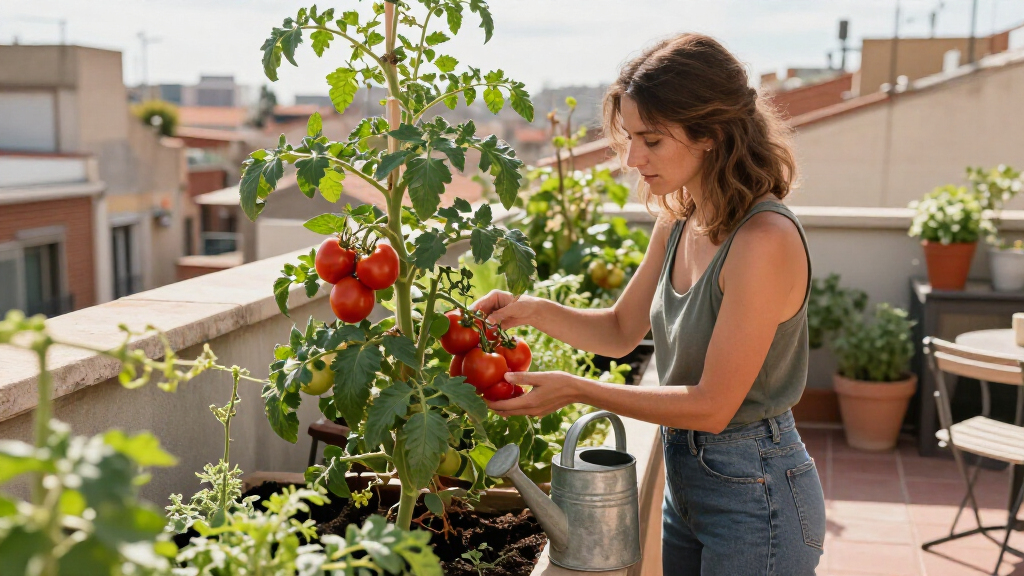
Research indicates that Barcelona’s municipal rooftops have the potential to produce nearly a third of the city’s tomato consumption. This development underscores urban farming’s role in local food sustainability, though further feasibility studies are pending.
A recent study by the Autonomous University of Barcelona estimates that municipal rooftops in Barcelona could produce up to 31% of the tomatoes consumed within the city. This finding highlights the potential for urban agriculture to contribute significantly to local food supply, though the practical implementation is still under evaluation.
The study analyzed the available rooftop space across Barcelona’s municipal buildings and identified the potential for cultivating tomatoes, a staple in the local diet. According to the researchers, if fully utilized, these rooftops could meet nearly a third of the city’s tomato demand, reducing reliance on external supply chains.
While the exact number of rooftops suitable for cultivation remains under assessment, the study emphasizes that implementing urban farming on this scale could support sustainability goals and decrease the city’s carbon footprint associated with food transportation. The research was conducted in collaboration with city planners and local agricultural experts, aiming to explore the feasibility of large-scale rooftop farming.
City officials have expressed interest in further exploring this potential, but detailed plans, costs, and logistical challenges are still being evaluated. The findings are preliminary, and the study notes that actual production levels depend on factors such as infrastructure, soil quality, water access, and maintenance capabilities.
Potential Impact on Urban Food Security and Sustainability
This study underscores the possibility of transforming urban rooftops into productive agricultural spaces, which could significantly enhance local food security in Barcelona. By producing a substantial portion of its tomatoes locally, the city could reduce dependence on imports, lower transportation emissions, and promote sustainable urban living.
Furthermore, integrating rooftop farming aligns with broader initiatives to promote green infrastructure and sustainable city development, potentially inspiring other urban centers to explore similar approaches. The project could also create new opportunities for community engagement and local employment in urban agriculture.
However, the practical implementation faces challenges, including structural modifications to buildings, water management, pest control, and ensuring that rooftop spaces are suitable for intensive cultivation. The extent of these barriers and the timeline for potential deployment remain uncertain.
Popular right now

Dyson Ball Animal 2 Plus Corded Vacuum

Vitamix Propel Series 750 Professional-Grade Blender, 4 Programs, Black

iRobot Roomba Max 715 Pet Robot Vacuum with AutoEmpty Dock
As an affiliate, we earn on qualifying purchases.
Urban Agriculture Trends and Barcelona’s Sustainability Goals
Urban agriculture has gained increasing attention worldwide as cities seek sustainable solutions to food production and climate change mitigation. Barcelona has been active in promoting green initiatives, including rooftop gardens, green roofs, and urban farming projects, as part of its climate action plan.
The city’s climate policies aim to reduce greenhouse gas emissions and promote local food production, aligning with broader European sustainability targets. The recent study builds on this momentum, exploring how existing urban spaces can be repurposed for food cultivation.
Historically, rooftop farming has been implemented on a smaller scale in Barcelona and other European cities, primarily for community gardens or experimental projects. The new research indicates a potential for scaling this approach significantly, especially for crops like tomatoes that are widely consumed and adaptable to container gardening.
While the idea is promising, it remains in the early stages, with many technical, economic, and regulatory questions yet to be addressed.
Feasibility and Implementation Challenges of Rooftop Tomato Farming
While the study presents an optimistic potential, it is not yet clear how feasible large-scale rooftop tomato cultivation truly is. Key uncertainties include the structural capacity of buildings to support farming infrastructure, availability of water, soil quality, pest management, and ongoing maintenance costs. The actual yield and economic viability remain unconfirmed, and detailed pilot projects are needed to validate these projections.
Next Steps in Research and Pilot Projects for Urban Agriculture
The researchers plan to conduct pilot projects on selected rooftops to assess practical challenges and refine cultivation techniques. City officials are expected to evaluate the feasibility, costs, and regulatory adjustments needed to support broader implementation. Further studies will also explore other crops and diversified urban farming models, aiming to develop scalable solutions within the next 1-2 years.
Key Questions
How much rooftop space in Barcelona is available for farming?
The study analyzed the rooftops of municipal buildings, but the exact available space for farming remains under assessment. Preliminary estimates suggest a significant portion could be suitable, but detailed mapping is ongoing.
What are the main challenges to implementing rooftop tomato farms?
Challenges include structural capacity of buildings, access to water, soil or growth medium quality, pest control, and ongoing maintenance. These factors need further investigation through pilot projects.
Could this project reduce Barcelona’s dependence on imported tomatoes?
If successfully implemented, the project could supply up to 31% of the city’s tomato consumption, potentially decreasing reliance on external sources and reducing transportation emissions.
When might rooftop tomato farming become a reality in Barcelona?
It is still in the early planning and testing phase. Pilot projects are expected to start within the next year, with broader implementation possibly within 2-3 years if challenges are addressed.
Are other crops being considered for rooftop farming in Barcelona?
While tomatoes are the focus of this study, urban farming initiatives often include herbs, leafy greens, and other vegetables. Further research will determine the viability of diversifying crop production.
Source: local