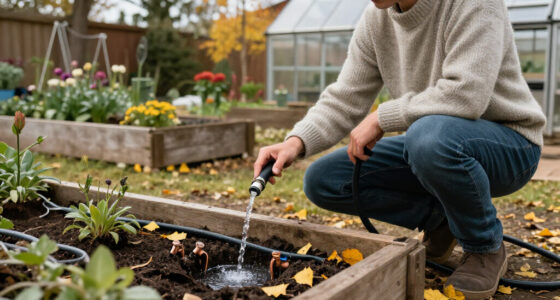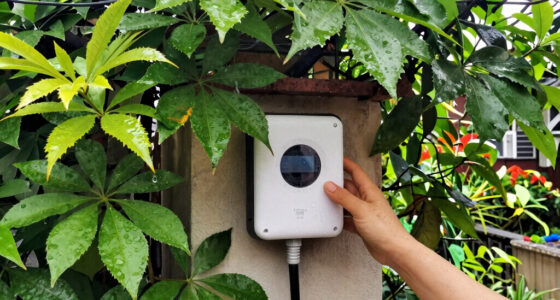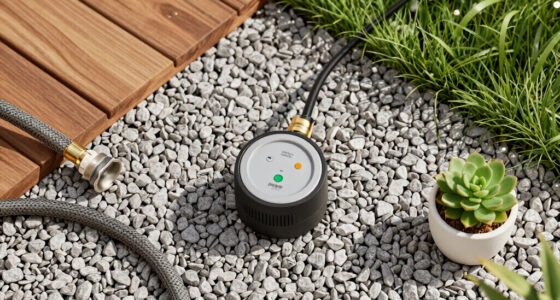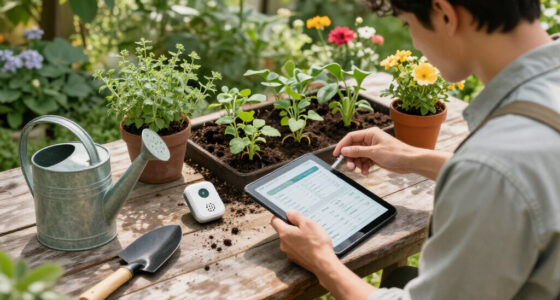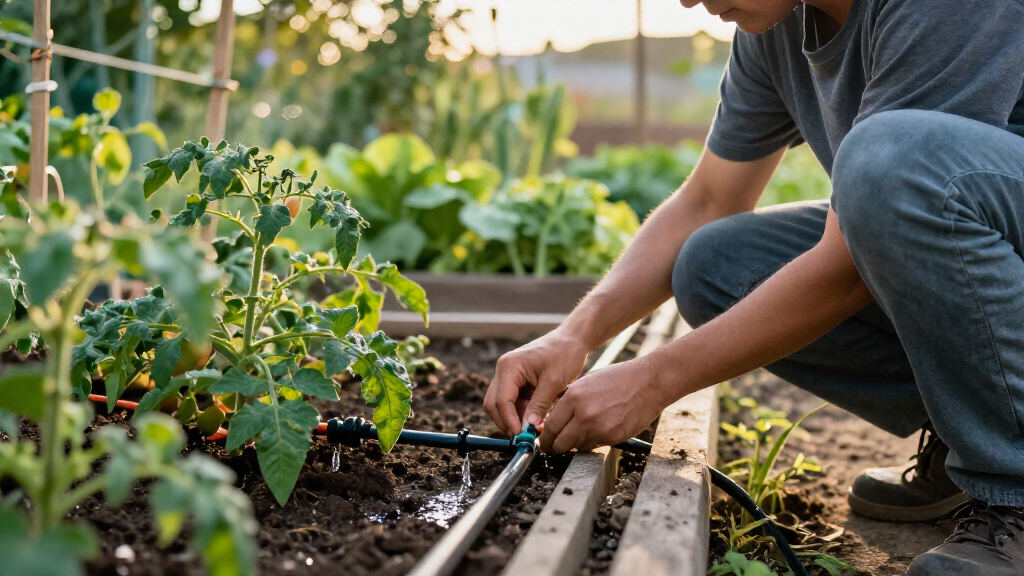

Gardeners comparing water-efficient drip irrigation systems often face a choice between soaker hoses and dripline: both apply water near plant roots, but they differ in control, setup, and how easily they adapt to a garden. Soaker hoses are porous tubes that release water along their length; dripline uses tubing with individual emitters or built-in outlets. That makes soaker hoses a straightforward fit for compact, evenly planted beds, while dripline is usually the stronger choice for mixed plantings, longer runs, and gardens where precise watering matters. The better value depends on whether you need simple coverage or adjustable delivery.

Get garden gear delivered free with Prime
- Fast, free delivery on millions of items
- Prime Video, Amazon Music and more included
- Member-only deals all year

MIXC 230FT Quick-Connect Drip Irrigation System Kit
- ✔ Tubing: 33 ft of 1/2-inch mainline and 197 ft of 1/4-inch tubing
- ✔ Stated emitter capacity: Up to 32 drip emitters
- ✔ Emitter styles: Three adjustable irrigation modes
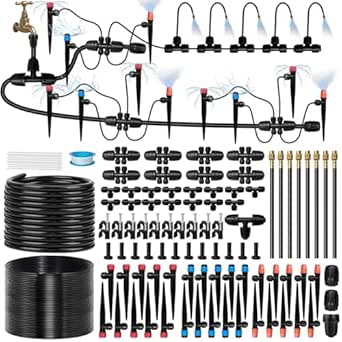
230FT Drip Irrigation System for Garden with 38 Adjustable Copper Nozzles & Emitters
- ✔ Tubing: 33 ft of 1/2-inch mainline and 197 ft of 1/4-inch tubing
- ✔ Nozzles and emitters: 38 total: 8 copper nozzles and 30 adjustable emitters
- ✔ Emitter types: Vortex, stream, misting, and bendable directional spray

Drip Irrigation System Kit for Garden Watering, Sprinkler, 100 ft
- ✔ Tubing: 50 ft of 5/16-inch mainline and 50 ft of 1/4-inch distribution tubing
- ✔ Emitters: 30 adjustable stream and vortex emitters
- ✔ Stated coverage: Up to three raised garden beds
At a Glance
| Criteria | Soaker hoses | Dripline irrigation systems | Winner |
|---|---|---|---|
| Water placement and control | Water seeps along the hose; output is difficult to adjust by plant. | Emitters release water at set points; spacing and flow can be selected for the planting. | B |
| Water efficiency | Can reduce evaporation by watering at soil level, but flow may vary along the hose. | Direct delivery near roots limits overspray; emitter flow can be matched to plant needs. | B |
| Setup and flexibility | Easy to lay in straight beds; less adaptable around irregular plant spacing. | Tubing, fittings, and emitters support branching and irregular layouts. | Depends |
| Performance across long runs | Pressure and seepage can vary, especially on long runs or uneven ground. | Pressure regulation and suitable tubing help maintain more consistent delivery. | B |
| Maintenance and clog risk | Usually simple, though mineral deposits and sediment can restrict pores. | Filters and periodic flushing help prevent emitter blockages; more parts need inspection. | A |
| Upfront cost and value | Generally lower cost and fewer components for a small, simple bed. | Higher initial cost, with greater control and easier expansion for complex gardens. | Depends |
MIXC 230FT Quick-Connect Drip Irrigation System Kit
The MIXC 230FT kit earns our top position because its layout combines a substantial 1/2-inch mainline with nearly six times as much 1/4-inch distribution tubing, plus three adjustable emitter styles. That combination gives us room to bring water close to plants while tailoring delivery for different spots. The stated capacity of up to 32 drip emitters also gives a useful planning limit for a garden with several beds or container groups.Compared with the Carpathen kit, MIXC is designed around a longer, branched layout and quick-connect fittings, rather than a compact 100-foot arrangement using a 5/16-inch mainline. The copper-nozzle competitor adds bendable directional sprays and explicitly describes a tee for two independent zones. MIXC instead stands out for its stated mix of microdroplet, spray, and watering modes and its broad set of components. Those modes can help match different plants, but the spray options need careful aiming if the goal is to avoid wetting paths or foliage. The listing also calls the control type automatic while describing a water-pressure-driven setup; it does not identify a timer. We would treat unattended scheduling as a separate requirement to verify.The quick connectors are intended to make assembly easier without heating, gluing, or special tools. That is helpful when routing lines around beds, though every junction adds a potential place to inspect if a connection loosens or leaks. The claimed short setup time should not replace measuring the actual route and testing the system before relying on it. For a versatile garden layout, MIXC offers the strongest balance in this group; buyers with a small, straightforward bed may not need its full length or component range.
Pros:
- Includes 33 feet of 1/2-inch mainline and 197 feet of 1/4-inch tubing for flexible routing.
- Three adjustable emitter types support different watering patterns across a mixed garden.
- Quick-connector design is intended to simplify assembly and repositioning.
- The listing states a capacity of up to 32 drip emitters.
Cons:
- The listing does not clearly establish that a timer or other scheduling control is included.
- Spray and mist modes require careful aiming to keep water focused where it is needed.
- The stated maximum pressure is unusually high and should be verified before system design.
Best for: Gardeners connecting several beds, greenhouse rows, or container areas who want multiple adjustable watering styles and a long branched layout.
Not ideal for: Buyers with one small bed, or anyone who needs a documented timer, filter, pressure regulator, or verified high-pressure operating limit included.
Bottom line: Choose MIXC for the most balanced combination of long tubing, quick connections, and adjustable watering options, provided you verify the pressure and scheduling details for your setup.
“Choose MIXC for the most balanced combination of long tubing, quick connections, and adjustable watering options, provided you verify the pressure and scheduling details for your setup.”
230FT Drip Irrigation System for Garden with 38 Adjustable Copper Nozzles & Emitters
This 230-foot system is the strongest fit for gardeners who need a longer reach and a way to direct water across different kinds of planting. Its listed contents include 33 feet of 1/2-inch mainline, 197 feet of 1/4-inch tubing, three plastic emitter styles, and eight bendable copper nozzles. The copper nozzles can be adjusted in different directions, which may help cover plant positions that do not line up neatly along a drip tube.Its most distinctive feature relative to MIXC is the 1/2-inch tee for two independent zones. Separate branches can make it easier to give different areas their own watering arrangement, such as a greenhouse section and an outdoor bed. The listing says the zones allow customized watering schedules, but does not name a timer or explain how the schedules are controlled. We would therefore see the tee as a routing feature, not proof of automatic scheduling. Compared with Carpathen, this kit provides much more tubing and a wider variety of nozzles, but that extra reach is only useful if the garden layout justifies the extra branches and connections.For water efficiency, the key advantage remains the ability to place emitters close to roots and adjust spray direction. However, mist and spray can disperse water beyond the root zone, especially in wind or when aimed too broadly. The product description does not give a stated emitter-capacity limit or operating-pressure range, making system planning less certain than with Carpathen’s stated pressure range and emitter count. We would choose this kit when directional coverage and separate branches matter more than a clearly documented operating specification.
Pros:
- Provides 230 feet of tubing split between 1/2-inch mainline and 1/4-inch distribution line.
- Includes eight bendable copper nozzles for directing spray toward specific plants.
- The 1/2-inch tee supports two separate branches or watering zones.
- Three additional emitter types cover drip, stream, and misting patterns.
Cons:
- The supplied description does not state a clear maximum emitter count or operating-pressure range.
- It does not identify a timer despite referring to customized watering schedules.
- Spray and mist nozzles can be less targeted than drip emitters when conditions are windy.
Best for: Gardeners with larger or mixed layouts who want long distribution runs, adjustable spray direction, and a tee to split the line into two areas.
Not ideal for: Small garden owners who would leave most of the tubing unused, or buyers who need a clearly specified pressure range, emitter limit, or included timer.
Bottom line: Pick this kit when a large or irregular garden benefits from directional nozzles and two branches, after confirming pressure and scheduling needs.
“Pick this kit when a large or irregular garden benefits from directional nozzles and two branches, after confirming pressure and scheduling needs.”
Drip Irrigation System Kit for Garden Watering, Sprinkler, 100 ft
Carpathen takes the compact-garden role with 100 feet of tubing, 30 adjustable emitters, and a layout the listing frames for up to three raised beds. Its 50-foot 5/16-inch mainline and 50-foot 1/4-inch distribution tube form a simpler starting point than either 230-foot kit. For a few beds or a modest cluster of containers, that shorter reach can make it easier to plan a direct route and avoid managing a large surplus of tubing.The kit also gives buyers a more clearly stated operating window than the two longer systems: 20–45 PSI, with emitters described as adjustable by turning their caps. Its stream and vortex emitters, multiple splitters, and detachable heads provide some flexibility while keeping the system centered on barbed connections. By comparison, MIXC offers far more tubing and quick-connect fittings, while the copper-nozzle kit adds directional metal sprays and a two-zone tee. Carpathen is the more focused option when a small garden does not need those extra branches or nozzles.That focus is also its limit. The listed output of up to 40 gallons per hour per emitter is a maximum, not a water-saving target; using many emitters at high output may undermine the goal of conserving water. We would adjust each head to the plant and soil, check the actual flow, and consider a timer or pressure regulator if the supply needs one. Although the listing describes the tubing as UV resistant and the emitter heads as easy to clean, it does not provide independent durability evidence. For a first system in a compact garden, the shorter layout and stated pressure range are practical advantages; for a large or irregular site, MIXC or the 230-foot kit has more reach.
Pros:
- The 100-foot layout is sized for a smaller garden and is less extensive than the two 230-foot kits.
- Includes 30 adjustable emitters and several splitter styles for branching lines.
- Lists a 20–45 PSI operating range and detachable emitter heads for cleaning.
- The description states that the tubing is UV resistant and suitable for above- or below-ground installation.
Cons:
- Shorter tubing limits coverage compared with the two 230-foot systems.
- Barbed fittings may take more effort to rearrange than the quick-connect approach used by MIXC.
- The stated maximum emitter output is high, so careful adjustment is needed to avoid excessive watering.
Best for: New drip-system owners watering a few raised beds, small garden plots, or nearby pots who want a manageable layout with adjustable emitters.
Not ideal for: Gardeners routing water over a large area, or anyone who needs quick-connect fittings, two distinct zones, or more than 100 feet of tubing.
Bottom line: Choose Carpathen for a compact raised-bed layout with adjustable emitters and a specified pressure range; move to a longer kit when the garden needs broader reach or separate branches.
“Choose Carpathen for a compact raised-bed layout with adjustable emitters and a specified pressure range; move to a longer kit when the garden needs broader reach or separate branches.”
As an Amazon Associate we earn from qualifying purchases.
Key Differences
The central difference is control. A soaker hose releases water across its porous surface, making it useful when plants form a continuous row or groundcover. Dripline targets particular points, so gardeners can choose emitter spacing and flow to match the crop layout. This is a moderate-to-major practical advantage for dripline in mixed beds, containers, and longer irrigation zones; it matters less in a short, uniform vegetable row.
Both systems can conserve water compared with sprinklers by keeping delivery close to the soil and reducing wet foliage and airborne spray. Dripline has the edge when a system is designed with appropriate emitters and pressure, since its output is more deliberate. Soaker hoses cost less and take less planning, but their output can vary with pressure, run length, slope, hose age, and water quality. The most useful choice is the one that matches the bed and can be checked for even moisture.
Setup and upkeep pull in opposite directions. A soaker hose is easy to position and connect, but fixed, porous coverage can be awkward around widely spaced plants or separate beds. Dripline takes more components and careful layout, and its small outlets can clog without filtration and flushing. For a small, simple garden, the soaker hose often gives better value. For a larger or varied garden where targeted watering can prevent waste, dripline’s added cost can pay off through better control.
Detailed Comparison
Water placement and control (Dripline irrigation systems wins — moderate)
Soaker hoses wet soil along the hose, which suits continuous rows but offers limited control over how much water each plant receives. Dripline places outlets at set intervals and can use emitters with different flow rates. Dripline wins by a moderate margin for mixed plantings; its targeted delivery makes it easier to serve plants with different spacing or water needs.
Water efficiency (Dripline irrigation systems wins — moderate)
Both can reduce losses from wind and evaporation compared with overhead sprinklers because they water near the soil. Dripline wins by a moderate margin when emitters are selected and installed well: delivery is more targeted and easier to tune. A soaker hose can still be an efficient, low-cost choice in a compact bed, but inconsistent seepage may leave some areas too wet and others too dry.
Setup and flexibility (moderate difference)
Soaker hoses are quick to lay along a straight bed and need few fittings. Dripline requires more planning but can branch around distinct rows, beds, and plants. The winner depends on the garden: A is easier for a simple, regular bed, while B fits irregular layouts and future changes better. The difference is moderate once a system has more than one watering zone.
Performance across long runs (Dripline irrigation systems wins — moderate)
Soaker-hose seepage can weaken or vary along a long run, with slopes and water pressure affecting delivery. Dripline systems can use pressure regulation and suitable tubing to keep output more consistent. B wins by a moderate margin for larger areas, though correct design still matters: long zones may need to be divided to maintain even watering.
Maintenance and clog risk (Soaker hoses wins — minor)
Soaker hoses have no individual emitter openings to inspect, so routine care is simple, though pores can clog with sediment or mineral deposits. Dripline has more small outlets and fittings that can block or leak; filtration and occasional flushing help keep it working. A wins by a minor margin for ease of upkeep. Neither system is maintenance-free, especially with hard or dirty water.
Upfront cost and value (moderate difference)
Soaker hoses generally cost less and need fewer fittings, making them good value for a short, uncomplicated bed. Dripline costs more to set up, but its configurable delivery can justify the extra spending across a large or varied garden. A wins for basic coverage; B wins when precise control or expansion would otherwise require replacing or rearranging hoses.
Soaker hoses: Pros and Cons
Pros:
- Low upfront cost and few components
- Fast to install in a straight, densely planted bed
- Simple to move or store between seasons
Cons:
- Limited control over delivery to individual plants
- Output may vary along long runs or on slopes
- Porous material can clog or wear over time
Dripline irrigation systems: Pros and Cons
Pros:
- Emitter placement and flow can suit varied plant spacing
- More adaptable to branching beds and multiple zones
- Can deliver more consistent output when correctly designed
Cons:
- Higher initial cost and more setup work
- Small emitters may clog without filtration and flushing
- More fittings create additional points to inspect for leaks
Who Should Choose What
Choose Soaker hoses if:
- You water a short, straight bed with plants spaced fairly evenly.
- You want an inexpensive system that is quick to install and easy to reposition.
- You prefer fewer parts and can check soil moisture to catch uneven coverage.
Choose Dripline irrigation systems if:
- Your garden has mixed plant spacing, separate beds, or plants with different water needs.
- You need a system that can expand into branches or multiple zones.
- You are willing to install a filter and check emitters in exchange for more precise delivery.
Skip both if: Neither fits well if you need mobile watering, want to irrigate turf, or cannot provide compatible pressure and a dependable water supply; compare sprinklers or hand watering for the specific site.
Value for Money
Paying more for dripline is worthwhile when emitter placement and adjustable flow solve a real problem, such as watering a mixed bed or extending coverage across several zones. That control can reduce oversupply in some spots and make watering easier to tailor. For one small, evenly planted bed, the extra fittings and planning may add little practical value; a soaker hose is usually the better buy. Compare the full setup, including a pressure regulator, filter, and connectors, rather than tubing prices alone.
Final Verdict
Choose a soaker hose for an uncomplicated, evenly planted bed where low cost and easy setup matter most. Choose dripline for a larger or varied garden where measured delivery, branching layouts, and adjustment by plant are worth the higher purchase and maintenance effort. The deciding factor is control: if the same watering suits every plant along the bed, save money with a soaker hose; if spacing or water needs differ, dripline is the stronger long-term choice.
Frequently Asked Questions
Which system uses less water?
Either can use less water than overhead sprinklers when installed and scheduled well. Dripline often has an advantage because outlets target specific plants and their flow can be selected to suit the layout. Soil, pressure, run length, and watering duration still determine actual use.
Can I connect a soaker hose or dripline directly to a faucet?
Many setups need a pressure regulator, and dripline commonly benefits from a filter. Check the product’s pressure range and the water source before connecting it. Excess pressure can damage tubing or cause uneven output.
Which is better for a vegetable garden?
For straight rows planted at similar spacing, a soaker hose is simple and economical. Dripline is a better fit when rows differ, crops need different amounts of water, or the garden has several zones.
Does dripline need more maintenance?
Usually. Its emitters and fittings need periodic checks for clogs and leaks. A filter and occasional flushing reduce clogging; soaker hoses also need inspection because sediment and mineral deposits can restrict seepage.