
TL;DR

Get garden gear delivered free with Prime
- Fast, free delivery on millions of items
- Prime Video, Amazon Music and more included
- Member-only deals all year
Homes & Gardens’ winterization guide advises shutting off and draining outdoor drip irrigation before the first hard frost to reduce the risk of freeze damage. Its five steps cover the water supply, lines, timer, exposed valves and backflow preventer, and removable parts.
Homes & Gardens has outlined five steps for preparing an outdoor drip irrigation system for winter, advising homeowners to shut off and drain the system before the first hard frost. The guidance matters because water left in lines or above-ground components can freeze and expand, potentially damaging pipes, fittings, valves and backflow preventers; learn more about finding and fixing drip irrigation leaks.
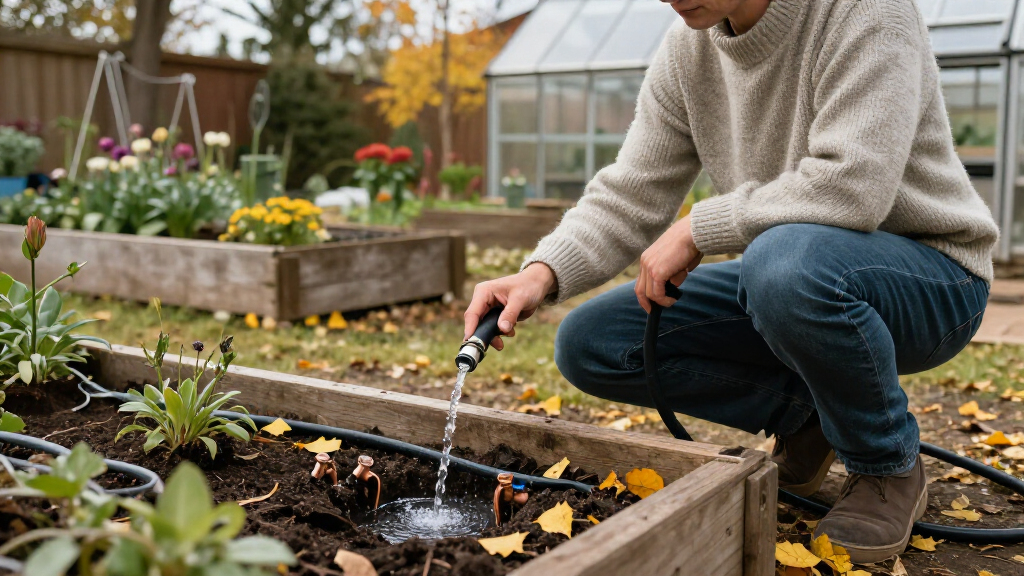
The guide’s first step is to turn off the water supply at the source, tap or shut-off valve. Next, remove end caps or plugs and let water drain from the lines, and check for drip irrigation leaks. Raising sections of tubing can help gravity move residual water toward an open end. The system should be given time to drain rather than being closed up while water remains inside.
For systems that need a compressed-air blowout, irrigation specialist Heather Todd of Conserva Irrigation says a professional winterization service can clear water from the lines. The guide cautions that compressed air can damage pipes if used incorrectly, so it recommends having an expert do this work.
The remaining steps are to remove and store the timer, taking out its batteries; drain and insulate exposed backflow preventers and valves; and, where practical, store removable tubing, drippers, control valves, fittings and controllers in a dry, frost-free place. Before storing components, check them for cracks or other damage, including leaks in the drip irrigation system, and label the storage box for spring.
Preventing Freeze Damage and Leaks
Winterizing can help prevent repairs to both the irrigation system and connected plumbing. As water freezes and expands, it may crack lines or damage valves and backflow assemblies. A break in an above-ground component can also lead to a leak that requires shutting off water to the property, according to the specialists quoted in the guide.
The preparation also makes it easier to return the system to service in spring. Draining lines and protecting exposed parts address risks that can otherwise go unnoticed until a thaw or the next time the system is switched on. The exact repair risk varies with the system’s layout, materials and exposure to cold.
Popular right now

Dyson V10 Konical Cordless Stick Vacuum

Ninja Flip Toaster Oven and Air Fryer, 8-in-1, Stainless Steel, SP151

iRobot Roomba Plus 678 Robot Vacuum and Mop with AutoWash Dock
As an affiliate, we earn on qualifying purchases.
Timing Depends on Local Frosts
The guide recommends preparing the system before the first freeze, rather than waiting for a cold spell to arrive. Frost timing varies by location: the source says it can range from early October to December in different parts of the United States.
Justin Wilson, owner of American Irrigation Repair, says freezes in his Central Texas service area can come later, with the hardest freezes typically in January and February. He says he watches forecasts and prepares ahead of hard freezes. That regional example is not a universal schedule; homeowners should use local weather forecasts to judge when to act.
“Water left in irrigation lines or backflow preventers can freeze and expand, potentially cracking pipes, damaging valves, or causing backflow assembly failures.”
— Heather Todd, brand president of Conserva Irrigation
System Layouts Need Different Care
The guide does not provide a single calendar date or procedure that suits every system. Freeze timing varies by region, and a system’s components and installation determine which parts can be drained, removed or insulated. It also does not specify a pressure setting for compressed-air work; it warns that improper use can damage pipes and points readers toward professional service.
The source offers general homeowner guidance, not an inspection of any particular installation. It does not establish whether an individual system has drained completely or whether insulation alone is adequate for its exposure. Those details may require checking the equipment instructions or consulting an irrigation professional.
Check Forecasts and Prepare Early
Homeowners should check local short- and long-range forecasts and complete shutdown and drainage before the first hard frost expected in their area. After draining, they can protect exposed valves and backflow equipment, store removable parts and keep the timer dry and protected.
Before restarting in spring, inspect stored and exposed components for cracks or damage. The guide does not give a spring restart date or a detailed recommissioning procedure; those steps will depend on local conditions and the system’s instructions.
Key Questions
When should I winterize a drip irrigation system?
Prepare it before the first hard frost in your area. Frost dates vary, so check local forecasts rather than relying on a fixed calendar date.
What should I do first?
Turn off the water supply to the system at its source, tap or shut-off valve before opening lines or removing components.
Can I use compressed air to clear the lines?
The guide says pressurized air can remove water, but warns that it can damage pipes if used incorrectly. It recommends having a professional perform a blowout.
What should I do with the irrigation timer?
Disconnect and remove the timer, take out its batteries, and keep it in a dry, protected place over winter.
Which parts should be protected or stored?
Drain and insulate exposed backflow preventers and valves. Where practical, store removable tubing, drippers, fittings, control valves and controllers in a dry, frost-free location after checking them for damage.
Source: homesandgardens.com