TL;DR

Get garden gear delivered free with Prime
- Fast, free delivery on millions of items
- Prime Video, Amazon Music and more included
- Member-only deals all year
Deep soak watering involves slowly saturating the soil around your desert trees to encourage deep roots. Adjust duration, spacing, and frequency based on the season—longer and less frequent in summer, shorter but more often in spring—to keep trees healthy and stress-free.
If you want your desert trees to thrive through scorching summers and dry spells, deep soak watering is your best friend. It’s about delivering enough water slowly so it penetrates deep into the soil—where roots can really grab it, not just the top inch. This method builds roots that reach further down, making your trees stronger and more drought-tolerant.
Getting the timing, duration, and spacing right isn’t complicated, but it does take some attention—especially since desert conditions change with the seasons. In this guide, I’ll walk you through exactly how long to water, how far apart, and how often, based on the time of year. Trust me, a little tweak here and there can turn your yard into a resilient oasis.
Deep soak watering should saturate the soil to at least 12 inches deep, encouraging deep roots.
Duration varies from 30 minutes to several hours, depending on soil type and tree size.
Watering frequency shifts with the seasons: more frequent in summer, less in winter.
Apply water around the drip line to target roots efficiently and avoid wastage.
Use moisture sensors and mulch to optimize watering and prevent over- or under-watering.
Desert tree field guide
Deep Soak Watering by Season
Slowly saturate the active root zone, then allow the soil to breathe. The winning rhythm changes with heat, rainfall, soil texture and tree size—but the destination stays the same: moisture 12–18 inches deep.
01 / Seasonal schedule
Match the soak to the weather
Use this schedule as a starting point, then adjust for rainfall, tree age, emitter flow and actual soil moisture. Peak heat demands deeper, more frequent sessions; cool weather demands restraint.
| Season | Frequency | Duration | Root-zone cue | Primary risk |
|---|---|---|---|---|
| Spring | Every 2–3 weeks | 30–60 minutes | Roots are waking; verify depth | Starting too shallow |
| Summer | Weekly or bi-weekly | 1–3 hours | Probe before the next cycle | Heat stress or runoff |
| Fall | Every 3–4 weeks | 30–60 minutes | Reduce as temperatures fall | Watering on summer timing |
| Winter | Minimal or none | Only if unusually dry | Let rainfall lead | Root rot in cool soil |
Field adjustment: delay a scheduled soak whenever a probe shows moisture remaining at 12–18 inches.
02 / Duration by soil
The clock follows infiltration
Minutes alone cannot confirm a deep soak. Fast-draining soil needs shorter sessions; dense soil needs slower, longer delivery. Stop runoff, let water absorb, then resume if necessary.
Fast infiltration
Sandy soil
30–45 minutesWater moves down rapidly. Use a shorter soak and verify that moisture spreads through the active root zone rather than slipping below it.
Balanced infiltration
Loamy soil
45–90 minutesA steady, low-flow application usually provides even coverage. Confirm depth before extending the session.
Slow infiltration
Clay soil
2–3 hoursUse low flow or cycle-and-soak intervals. Long, gentle delivery limits puddling while allowing moisture to penetrate dense soil.
03 / Spacing and placement
Move water away from the trunk
Most absorbing roots spread beneath and beyond the canopy edge. Place emitters in a ring around the drip line, widening the ring as the tree grows.
Find the drip line
Look straight down from the outer canopy edge. This is the primary target for active feeder roots.
Build an even ring
Space drip emitters about 12–18 inches apart, or loop a soaker hose around the canopy perimeter.
Keep the trunk dry
Avoid concentrating water against the bark. Constant trunk moisture can invite disease and decay.
Expand with growth
Move emitters outward as the canopy broadens so irrigation continues to follow the active root zone.
04 / Verify the soak
Measure soil, not assumptions
A timer controls delivery; a soil check confirms success. Test after irrigation and again before the next scheduled session.
Probe 12–18 inches
A soil probe should enter moist soil with moderate resistance. Dry soil at depth means the session was too short.
Pause visible runoff
Split one long session into cycles when water begins pooling. Resume after the surface has absorbed the first pass.
Do not water by habit
Persistent moisture before the next cycle signals overwatering. Extend the interval instead of adding more water.
05 / Quick answers
Troubleshoot the routine
Small adjustments in timing and placement can prevent the two biggest failures: shallow roots from frequent surface watering and root damage from persistently saturated soil.
How do I know the soak is deep enough?
Check with a soil probe or moisture meter. The target is consistently moist—not waterlogged—soil 12–18 inches below the surface.
How long in peak summer?
Plan for 1–3 hours at low flow, depending on soil and emitter output. Sandy soil may need less time; clay often needs cycling.
Can desert trees be overwatered?
Yes. Constantly wet soil restricts oxygen and can promote root rot. Check moisture before every irrigation cycle.
What improves water efficiency?
Use drip irrigation or a soaker hose, water early, apply mulch over the root zone and adjust after meaningful rainfall.
The deciding measurement: if moisture reaches this depth without runoff or prolonged pooling, the session has done its job. Let the root zone partially dry before watering again.
What does deep soak watering really mean for desert trees?
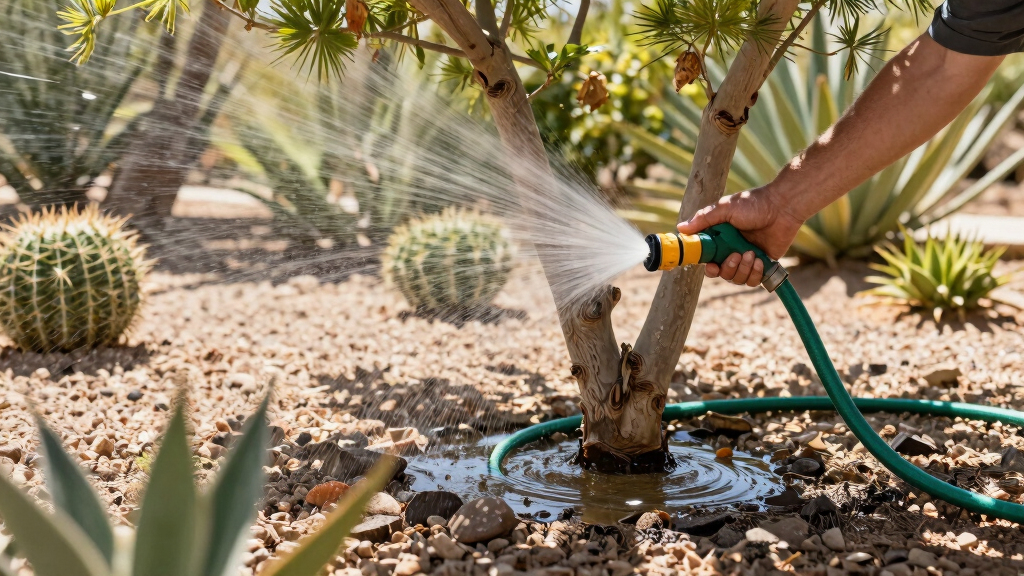
Deep soak watering means delivering a large volume of water slowly enough to reach 12-18 inches deep in the soil. It’s like giving your tree a refreshing, long drink that soaks every root tip. This deep saturation encourages roots to grow downward, away from the surface where evaporation is high, which is crucial in desert environments where surface moisture quickly dissipates. The deeper roots can access moisture that remains underground even during drought conditions, providing your tree with a more reliable water source.
Imagine a thirsty tree standing tall in the desert, roots searching deep underground. When you water deeply, you’re mimicking natural rainfall—slow and thorough—helping roots anchor and access moisture beyond the reach of surface drought. This process not only sustains the tree during dry spells but also promotes a healthier, more resilient root system that’s less dependent on frequent surface watering. The tradeoff is that deep soaking requires more water per session and longer watering times, but the payoff is a stronger, more drought-tolerant tree that can better withstand the harsh desert climate.
For example, a mature mesquite or desert apple will need a deep soak lasting between 1 to 3 hours, depending on soil type and water flow rate. The goal: saturate the entire root zone without runoff or puddling, which could lead to water wastage or root rot. Properly done, deep soaking minimizes water waste and encourages roots to grow deeper, making your trees more resilient in the long run.
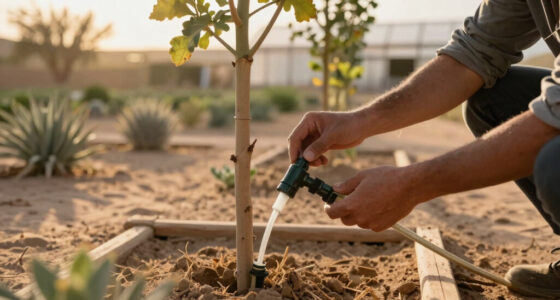
deep soak watering system for trees
As an affiliate, we earn on qualifying purchases.
As an affiliate, we earn on qualifying purchases.
How long should a deep soak last? Tips for maximum root growth
The answer varies, but generally, a deep soak lasts from 30 minutes to several hours. The key is to keep the soil moist at a depth of 12-18 inches without runoff or pooling. Longer durations allow water to penetrate more deeply, especially in soils with poor permeability, which is vital for establishing and maintaining a resilient root system. For instance, sandy soils drain quickly, so a shorter but more frequent deep soak—around 30-45 minutes—can be effective, while clay soils retain water longer and may require 2-3 hours to saturate properly.
Picture watering a young palo verde tree. During summer, a 2-hour soak once a week keeps roots deep and happy, especially when daytime temps top 100°F. Using a soil probe or moisture meter to check if you’re reaching 12 inches deep is crucial—if the soil feels moist at that depth, you’ve likely achieved optimal saturation. The tradeoff here is balancing water use and root health: longer soaks promote deeper roots but consume more water, so adjusting duration based on soil type and weather conditions is essential for efficient watering. Proper timing ensures roots grow downward, improving drought resistance and reducing the frequency of watering needed in the long term.
As an affiliate, we earn on qualifying purchases.
Where should you water? Spacing and placement for best results
Water should be applied around the drip line—the outer edge of your tree’s canopy—where most roots are concentrated. Think of it as giving every root a drink. For a mature desert oak or mesquite, aim the drip emitters at or just beyond the canopy edge. Proper placement ensures water reaches the zone where roots are actively growing, which is essential for supporting healthy growth and drought resilience.
If you use a soaker hose, lay it in a gentle ring around the drip line. Keep the hose 1-2 inches above the soil or buried just beneath the surface to prevent evaporation. This method ensures water is evenly distributed across the root zone, avoiding dry patches or overwatering the trunk, which can lead to rot or disease. The tradeoff is that improper placement can result in inefficient watering—either missing the roots or wasting water on non-essential areas. Correctly positioned watering devices promote deep root growth and conserve water, making your efforts more effective and sustainable.
For example, a desert willow planted in full sun benefits from a ring of drip emitters spaced 12-18 inches apart around its canopy. This coverage guarantees roots from top to bottom get enough moisture during deep soak sessions, ultimately strengthening the tree’s drought resistance and overall health.
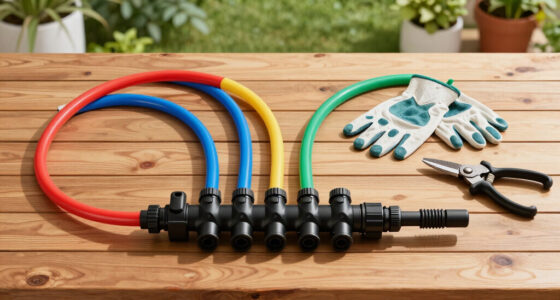
drip irrigation kit for desert trees
As an affiliate, we earn on qualifying purchases.
As an affiliate, we earn on qualifying purchases.
When and how often should I water in different seasons?
Seasonal changes dictate watering frequency and duration. In desert climates, you’ll need to adjust based on temperature, rainfall, and soil moisture. Here’s what works best:
| Season | Watering Frequency | Duration | Notes |
|---|---|---|---|
| Spring | Every 2-3 weeks | 30 min to 1 hour | As temperatures rise, roots awaken. Watch for early signs of drought stress. |
| Summer | Weekly or bi-weekly | 1-3 hours | Peak heat calls for longer, deeper watering. Use soil moisture sensors to avoid overdoing it. |
| Fall | Every 3-4 weeks | 30 min to 1 hour | Reduce frequency as days cool. Keep soil moist but not soggy. |
| Winter | Minimal or none | N/A | Unless unseasonably dry, skip watering. Rain often suffices. |
Adjusting watering schedules seasonally is vital because it directly influences root health and drought resilience. In summer, deep watering helps roots access moisture deep underground, which is crucial when surface soil dries out quickly. Conversely, in winter, roots often go dormant, and excess watering can lead to root rot or fungal issues. The tradeoff is that overwatering in cooler months can weaken roots, while under-watering during hot periods can stress the tree, making it more susceptible to pests and disease. By understanding these seasonal needs, you can tailor your watering to promote healthy, resilient trees year-round.
garden mulch for moisture retention
As an affiliate, we earn on qualifying purchases.
As an affiliate, we earn on qualifying purchases.
Frequently Asked Questions
How can I tell if I am watering deeply enough?
Use a soil probe or moisture meter to check if water has reached 12-18 inches down. When soil feels moist at that depth, you’re good. Over time, you’ll learn to judge by soil texture and visual signs of healthy roots.
How long should each deep soak last in summer?
In summer heat, aim for 1 to 3 hours, depending on your soil type and water flow. Sandy soils drain faster, so shorter is fine; clay soils need longer to saturate properly.
Is overwatering desert trees a real risk?
Yes. Too much water can drown roots and promote rot. Always check soil moisture before watering and stop once you see moist soil at the root zone. Balancing water is key to healthy, drought-resistant trees.
What’s the best time of day to water desert trees?
Early morning is best—cooler temps mean less evaporation, and water soaks in overnight, ready for a hot day. Avoid watering midday or late afternoon when the sun’s at its hottest.
Can I use drip irrigation for deep soak watering?
Absolutely. Drip systems with adjustable emitters are perfect for slow, deep watering. They’re reliable and minimize waste, making them a favorite among desert gardeners.
Conclusion
Deep soak watering isn’t just about quenching your desert trees’ thirst—it’s about building roots that reach further into the earth, anchoring your landscape against drought. Adjusting duration and frequency seasonally turns a good practice into a game-changer.
Think of your trees as desert survivors; give them the right drink at the right time, and they’ll reward you with vibrant leaves and sturdy branches for years to come. The desert’s harsh, but your watering habits can make it a little more forgiving.
Fall yard work Picks
leaf blowers
As an affiliate, we earn on qualifying purchases.