TL;DR
Listen free for 30 days with Audible
Thousands of audiobooks and originals — cancel anytime.
Start your free trialAs an affiliate, we earn on qualifying purchases.
In full desert sun, dark grow bags absorb more heat, pushing root temperatures beyond safe limits. Light-colored or reflective bags cut heat gain by 10–20°F, protecting roots and boosting plant health in extreme heat.
Imagine a sunny desert afternoon. Your tomato plant in a black grow bag wilts faster than in a lighter one. Roots are like tiny heat engines—they’re vulnerable to scorching temperatures. In desert climates, container root zones can hit 120°F or more, frying delicate roots and stunting growth.
The secret isn’t just watering more. It’s about managing how much heat your containers soak up in the first place. That’s where grow bag color comes into play. You can turn a hot mess into a thriving oasis by choosing the right hue and tweaking your setup. This guide shows you how color influences root temps and what practical steps you can take to keep roots cool—even in the blazing full desert sun.
Choose light-colored or reflective grow bags to cut heat gain by 10–20°F in desert sun.
Maximize soil volume and mulch to buffer root temperatures and slow heat buildup.
Orient containers to avoid afternoon west-facing sun; rotate or shade to prevent hotspots.
Water early and often—hot, dry air accelerates evaporation and raises root temps quickly.
Use reflective wraps or double containers for an extra layer of heat protection, especially in extreme heat.
Grow Bag Color and Root Temperature
In full desert sun, a grow bag behaves like a solar collector. Dark walls absorb intense radiation and can push roots beyond safe limits. Light-colored or reflective bags reduce heat gain by roughly 10–20°F—often the difference between wilted plants and a productive garden.
Why container roots overheat
In-ground soil insulates roots. A freestanding bag exposes a thin root-zone wall directly to solar radiation, hot air and reflected heat. The south- and west-facing sides take the greatest afternoon load.
Dark walls collect heat
Black materials absorb more incoming radiation, converting sunlight into heat at the container wall.
10–25°F above airUptake slows first
Hot roots become less efficient at absorbing water, so a plant can wilt even when moisture remains in the substrate.
Stress begins near 90°FOne side becomes a hotspot
South- and west-facing bag walls can add another 10–15°F of localized heat during peak afternoon sun.
West side = peak loadColor changes the thermal load
White and khaki fabric reflect the most solar energy. Black fabric still heats up, but breathability and evaporative cooling give it a modest advantage over impermeable black plastic.
Relative heat-gain index
Which bag wins in desert sun?
The ranking is clear, but color is not the only factor. Breathability, soil volume and exposure determine how quickly each container reaches its peak.
| Color and material | Expected temperature | Cooling behavior | Trade-off | Desert verdict |
|---|---|---|---|---|
| White or khaki fabric | 10–20°F cooler than black | Reflective, breathable and air-pruning | Shows dirt; algae may appear if continually damp | ✓Best choice |
| Black fabric | 5–15°F hotter than white | Some evaporative cooling through the wall | Requires shade, mulch or a reflective sleeve | ~Manageable |
| Black plastic or rigid pot | 15–25°F hotter than white | Impermeable wall traps absorbed heat | Can exceed 120°F rapidly in direct exposure | ×Highest risk |
Relative ranges vary with air temperature, wind, irrigation, bag size, substrate moisture and reflected heat.
How a black bag becomes root stress
Heat injury is a connected process. Interrupting any link—reflection, shade, insulation, moisture or soil volume—reduces the final burden on the plant.
Solar load
Intense desert sunlight strikes the exposed container wall.
Absorption
Dark material converts more radiation into stored heat.
Hot wall
The west-facing side becomes a concentrated thermal zone.
Root stress
Respiration rises while water and nutrient uptake decline.
Plant wilt
Growth stalls, leaves droop and exposed roots may die.
Build a cooler root zone
Layer multiple tactics. A light bag reduces incoming heat; added volume, mulch, shade and well-timed irrigation slow and lower the temperature peak.
Choose a light exterior
Use white, tan, khaki or UV-reflective fabric. Wrap existing black bags with reflective material when replacement is impractical.
Increase soil volume
Move toward 15–25+ gallons. Large masses warm more slowly and peak lower than small three-gallon bags.
Mulch the surface
Add a 1–2 inch layer over the substrate. Bare topsoil can exceed 130°F under extreme exposure.
Shade the pot wall
Block south and west exposure with cloth, a board, neighboring containers or pot-only shade while foliage remains in sun.
Water strategically
Irrigate early morning; reassess late afternoon. Fabric bags may need daily or twice-daily watering in peak summer.
Create an insulating gap
Use double containers, reflective sleeves, partial burial or surrounding wood chips to interrupt direct heat transfer.
Trade-offs worth planning for
The coolest solution must also fit your budget, watering capacity and garden layout. Measure the root zone and adjust the system instead of relying on leaf wilt alone.
Light fabric
Excellent reflection and breathability, but pale bags show soil stains and can support visible algae where the wall stays moist.
Reflective wraps
Can reduce surface temperature by roughly 10–15°F, though commercial sleeves add cost and DIY wraps need secure ventilation.
Fabric evaporation
Evaporation cools the container, but desert air also dries it quickly. Cooling only works while adequate moisture remains.
Treat this as an action threshold.
Check with a soil thermometer several inches into the sun-facing root zone. At 100°F or higher, add temporary shade, mulch, reflective protection or cooling irrigation and recheck during the afternoon peak.
Why Container Roots Get Hot — And Why It Matters
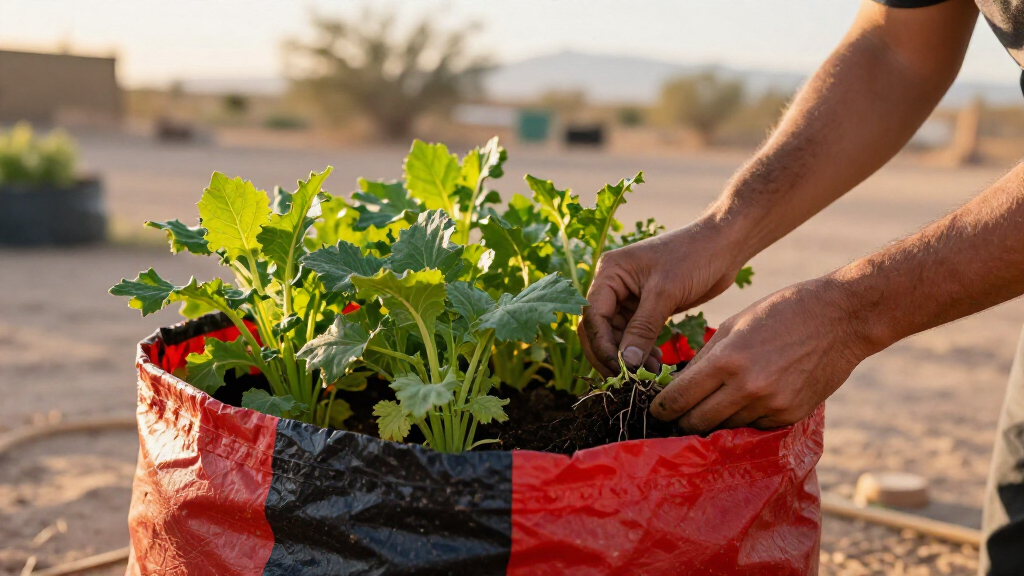
When you grow in containers, roots are exposed to the sun like a mini solar panel. Unlike in-ground planting, where soil insulates roots, containers act like heat conductors. Dark-colored bags absorb a significant amount of solar energy, turning into mini ovens that push substrate temps well above air temperature.
Research shows black grow bags can run **10–25°F hotter** than ambient conditions, with surface temps soaring past **120°F** in full sun. Roots thrive below about **85–90°F**; above that, their activity slows, and they start to die at **over 113°F**. This thermal stress can stunt plant growth or kill the roots outright.
In a real-world desert scenario, an unshaded black grow bag on a 105°F day can push root zone temps past 130°F, frying roots in a matter of hours. The west-facing wall, catching the afternoon sun, becomes the hottest spot, often the first sign of trouble.
light-colored grow bags for heat reduction
As an affiliate, we earn on qualifying purchases.
As an affiliate, we earn on qualifying purchases.
Grow Bag Color Rankings — Which Colors Keep Roots Cooler?
Not all grow bags are created equal when it comes to heat management. Here’s a quick ranking for desert conditions:
| Color & Material | Expected Root Zone Temp Difference | Notes |
|---|---|---|
| White or Khaki Fabric | 10–20°F cooler than black | Reflects most solar radiation; breathable; shows dirt, grows algae if damp |
| Black Fabric | 5–15°F hotter than white, but less than plastic | Breathable, air-prunes roots, moderate heat buildup |
| Black Plastic | 15–25°F hotter than white | Impermeable, traps heat, reaches 120°F+ easily |
In desert sun, the light-colored fabric bags lead the pack. They reflect more light, stay cooler, and help roots stay below damaging thresholds.
The fabric’s breathability and air pruning also give it a slight edge over solid black plastic, which acts like a heat sponge.
As an affiliate, we earn on qualifying purchases.
How Orientation and Sun Angles Amplify Heat Stress
Which side of your grow bag faces the sun? The south- and west-facing walls get the most load from afternoon sun, often raising root temperatures by another 10–15°F.
Imagine a bag sitting in full desert sun. The wall facing west absorbs that afternoon heat, turning into a thermal hotspot. That’s why shading just that side or rotating your containers can make a big difference.
In one backyard, a gardener noticed her peppers in black fabric bags on the west wall wilted by noon. She shifted them to the east side, where they stayed cooler. Simple moves like this can save your plants from heat stress.
garden mulch for root temperature control
As an affiliate, we earn on qualifying purchases.
As an affiliate, we earn on qualifying purchases.
Practical Strategies to Keep Roots Cool in Desert Sun
Controlling root temperature isn’t just about choosing light colors. Here’s a hierarchy of effective, real-world tactics:
- Use light-colored or reflective grow bags. White, tan, or UV-reflective fabrics are best.
- Increase soil volume. Bigger bags (15–25+ gallons) buffer temperature swings.
- Apply a mulch layer. A 1–2 inch mulch on the bag surface keeps the top layer below 130°F.
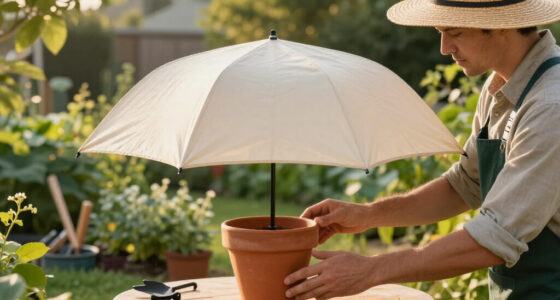
- Shade the containers. Use shade cloth, umbrellas, or plant in dappled shade during the hottest hours.
- Group plants together or into double containers. Overlapping shade reduces individual container heat load.
- Water strategically. Water early morning or late afternoon. Keep substrate moist but not soaked to promote evaporative cooling.
- Wrap or insulate with reflective material. Aluminum foil or reflective bubble wrap can bounce solar rays away.
For example, a gardener in Palm Springs wraps her fabric pots with reflective insulation, adds mulch, and groups her tomatoes under shade cloth. Her roots stay cooler, and her plants produce all season long.
insulated plant containers for desert sun
As an affiliate, we earn on qualifying purchases.
As an affiliate, we earn on qualifying purchases.
Trade-Offs and Real-World Limitations
White grow bags look great in theory, but they have their downsides. They show dirt easily and can develop algae if kept moist. Plus, in some sizes, they’re harder to find or more expensive than black options.
Reflective wraps can ding your budget but significantly cut solar gain. Burying bags in soil or wood chips adds insulation, but may not be practical for all setups.
Understanding these trade-offs helps you craft a customized solution that balances cost, durability, and plant health.
Desert-Specific Watering and Care Tips for Hot Containers
Hot roots can’t take up water efficiently, so regular watering is essential. In peak summer, expect to water every 24 hours or even twice daily for fabric bags. Early morning watering cools roots and prepares them for the heat.
Use a soil thermometer to monitor root zone temps. If they hit 100°F or higher, add a layer of mulch or temporary shade.
In dry desert air, evaporative cooling through fabric bags helps. But don’t let containers dry out completely — roots need constant moisture to stay cool and active.
For instance, a gardener in Las Vegas notes her peppers in fabric bags often need watering at dawn and dusk during July. Adjust your schedule based on soil temperature and humidity.
Frequently Asked Questions
Do black grow bags get too hot in full sun / in Arizona or Texas summers?
Yes, black grow bags can reach **120°F or more** in direct desert sun, pushing roots beyond safe temperatures. This can cause stress or root death, so consider lighter colors or shading.What color grow bag is best for hot climates?
Light-colored or reflective fabric bags—like white or tan—are best, running **10–20°F cooler** in the root zone compared to black. They reflect solar radiation and help keep roots below damaging temps.How hot do roots actually get inside a grow bag?
In full desert sun, root zone temps in black bags can soar past **130°F**, well above the **85–90°F** threshold for healthy growth. Lighter bags stay significantly cooler, protecting roots.At what temperature do plant roots die?
Most roots start to die or become inactive above **113°F**. Sustained exposure over **100°F** impairs water uptake and increases the risk of root damage.Does painting or wrapping a pot with reflective material actually help?
Absolutely. Reflective wraps bounce solar rays away, reducing container surface temps by **10–15°F**. This simple step can make a big difference in desert heat.Conclusion
In desert gardening, your containers are the first line of defense against blistering heat. Picking the right color and applying simple shading tactics can keep roots from frying and your plants thriving. Think of it as giving your garden a cool, shaded shelter in the middle of the heatwave.
Next time you set up a grow bag in full sun, remember: it’s not just about watering — it’s about controlling how much heat your roots soak up. A little planning can turn a scorching desert into a lush, productive oasis.
Flea & tick season Picks
flea and tick prevention
As an affiliate, we earn on qualifying purchases.