
TL;DR
Listen free for 30 days with Audible
Thousands of audiobooks and originals — cancel anytime.
Start your free trialAs an affiliate, we earn on qualifying purchases.
In desert regions, a raised bed of 18 inches hits the sweet spot for most root crops, offering enough depth for long roots and better moisture retention. Going deeper to 24 inches helps with water conservation and deep-rooted crops, but adds cost and effort.
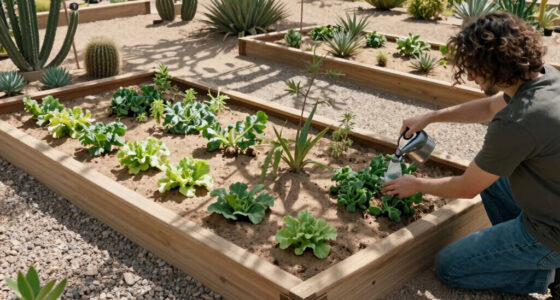
Root crops are the underground treasures of your garden. But in desert regions, their success depends heavily on how deep their roots can grow and how well they can stay cool and moist.
If you’re planting carrots, beets, or potatoes in a hot, alkaline desert soil, the right raised bed depth can make or break your harvest. Choosing between 12, 18, or 24 inches isn’t just about space—it’s about avoiding stunted roots, bitter flavors, or wasted water. This guide cuts through the confusion and shows you what works best in the desert’s tough conditions.
12 inches works only for small, short-rooted crops over loosened native soil; it’s rarely enough for long roots in desert conditions.
18 inches is the best all-around depth—balancing crop needs, water retention, and cost in desert gardens.
Deep-rooted crops like sweet potatoes and long daikons benefit from 24 inches, especially for water conservation and thermal buffering.
Always consider native soil, crop type, and budget when selecting bed depth—there’s no one-size-fits-all solution.
Using organic amendments and strategic fill can help manage costs and soil settling in deeper beds.
Raised Bed Depth for Desert Root Crops: 12, 18 or 24 Inches
Root crops are the underground treasures of your garden — but in hot, alkaline desert soil, bed depth can make or break the harvest. Choose wrong and you get forked carrots, bitter parsnips and wasted water. Choose right and roots grow long, straight and sweet through the toughest months.
“In desert conditions, 18 inches of soil provides a balanced environment for most root crops — reducing water needs and temperature swings far more effectively than shallower beds.”
The Three Depths, Head to Head
Choosing between 12, 18 and 24 inches isn’t just about space — it’s about avoiding stunted roots, bitter flavors and wasted water under desert sun.
The bare minimum. Fine for small, short-rooted plants — but long carrots fork, stub or turn woody, and shallow soil heats fast and dries within hours in summer.
- Grows well: radishes, beets, turnips, garlic
- Carrot types: globe only — ‘Paris Market’, ‘Thumbelina’
- Fails: Imperator carrots (8–11″), parsnips (10–12″)
Deep enough for virtually every common root crop, with meaningfully better moisture retention and root-zone cooling. The comfy shoe of desert beds — room to grow without bulk.
- Grows well: long carrots, parsnips, long beets, rutabagas
- Handles: daikon-type radishes, potato hilling
- Real-world: Las Vegas carrots stayed sweet & straight through heat
The greatest thermal mass — coolest in summer, warmer through light winter frosts, and the longest moisture hold. But fill cost roughly doubles versus a shallow bed.
- Best for: sweet potatoes, long daikon, in-bed hilling
- Bonus: salt dilution, easier deep leaching, less bending
- Cost: ~1.2 yd³ of soil per 4×8 ft bed
Depth Performance Matrix
How each depth performs across the crops and conditions that matter most in arid climates. The 18-inch column is highlighted as the reference standard.
| Crop / Factor | 12″ Bed | 18″ Bed ★ | 24″ Bed |
|---|---|---|---|
| Radishes, beets, turnips | ✓ Reliable | ✓ Reliable | ✓ Reliable |
| Long ‘Imperator’ carrots (8–11″) | ✗ Forks & stuntsGlobe types only | ✓ Straight & sweet | ✓ Excellent |
| Parsnips (10–12″ taproot) | ✗ Too shallow | ✓ Good with buffer | ✓ Excellent |
| Potatoes (needs hilling) | ✗ No hilling room | ~ Workable18–24″ preferred | ✓ In-bed hilling |
| Sweet potatoes & long daikon | ✗ Not viable | ~ Possible12″ min loose soil | ✓ Ideal choice |
| Moisture retention | ✗ Dries in hours | ✓ Noticeably longer hold | ✓ Longest hold |
| Heat & frost buffering | ✗ Wild temp swings | ✓ Stable root zone | ✓ Maximum thermal mass |
| Soil fill, 4×8 ft bed | ~0.6 yd³ | ~0.9 yd³ | ~1.2 yd³ |
| Build cost & effort | ✓ Lowest | ~ Moderate | ✗ Highest — 2× shallow |
Soil Volume vs. Root Demand
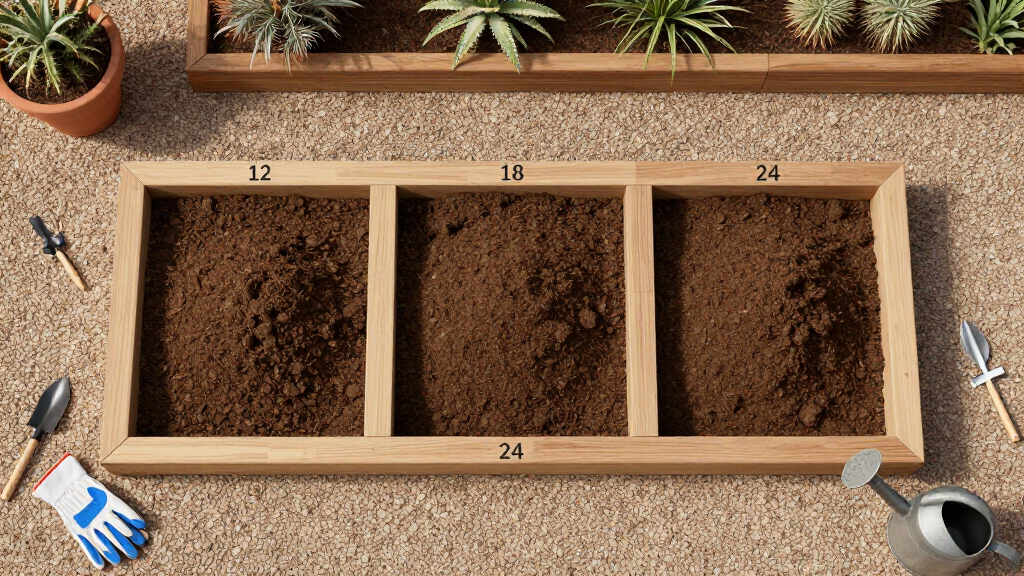
Fill cost climbs steeply with depth — but so does the underground real estate your crops actually need. The 3–6 inch buffer rule decides the winner.
Why the Desert Changes the Math
Depth advice written for mild climates breaks down fast in the low desert. Four forces make every extra inch work harder here.
Caliche Hardpan
Desert ground is often cemented calcium carbonate that roots cannot penetrate. Over hardpan, your bed depth is the total root zone — the strongest argument for 18–24 inches.
Extreme Soil Temperatures
Shallow soil swings wildly between day and night. Carrots germinate poorly above 80–85°F soil temp, and heat-stressed roots turn bitter, woody or forked. Deeper soil is a thermal shock absorber.
Rapid Moisture Loss
High evaporation drains shallow beds within hours in summer. Greater soil volume acts as a moisture battery — arguably the single biggest reason to go deeper in arid regions.
Salt Accumulation
Alkaline desert water concentrates salts in the root zone. A deeper bed dilutes salts across more volume and makes periodic deep leaching far more effective.
Pick Your Depth in Five Steps
The right depth isn’t just about the crop — it’s about your soil, water and budget too. Walk the chain.
Check Native Soil
Caliche or compacted? The bed is your entire root zone — start at 18″ minimum. Loose and diggable? Roots can continue below the frame.
Match the Crop
Long carrots, parsnips and sweet potatoes demand depth. Radishes and globe carrots tolerate 12″. Add the 3–6″ buffer to mature root length.
Plan the Watering
Deeper beds invert the schedule: less frequent but deeper soakings. Drip lines plus mulch stretch every gallon further.
Weigh the Fill Cost
Soil volume doubles from 12″ to 24″. Stretch budgets with coarse organic debris layered at the bottom — expect some settling.
Default: 18″
The practical compromise: full root development, real thermal buffering, manageable cost. Reserve 24″ for deep-rooted specialists.
Desert Depth FAQ
Is 12 inches deep enough for carrots in the desert?
Only for short, round varieties like ‘Thumbelina’ or ‘Paris Market’. Long carrots need at least 14–18 inches of loose, well-drained soil to develop properly in desert heat.
Will roots keep growing past the bed into native soil?
Yes — if the native soil below is loosened, roots can extend into it. But over caliche or compacted ground, your bed depth defines the total root zone.
What’s the minimum depth for potatoes and sweet potatoes?
Sweet potatoes want at least 12 inches of loose soil, with 18–24 ideal. Potatoes benefit from 18–24 inches to allow hilling and tuber development.
Does a deeper bed need less watering?
Deeper beds hold moisture longer and need less frequent watering — but each session should be a deeper soaking that saturates the entire root zone.
Is building a 24-inch bed worth the extra effort and cost?
Only if you’re growing deep-rooted crops, prioritizing water conservation, or want better frost protection. For most home desert gardeners, 18 inches is the best balance.
How do I keep fill costs down on a deeper bed?
Layer coarse organic material at the bottom and top with rich compost mix. A Phoenix gardener cut costs this way in 18-inch beds — roots stayed happy through the hot months. Fill 10–20% overfull for settling.
Why 12 Inches Is Too Shallow for Most Root Crops in the Desert
12 inches is the bare minimum for small or short-rooted plants like radishes or some turnips. But for anything longer—like carrots or parsnips—it’s a tight squeeze.
Imagine planting a long carrot in a 12-inch bed sitting on compacted caliche. The root either forks, stays stubby, or struggles to develop. Plus, shallow beds heat up fast and dry out quickly, forcing you to water multiple times a day during summer. If your native soil is hard or full of caliche, this depth offers nearly no room for roots to stretch.
For example, a gardener in low-desert Tucson tried growing long carrots in a 12-inch bed. They looked promising at first but quickly became woody, forked, and bitter by late spring’s heat. Clearly, 12 inches isn’t enough for most long-root crops in desert conditions.
Choosing a shallow bed means your plants will often be stressed by heat and limited space, leading to poor growth and flavor. It also increases your watering needs because the limited soil volume dries out faster, making your garden less efficient and more labor-intensive in arid environments. The tradeoff is that shallower beds are easier to build and require less soil, but the long-term productivity and quality of your crops suffer significantly.
As an affiliate, we earn on qualifying purchases.
Why 18 Inches Is the Desert’s Goldilocks Depth for Root Crops
At 18 inches, your garden hits a sweet spot. It’s deep enough for most long-rooted crops—carrots, beets, parsnips—and offers better insulation against desert heat.
Think of it like a comfy shoe—enough room to grow without unnecessary bulk. A gardener in Las Vegas reports that after switching to 18-inch beds, her carrots stayed sweet and straight through the hot months, with less frequent watering.
This depth allows roots to stretch comfortably, reduces soil temperature swings, and helps retain moisture longer. It also provides a buffer against rapid soil drying and overheating, which are common in desert climates. This means your plants are less stressed, grow better, and require less watering—saving time and resources. Compared to 24 inches, 18 inches strikes a practical balance between providing ample space for root development and keeping construction and soil costs manageable. Most importantly, this depth aligns with the typical mature root length of many crops, reducing the risk of root-bound plants or stunted growth, which can happen in shallower beds.
In essence, 18 inches offers enough room for roots to develop fully while minimizing the negative effects of extreme desert heat and water scarcity. It’s the ideal compromise that supports healthy growth without unnecessary expense or effort.
desert root crop planting containers
As an affiliate, we earn on qualifying purchases.
As an affiliate, we earn on qualifying purchases.
When You Should Go Deep: 24 Inches and Why It Matters
Deep beds of 24 inches are best for certain crops—like sweet potatoes, long daikon radishes, or if you’re aiming to conserve water.
Imagine a gardener planting sweet potatoes in a 24-inch bed. The extra depth creates a thermal buffer, keeping roots cooler during summer’s peak and warmer in winter’s chill. This helps prevent root stress caused by extreme temperature fluctuations, which are common in desert environments. The additional soil volume also means moisture is retained longer, reducing the frequency of watering and improving water efficiency—crucial in arid regions where every drop counts.
However, a 4×8 bed at 24 inches needs roughly 1.2 cubic yards of soil—double that of a shallow bed. This significantly increases the initial effort and cost of setup. For most home gardeners, this means more time, money, and labor spent on filling and maintaining the bed. If your goal is to grow deep-rooted crops like sweet potatoes or long radishes, and you have the resources, the investment can pay off in healthier plants and less frequent watering.
But for general purposes, especially when space, budget, and effort are considerations, the extra benefits of 24 inches might not justify the added cost. It’s a tradeoff: deeper beds provide better thermal buffering and water retention but require more initial work and financial investment. For many desert gardeners, 18 inches remains the most efficient and practical choice, with 24 inches reserved for specific crops or needs.
deep root vegetable planters 24 inches
As an affiliate, we earn on qualifying purchases.
As an affiliate, we earn on qualifying purchases.
Practical Tips for Choosing Your Bed Depth in Desert Gardening
Picking the right bed depth isn’t just about the crop. It’s about your soil, water, and budget too.
Here are some concrete tips:
- Check native soil: If it’s caliche or packed, go for deeper—18 or 24 inches.
- Think about your crop: Long carrots, parsnips, and sweet potatoes need deeper beds.
- Water wisely: Deeper beds require less frequent, deeper soakings.
- Consider cost: Soil fill doubles from 12 to 24 inches—plan accordingly.
- Use local resources: Inexpensive fill like compost or organic debris can reduce costs but be aware of settling.
For instance, a gardener in Phoenix built 18-inch beds filled with compost and added a layer of coarse organic material at the bottom. This cut costs, improved moisture retention, and kept roots happy through the hot months.
raised bed soil amendments for desert gardens
As an affiliate, we earn on qualifying purchases.
As an affiliate, we earn on qualifying purchases.
Frequently Asked Questions
Is 12 inches deep enough for carrots in the desert?
Only for short, round varieties like ‘Thumbelina’ or ‘Paris Market’. Long carrots need at least 14–18 inches of loose, well-drained soil to develop properly in desert heat.
Will my roots keep growing past the bed if native soil is loose?
Yes. If native soil is loosened and sits below your bed, roots can extend into it. But if you have caliche or compacted ground, your bed depth defines the total root zone.
What’s the minimum depth for potatoes and sweet potatoes?
Sweet potatoes prefer at least 12 inches of loose soil, with 18–24 inches ideal. Potatoes benefit from 18–24 inches to allow for hilling and tuber development.
Does a deeper bed need less watering?
Deeper beds generally require less frequent watering because they hold moisture longer, but each watering should be deeper to saturate the entire root zone effectively.
Is building a 24-inch bed worth the extra effort and cost?
Only if you’re growing deep-rooted crops, aiming to conserve water, or need better frost protection. For most home desert gardeners, 18 inches offers the best balance.
Conclusion
In the desert, a bed of 18 inches hits the perfect balance for most root crops—deep enough for healthy growth, yet manageable on your wallet and back. Think of it as planting a sturdy foundation that keeps roots cool, moist, and happy all season long.
If you’re growing deep-rooted crops or aiming to conserve water, stepping up to 24 inches makes sense. Otherwise, stick with 18 inches for reliable, fuss-free results that turn your desert garden into a root crop treasure trove.
NFL season / tailgating Picks
team gear
As an affiliate, we earn on qualifying purchases.