
TL;DR

Get garden gear delivered free with Prime
- Fast, free delivery on millions of items
- Prime Video, Amazon Music and more included
- Member-only deals all year
Fall cleanup in desert gardens involves removing dead debris, pruning selectively, and leaving native plants undisturbed. Proper timing and mindful practices promote healthy growth and conserve water during cooler months.
Fall in the desert isn’t just about changing leaves—it’s a prime time to tidy up your landscape. Proper cleanup boosts plant health, cuts down on pests, and prepares your garden for winter. But in a desert, knowing what to cut and what to leave can be a game-changer for water-wise gardening.
If you’re wondering when and how to prune, what debris to clear, and which plants to let be, this guide is your practical neighbor. Let’s walk through the essentials so your yard stays vibrant and resilient year-round.
Prune only dead or damaged branches—avoid heavy cuts on native desert plants in fall.
Leave seed pods and dried flowers intact to support local wildlife and natural beauty.
Timing is crucial: late October to early December is ideal for fall cleanup in desert regions.
Remove debris promptly to reduce pests and fungal issues, compost healthy material, and discard diseased parts.
Adjust watering and mulch to protect roots and conserve water during cooler months.
Fall Cleanup in the Desert: What to Cut Back and What to Leave
Desert fall care is an exercise in restraint: remove genuine hazards and disease, preserve native structure, then adjust water and mulch for cooler weather. The goal is a resilient habitat—not a stripped-clean yard.
After peak heat and before local frost
Maximum plant volume removed at once
Typical interval for a deep soak
Cleanup and preparation come first
Cut the damage. Keep the habitat.
Fall pruning should be selective, clean and conservative. Native plants often enter dormancy or semi-dormancy as temperatures fall; unnecessary cuts spend stored energy and create openings for pests or disease.
Remove clear liabilities
Intervene where plant health, safety or water competition is at stake.
- Dead, broken or visibly diseased branches
- Leggy growth vulnerable to winter damage
- Invasive weeds before flowers set seed
- Fallen debris that shelters pests or fungus
Preserve resilient structure
Keep healthy native growth and useful winter habitat in place.
- Healthy native shrubs and desert trees
- Cacti, succulents and healthy pads
- Seed pods and dried flower stalks
- Structures that feed or shelter wildlife
Plant-by-plant judgment
Use condition—not neatness—as the trigger. A brown, broken branch warrants action; a healthy native plant with dried seed heads usually does not.
| Landscape element | Fall action | What to inspect | Why it matters |
|---|---|---|---|
| Dead or diseased branch | ✓ Cut | Discoloration, cracking, decay | Limits hazards and pathogen spread |
| Healthy palo verde or ocotillo | ~ Light only | Broken tips or crossing limbs | Protects natural form and energy reserves |
| Native cactus or succulent | ✗ Leave | Rot, severe injury or infestation | Avoids wounds during cooler conditions |
| Seed pods and dried flowers | ✗ Leave | Whether material is healthy | Feeds birds and insects through winter |
| Healthy fallen material | ✓ Compost | No disease or heavy infestation | Returns nutrients to the soil cycle |
| Diseased plant debris | ✓ Discard | Spots, spores, rot or pest colonies | Prevents reinfection and overwintering |
Five moves from inspection to recovery
Work during the cooler part of the day. Wear gloves and eye protection, especially around thorns, brittle wood and irritating sap.
Inspect first
Confirm that tissue is dead, damaged or diseased before making a cut.
Clean the tool
Use sharp bypass pruners or loppers and disinfect between affected plants.
Make one clean cut
Cut just above a healthy bud or branch junction without leaving a long stub.
Sort the debris
Compost healthy material; isolate and discard diseased or infested pieces.
Observe recovery
Watch for stress, fresh pest activity or moisture collecting around the wound.
Removing more than one quarter of a plant’s total volume can trigger stress. Avoid main stems and structural branches unless they are unsafe or diseased.
Water less often—but deeply.
Lower temperatures slow evaporation and growth, so irrigation frequency should fall. Roots still need moisture, while mulch buffers temperature swings and helps suppress winter weeds.
Shift frequency, not depth
A deep soak every two to three weeks is a practical starting point for many established desert plants. Adjust for rain, soil, exposure and local microclimates.
Protect the root zone
Use gravel or appropriate organic mulch as a thermal and moisture buffer, while keeping excess material away from stems and crowns.
How to Cut Back Plants Without Wrecking Your Desert Landscape
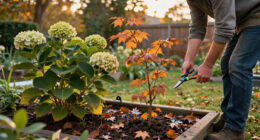
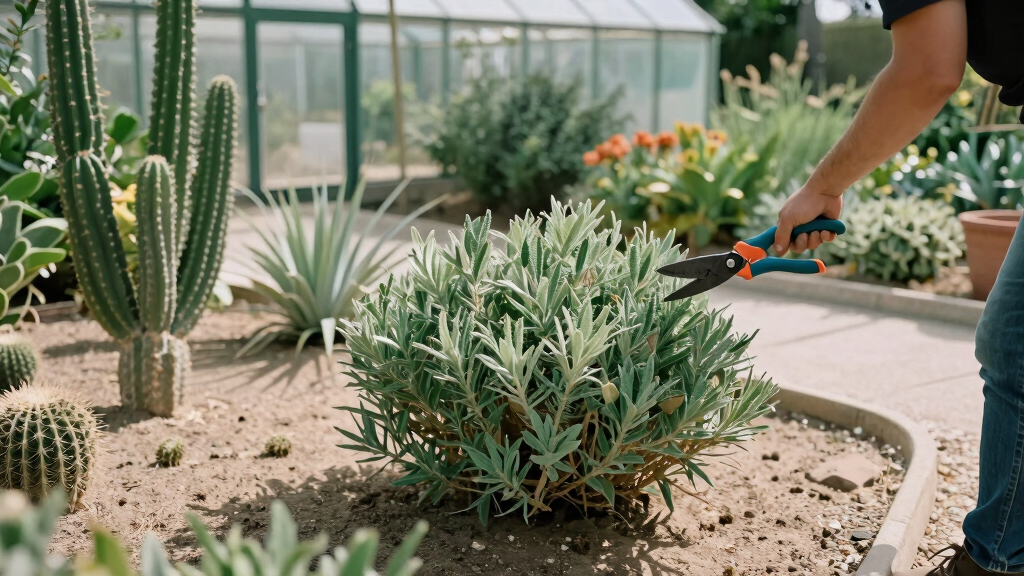
Pruning in fall is about removing what’s dead or damaged, not reshaping your landscape. Focus on branches that look broken or sick. For example, a sagging, brown branch on a native shrub is a prime candidate for removal.
Native plants like ocotillo or palo verde can handle light pruning, but avoid cutting into their main stems or branches that carry their life force. Use sharp, clean tools to make precise cuts—this prevents disease and speeds healing.
For instance, a shrub that’s leggy after summer might need a light trim to encourage bushiness. Just don’t go overboard—native plants are tough, but they appreciate gentle handling.
**Tip:** Always prune in the cooler part of the day, and wear gloves and eye protection. This keeps you safe from thorns and sap.
As an affiliate, we earn on qualifying purchases.
What to Leave Alone to Keep Your Garden Resilient
In desert gardens, less is more when it comes to native plants. Cacti, succulents, and drought-tolerant shrubs have evolved to withstand seasonal changes. Leaving them untouched during fall is crucial because these plants often enter a semi-dormant state, conserving energy and water. Heavy pruning during this period can disrupt their natural cycle, leading to stress or increased vulnerability to pests and disease.
For example, a prickly pear cactus with a few dead pads can be left to naturally shed, which is part of its renewal process. Removing healthy pads or stems unnecessarily can cause wounds that invite infections or pests, ultimately weakening the plant. Moreover, leaving seed pods and dried flower stalks provides critical winter food sources for local birds and insects, supporting the entire ecosystem. The visual interest of these dried structures also helps maintain a natural, wild aesthetic that blends seamlessly into the desert landscape.
**Key:** Avoid heavy pruning on native plants in fall—this is their dormant or semi-dormant period. Let nature do its thing, as it maximizes their resilience and minimizes stress.
Understanding why these plants should be left undisturbed is vital. Pruning or removing parts during this sensitive period can cause unnecessary stress, making plants more vulnerable to pests and diseases when they are least prepared. Leaving seed heads and dried stems not only supports wildlife but also allows plants to complete their natural life cycle, which is essential for maintaining the ecological balance of your garden. This mindful approach helps ensure your native plants remain resilient and healthy over the long term, reducing the need for corrective interventions later.
native plant seed pods preservation
As an affiliate, we earn on qualifying purchases.
As an affiliate, we earn on qualifying purchases.
Comparing What to Cut and What to Leave: A Quick Table
| What to Cut | What to Leave |
|---|---|
| Dead, broken, or diseased branches | Healthy native shrubs and trees |
| Leggy, overgrown plants | Seed pods, dried flower stalks |
| Heavy winter damage | Native cacti and succulents |
| Invasive weeds | Wildlife habitat elements |
As an affiliate, we earn on qualifying purchases.
When and How to Prune Your Desert Plants for Fall
Timing is key. The best window for fall pruning in desert regions is late October through early December. This allows plants to heal before the coldest weather, which may be mild or absent in your microclimate. Proper timing ensures that your plants can recover quickly and reduces the risk of frost damage or disease entering through fresh cuts.
Follow these steps:
- Identify dead or damaged parts.
- Use sharp, clean tools—preferably bypass pruners or loppers.
- Make clean cuts just above a healthy bud or branch junction.
- Remove no more than 25% of the plant’s total volume at once to avoid stressing it.
- Disinfect tools between cuts to prevent disease spread.
For example, prune a palo verde’s sick branches, but avoid cutting into its main trunk. This targeted approach helps maintain the plant’s health and shape without unnecessary stress. Remember, native plants are adapted to their environment and often don’t need heavy pruning—gentle shaping is enough to keep them healthy and resilient.
drought-tolerant shrub trimming tools
As an affiliate, we earn on qualifying purchases.
As an affiliate, we earn on qualifying purchases.
Why Removing Debris and Weeds Matters Now More Than Ever
Clearing fallen leaves, twigs, and plant debris reduces hiding spots for pests and diseases that can overwinter and emerge in spring. In desert gardens, debris can act as a microhabitat for pests like aphids or fungal spores, which can quickly multiply once conditions warm. Removing this debris now breaks the cycle, preventing infestations and outbreaks that could weaken your plants.
Imagine a pile of dead leaves under a desert willow—by spring, it might be a breeding ground for pests. Clearing debris also helps maintain airflow around plants, reducing fungal issues like powdery mildew. Weeds, on the other hand, compete for water and nutrients, and their seeds can spread rapidly in fall. Removing or controlling weeds before they seed prevents future invasions and preserves your native plant balance. Discard diseased or heavily infested plant material to prevent spreading pests or pathogens, and compost healthy debris to return nutrients to the soil, supporting your garden’s resilience.
Understanding the implications of debris and weed management emphasizes that fall cleanup isn’t just about tidiness—it’s a strategic effort to bolster plant health and ecosystem stability. Neglecting this step can lead to pest outbreaks, increased disease risk, and unnecessary stress on your plants, which are particularly vulnerable as they prepare for winter dormancy. Proper debris removal and weed control help create a healthier environment for beneficial insects and native wildlife, ensuring your garden remains a vibrant, balanced desert ecosystem.
Adjusting Watering and Mulching for Fall Success
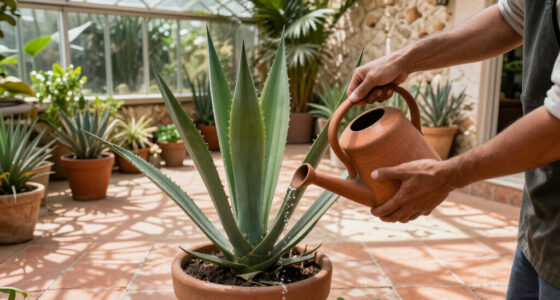
As temperatures cool, desert plants need less frequent watering, but completely stopping can stress roots. Deep soaking every 2-3 weeks ensures they remain hydrated and healthy during dormancy. Proper watering supports root development and helps plants endure winter conditions.
Mulching with gravel or organic material insulates roots, conserves soil moisture, and suppresses weeds. This layer acts like a thermal buffer, protecting plants from temperature fluctuations and reducing evaporation. For example, a mulched barrel cactus bed remains cooler during warm winter days and retains moisture longer, preventing dehydration.
**Tip:** Avoid over-mulching, which can trap excess moisture around stems and roots, leading to rot or fungal problems. Balance is key—use enough mulch to insulate but not suffocate roots.
Understanding the importance of proper watering and mulching practices during fall is critical. Overwatering can cause root rot, especially as plants slow their growth, while insufficient watering may lead to dehydration. Mulching wisely helps regulate soil temperature and moisture, creating a more stable environment that reduces plant stress and conserves water, which is especially vital in arid climates. The right approach minimizes disease risk and supports healthy, resilient plants through the winter months.
How to Prevent Pests and Disease During Fall Cleanup
Thorough cleanup and early removal of debris help eliminate overwintering pests and disease reservoirs. Removing fallen leaves, twigs, and infected plant parts reduces hiding spots for pests like aphids or scale and cuts off potential infection sites. Pruning infected tissue prevents disease spread and encourages healthy regrowth.
Natural deterrents like neem oil or insecticidal soap can provide additional protection, especially if pests are present. Applying neem oil after pruning coats remaining pests and eggs, disrupting their lifecycle. Be cautious not to overwater or create overly damp conditions, as wet environments attract pests and foster fungal growth. Disinfect your tools between plants to prevent accidental transmission of diseases, which can be devastating in the vulnerable fall season. Remember, healthy plants are more pest- and disease-resistant, so your cleaning efforts are also a form of preventative care that enhances overall resilience.
Addressing pest and disease prevention during fall cleanup is crucial because it sets the foundation for a healthy spring. Removing debris and infected material prevents pests from overwintering and reduces pathogen reservoirs, which could otherwise lead to outbreaks when conditions warm up. Using natural controls and maintaining hygiene through disinfected tools further minimizes chemical reliance and supports a balanced ecosystem. This proactive approach ensures your desert garden remains robust, reducing the need for reactive treatments later and promoting long-term plant health.
Final Tips for a Successful Desert Fall Cleanup
Use sharp, clean tools for precise cuts—dull blades damage plants and can introduce disease. Wear gloves and eye protection, especially when handling spiny cacti or thorny shrubs, to avoid injury. Respect native plants—avoid over-pruning, and leave seed heads for wildlife, which rely on these resources during winter. Think of your garden as part of a delicate desert ecosystem that benefits from your mindful stewardship.
Adjust your cleanup based on your microclimate and recent weather. If a cold snap hits early, postpone pruning sensitive plants to prevent frost damage and stress. Keep your tools rust-free and stored properly—this ensures they’re ready for spring’s burst of growth and reduces the risk of transmitting disease. Ultimately, thoughtful, timely cleanup supports the health of your landscape and the resilience of the desert ecosystem you’re nurturing.
Frequently Asked Questions
When is the best time to do fall cleanup in the desert?
The ideal window is late October to early December, after the hottest months have passed but before the first frost, if it occurs in your area. Timing helps plants heal and prepares them for winter dormancy.
Should I prune my desert plants in the fall?
Yes, but keep it light. Focus on removing dead or damaged branches. Avoid heavy pruning, especially of native species, since they often don’t need it and can be stressed by too much cutting at this time.
What native plants should I leave untouched during fall cleanup?
Most native cacti, succulents, and drought-tolerant shrubs don’t need pruning now. Leave seed heads and dried stems as they provide food for wildlife and add visual interest.
How can I prevent pests during fall cleanup?
Remove debris promptly, prune infected parts, and consider natural controls like neem oil. Avoid overwatering, which can attract pests and cause fungal issues. Clean your tools to prevent spreading disease.
Do I need to fertilize during fall cleanup?
No, fall is not the time for fertilizing. Focus on cleanup and preparation. Fertilize in early spring or after pruning if needed, depending on your plant’s needs.
Conclusion
Fall cleanup in the desert isn’t about overdoing it. It’s about being smart—removing what harms your plants and leaving what helps them thrive. Think of your garden as a community that needs gentle guidance, not heavy-handed pruning.
Picture your yard—clean, vibrant, and resilient—ready for winter’s quiet beauty. Your mindful approach now means a healthier desert garden come spring. So grab your tools, respect your native plants, and give your landscape the care it deserves.
Fall yard work Picks
leaf blowers
As an affiliate, we earn on qualifying purchases.