
TL;DR
Get ready for Prime Big Deal Days — try Prime free
Exclusive member deals on October 6–7, plus fast free delivery. Cancel anytime.
Start your free trialAs an affiliate, we earn on qualifying purchases.
Pre-monsoon tree pruning thins dense canopies before the monsoon winds arrive. It reduces storm damage, promotes healthy growth, and improves safety. Done correctly, it’s a simple step to protect your trees and property.
Thinning 20-30% of the canopy before monsoon winds reduces branch breakage and uprooting risks.
Use targeted pruning — crown thinning, cleaning, and selective cuts — for safety and health.
Timing is key: prune during dry, windless days in late spring or early summer.
Professional arborists are best for large, mature, or difficult trees to avoid damage and ensure safety.
Regular pruning supports a resilient, healthy landscape that withstands desert heat and heavy storms.
Pre-Monsoon Tree Pruning: Thinning Canopies Before the Winds
Dense canopies act like parachutes in high winds — catching gusts, snapping branches, and toppling whole trees. A strategic thinning cut before the monsoon arrives gives your trees a well-earned windbreaker: less storm damage, healthier growth, and a safer landscape.
Timing: Late Spring · Early Summer · Dry DaysThinning just 25% of a tree’s canopy before the monsoon can dramatically decrease wind resistance and the risk of branch breakage.
Why Thinning Before the Monsoon Matters
Think of pre-monsoon pruning as trimming a sailboat’s sails before a storm. In desert climates — where mesquite and palo verde grow dense, tangled crowns in compact, water-scarce soils — an open canopy lets wind pass through instead of pushing the tree over.
Wind Resistance
A thinned canopy sheds gusts instead of catching them, sharply reducing the chance of snapped limbs or a fully uprooted tree during monsoon winds.
Tree Health
Better light penetration and air circulation dry lingering moisture quickly — cutting the risk of fungal infections and pest infestations before they take hold.
Resource Efficiency
In water-scarce deserts, optimal canopy density lets trees allocate scarce water and nutrients efficiently, boosting resilience against both storms and drought.
How to Thin Without Killing the Tree
Thinning is selective removal — never hacking away. Remove the right branches, keep the natural shape, and stop at 20–30%. Follow the sequence:
Remove Hazards First
Cut out dead, broken, and diseased branches — the most immediate hazards in any storm.
Clear Crossing Limbs
Eliminate rubbing branches that create wounds and entry points for pests and disease.
Thin the Interior
Remove 20–30% of the canopy, focusing on dense interior growth. Never more — over-thinning starves the tree.
Cut at the Collar
Make cuts just outside the branch collar to promote fast healing in dry weather.
Step Back & Assess
Check shape and balance regularly, aiming for an open, natural crown the wind moves through freely.
The Canopy Density Sweet Spot
Too dense catches wind like a parachute; too thin leaves the tree without enough leaves for photosynthesis. The goal sits in the middle.
Four Pruning Techniques & When to Use Them
| Technique | Purpose | Best For | Impact on Tree |
|---|---|---|---|
| Crown Thinning | Reduces density without changing shape | Storm prep, general health | ✓ Lightens the canopy, preserves natural form, improves airflow |
| Crown Cleaning | Removes dead / diseased branches | Improving health, aesthetics | ✓ Enhances vitality, reduces pest and disease risk |
| Crown Reduction | Shortens overall height / spread | Safety concerns, space limits | ~ Significant change; can stress the tree if overdone |
| Selective Pruning | Targeted removal of specific branches | Injury prevention, shaping | ✓ Minimal impact, maintains natural look |
The Right Tools Make the Difference
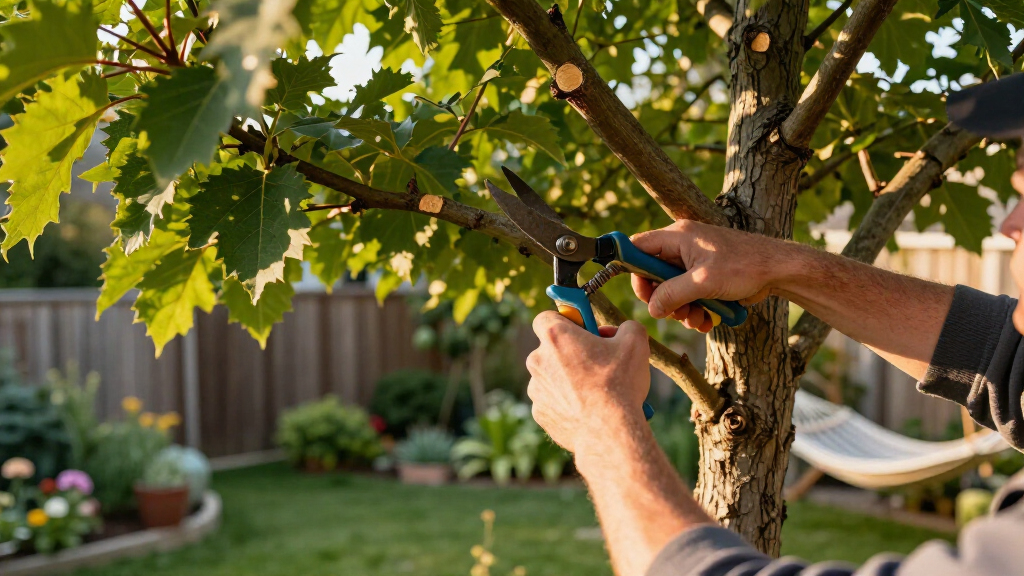
Sharp, clean, sterilized tools prevent tearing and infection — the foundation of quick healing. Always pair them with gloves, eye protection, and sturdy footwear.
Pruning Shears
Precise, clean cuts on small limbs. Sterilize blades before every use to prevent spreading pathogens.
Loppers
Extra leverage makes medium-sized cuts easier and cleaner, reducing ragged wounds.
Saws & Pole Pruners
For larger limbs — only if you’re experienced and confident in your safety setup.
Safety Gear
Gloves, eye protection, and sturdy footwear guard against falling debris and accidental cuts.
Five Rules for a Wind-Ready Canopy
Thinning 20–30% of the canopy before monsoon winds reduces branch breakage and uprooting risks.
Use targeted pruning — crown thinning, cleaning, and selective cuts — for both safety and tree health.
Timing is key: prune during dry, windless days in late spring or early summer.
Professional arborists are best for large, mature, or difficult trees to avoid damage and stay safe.
Regular pruning supports a resilient, healthy landscape that withstands desert heat and heavy storms alike — a safer, greener space for your family and local wildlife.
Why Thinning Your Tree Canopy Before the Monsoon Matters
Pre-monsoon pruning is like trimming a sailboat’s sails before a storm. It reduces wind resistance, making trees less likely to topple or lose heavy branches. Dense canopies act like parachutes in high winds, catching gusts and amplifying the risk of damage. In desert climates, where trees often grow in compact, water-scarce soils, a healthy, open canopy helps airflow and reduces stress. For example, a mesquite or palo verde with a thick, tangled crown might look lush, but during a monsoon wind, those heavy branches can snap or uproot the entire tree. Removing some of that weight and density helps trees stand firm when the wind roars.
According to an anonymous researcher, thinning trees before storms cuts the risk of branch or trunk failure by nearly 40%. That’s a significant safety boost. Additionally, a less crowded canopy allows better light penetration and air circulation, which are crucial for the tree’s overall health. When trees are overly dense, moisture can linger on leaves and branches, increasing the risk of fungal infections and pest infestations. In desert environments, where water and nutrients are scarce, maintaining an optimal canopy density ensures trees can allocate resources more efficiently, bolstering their resilience against storms and drought stress alike. Therefore, strategic thinning not only prevents physical damage but also supports the long-term vitality of your trees, creating a safer and healthier landscape for your family and wildlife.
As an affiliate, we earn on qualifying purchases.
How to Thin Your Tree Canopy Without Killing It
Thinning is about selective removal, not hacking away. Proper pruning involves understanding the tree’s structure and health, aiming to reduce wind resistance while maintaining its natural shape. This balance ensures the tree remains vigorous and aesthetically pleasing. When you remove only the right branches, you prevent over-stressing the remaining limbs, which could otherwise lead to failure during storms. The process also promotes better airflow, which helps dry out moisture that can foster pests and diseases. Over-thinning, on the other hand, can deprive the tree of necessary leaves for photosynthesis, weakening it over time. Striking the right balance is key: thin enough to reduce risk, but not so much that the tree becomes vulnerable or looks unnatural. This approach supports the tree’s ongoing health and structural integrity, especially in the challenging desert climate where every resource counts.
Follow these steps to do it right: first, identify and remove dead, broken, or diseased branches—these are the most immediate hazards. Next, look for crossing or rubbing branches, which can cause wounds and entry points for pests. Remove about 20-30% of the canopy, focusing on interior and overly dense areas—this selective approach prevents over-pruning. Make cuts just outside the branch collar to promote healing. Regularly step back to assess the overall shape and balance, aiming for a natural, open crown that allows wind to pass through easily. For instance, if a palo verde’s crown is uneven, prune selectively on one side to even it out without overdoing it. Use sharp, sterilized tools—pruning shears for small branches, loppers for medium-sized limbs, and saws for larger cuts. Always prune during dry weather to minimize disease risk and facilitate quicker healing. Remember, patience and moderation are essential; over-pruning can stress your tree, so when in doubt, consult a certified arborist to ensure your efforts support your tree’s health and safety.
As an affiliate, we earn on qualifying purchases.
Compare Different Pruning Techniques and When to Use Them
| Technique | Purpose | Best For | Impact on Tree |
|---|---|---|---|
| Crown Thinning | Reduces density without changing shape | Storm prep, general health | Lightens the canopy, preserves natural form, improves airflow |
| Crown Cleaning | Removes dead/diseased branches | Improving health, aesthetics | Enhances overall vitality, reduces pest and disease risk |
| Crown Reduction | Shortens overall height/spread | Safety concerns, space limitations | Significant change, can stress the tree if overdone, but useful for managing size |
| Selective Pruning | Targeted removal of specific branches | Injury prevention, shaping | Minimal impact, maintains natural look, supports specific needs |
Choosing the right pruning method depends on your goals and the condition of the tree. For example, crown thinning is ideal for reducing wind resistance in dense trees like mesquites, where a more open canopy can dramatically improve storm resilience. Crown cleaning is essential for removing hazards like dead or diseased branches, which can weaken the tree and pose safety risks. Crown reduction is useful when a tree’s height or spread threatens nearby structures or power lines, but it’s important to do it carefully to avoid stressing the tree. Selective pruning allows for precise adjustments, such as removing crossing branches or shaping the canopy, without compromising the tree’s overall health. Understanding these methods helps you tailor your approach to each tree’s needs, ensuring safety, health, and aesthetic value are optimized in desert landscapes.
As an affiliate, we earn on qualifying purchases.
Tools and Tips for Safe, Effective Pruning
Picking the right tools makes all the difference. Sharp, clean tools prevent tearing and infection, which are critical for quick healing and long-term health. Using improper tools or dull blades can cause ragged cuts that leave the tree vulnerable to pests and disease. For small branches, pruning shears are ideal because they allow precise cuts. Loppers provide leverage for medium-sized limbs, making the job easier and cleaner. For larger limbs, a saw or chainsaw might be necessary—only if you’re experienced with the equipment and confident in your safety. Always sterilize tools before use to prevent the spread of pathogens. Safety gear like gloves, eye protection, and sturdy footwear is essential to protect yourself from falling debris and accidental cuts. In desert gardening, timing your pruning during dry, windless days minimizes disease risk and speeds recovery. After pruning, collect all debris to prevent pests and fungal growth, and consider composting healthy green material to enrich your soil. Proper tools and safety measures are investments in your landscape’s resilience, ensuring your trees remain healthy and your efforts are effective.
As an affiliate, we earn on qualifying purchases.
What Happens if You Skip Pre-Monsoon Pruning?
If you ignore pre-monsoon thinning, your trees face higher risks of storm damage and long-term health issues. Dense, unpruned crowns act like sails, catching wind and increasing the likelihood of branches snapping or entire trees toppling. This can lead to costly property damage, safety hazards, and increased cleanup efforts. Moreover, when canopies are overly dense, moisture becomes trapped on leaves and branches, creating a humid microclimate that fosters fungal growth, pests, and decay. In desert environments, where water is precious and trees are adapted to dry conditions, overgrown crowns can divert vital resources away from roots and the trunk, weakening the overall structure. For example, a neighbor’s unpruned mesquite lost a large limb during a storm, causing damage and creating a hazardous situation—an incident that could have been prevented with timely thinning. Skipping this step not only jeopardizes safety but also leads to longer recovery times, increased maintenance costs, and diminished landscape resilience. Recognizing the tradeoffs involved—such as the risk of structural failure versus the stress of pruning—underscores how vital this proactive step is for long-term health and safety.
Neglecting pre-monsoon pruning means your trees become more vulnerable to the combined stresses of wind, drought, and pests. Dense canopies require more energy to maintain, leaving fewer resources for root development and drought resilience. Over time, this imbalance can cause trees to become weak, susceptible to disease, and less capable of bouncing back after storms or dry spells. The tradeoff is clear: while pruning may temporarily stress the tree, the long-term benefits of improved airflow, reduced wind resistance, and healthier growth far outweigh the risks of neglect. Properly timed, strategic pruning acts as a safeguard against the unpredictable challenges of desert climates, ensuring your landscape remains robust and safe through each season.
Frequently Asked Questions
Can I prune my trees myself, or should I hire a pro?
Small trees and light pruning can often be done by homeowners with sharp tools and some care. But for large, mature, or tricky trees, especially near power lines or structures, hiring a professional arborist is safest. They have the expertise and equipment to prune correctly without damaging the tree or risking injury.
How do I know if I’m removing too much foliage?
Limit your pruning to about 25-30% of the canopy at a time. Watch for signs of stress, like leaf drop or wilting. If the tree looks significantly less lush or starts shedding more leaves than usual, back off. When in doubt, consult an arborist for a quick assessment.
What are the best tools for pruning in desert landscapes?
Use sharp pruning shears for small branches, loppers for medium limbs, and saws for larger cuts. Always sterilize tools before use to prevent disease. For high branches, a pole pruner or a professional’s lift may be necessary. Safety gear like gloves and eye protection is a must.
Is pruning harmful to desert trees like mesquite or palo verde?
When done correctly and at the right time, pruning benefits desert trees by removing hazards and encouraging healthy growth. Avoid excessive or heavy pruning, which can stress these water-wise trees. Light, strategic thinning helps them withstand monsoon winds better.
How often should I prune my desert trees?
Annual or biennial pruning, especially before monsoon season, keeps trees in check. Focus on removing deadwood and crossing branches as needed. Regular light pruning is better than a heavy cut every few years.
Conclusion
Pre-monsoon pruning isn’t just a tidy-up — it’s a vital step to keep your trees safe and healthy through storm season. Think of it as giving your trees a wind-resistant shirt stitched with care. When the next gust hits, your trees will stand tall, proud, and ready for whatever the monsoon throws at them. Don’t wait — a little effort now saves a lot of cleanup and heartbreak later.Fall yard work Picks
leaf blowers
As an affiliate, we earn on qualifying purchases.