TL;DR

Get garden gear delivered free with Prime
- Fast, free delivery on millions of items
- Prime Video, Amazon Music and more included
- Member-only deals all year
Planet Natural’s winter-preparation checklist for young trees focuses on four checks: root-zone moisture, mulch placement, trunk guards where specific risks exist, and stakes and ties that may be rubbing or restricting growth. The report says local weather, soil, species and site conditions should guide decisions; it does not prescribe one schedule or protection plan for every tree.
Planet Natural has published a four-part winter checklist for young trees, advising gardeners to check soil moisture, spread mulch away from the trunk, use guards only where a specific hazard exists, and recheck stakes and ties before frozen ground or persistent snow obscures the site. The guidance is aimed particularly at trees planted within the past few years, when roots are still extending into surrounding soil, and stresses that local conditions should determine the steps taken.
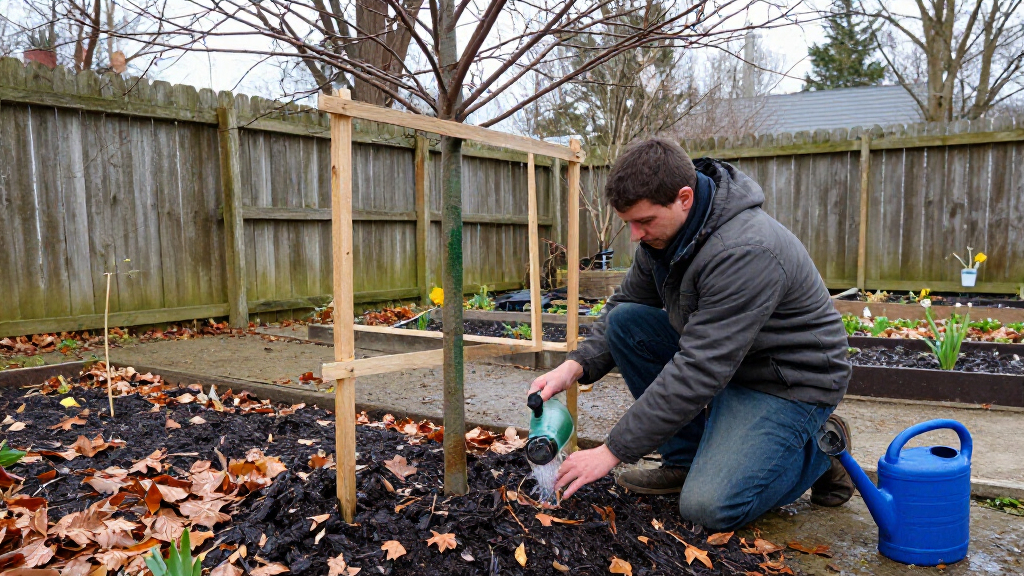
The report recommends checking moisture below the soil surface, not judging conditions by cool autumn air or dry-looking ground alone. Move mulch aside and feel the soil several inches down near, but not against, the root ball. If it is dry, water slowly so moisture reaches the root zone rather than running off. A soaker hose, a hose at a slow trickle or several gentle passes with a watering wand are suggested. If the soil is already consistently moist, the report says not to add more water. In dry regions, an occasional watering on a mild day may be needed while soil is unfrozen; where autumn rain and snow are regular, a pre-freeze check may be enough. Evergreens receive particular attention because their foliage can lose moisture while the ground is frozen.
For mulch, Planet Natural advises a broad, shallow ring rather than a mound against the trunk. It gives two to four inches as a common depth range, adjusted for the mulch and local guidance, and says to leave the root flare visible and keep mulch several inches from bark. A wider ring can reduce turf competition and moisture loss, moderate soil-temperature changes and keep mowers and trimmers away from the trunk. The report also advises filling visible planting cracks with soil, not additional mulch, and checking for runoff channels or compacted soil.
A trunk guard is recommended only when there is a reason to use one, such as evidence of rodents, deer, sunscald risk for a susceptible tree, or nearby equipment. A guard should leave space around the bark and be checked for rubbing, slippage, trapped moisture or pests. The final check is for stakes and ties: determine whether support is still needed, and make sure any tie is wide and flexible enough to allow gentle trunk movement without pinching or rubbing. The source advises checking local guidance and the tree’s stability before removing support.
Protecting Roots and Trunks
Young trees have less established root systems than mature trees and may be less able to draw moisture from beyond their original root balls, according to the Planet Natural report. A dry root zone before winter can leave a recently planted tree stressed, while bark injury from equipment, wildlife or an overly tight tie can undermine the protection gardeners intended to provide. The checklist’s value is its focus on inspection before conditions hide problems, rather than adding protective materials automatically.
The advice also cautions against treating winter preparation as a universal recipe. Too much water when soil is already moist is not helpful, mulch piled against bark can create problems, and a guard or stake that is no longer suitable can itself cause damage. Checking the tree and site first can help homeowners choose a proportionate response and identify issues while they remain visible.
garden soaker hose for watering young trees
As an affiliate, we earn on qualifying purchases.
As an affiliate, we earn on qualifying purchases.
Why Young Trees Need Checks
The source frames the checklist for trees planted within the past few years, while their roots are still expanding into surrounding soil. It notes that rainfall, soil texture, winter temperature swings, wildlife pressure and tree species all affect what preparation is appropriate. A dry, exposed site may call for a different moisture check than a location with dependable autumn rain or snow.
Planet Natural presents four inspection areas in order: soil and root-zone moisture, mulch and the base of the trunk, any guard used against an identified hazard, and stakes and ties. Its central recommendation is a short walk-around before freezing ground or persistent snow makes those details more difficult to inspect. The source does not set a single watering timetable or say that every young tree needs a guard or support.
tree trunk guards for winter protection
As an affiliate, we earn on qualifying purchases.
As an affiliate, we earn on qualifying purchases.
Conditions Vary by Tree and Site
The report does not identify a specific tree species, location, forecast or soil type, so it cannot establish whether a particular tree needs watering, a guard, mulch adjustments or continued staking. Those decisions depend on local rainfall, soil moisture, wildlife activity, exposure and tree stability. The suggested mulch depth is described as a common range, not a rule for every material or location.
The source also does not provide a universal watering frequency or a fixed date for removing guards and stakes. Gardeners should inspect the tree and use relevant local guidance. Whether a particular trunk guard remains appropriate through winter, or whether a supported tree can safely stand without stakes, depends on its condition and the risk at the site.
As an affiliate, we earn on qualifying purchases.
Recheck After Winter
Before snow or frozen ground limits access, inspect the root zone, mulch, trunk and every stake and tie. The report recommends taking photos before snow hides the evidence so the tree’s condition can be reviewed later. Where water is needed, apply it slowly and only when soil conditions and temperatures allow it to soak in.
In spring, revisit guards as the trunk grows and conditions change, and assess whether temporary support can be removed. Continue to watch for rubbing, constriction, moisture trapped against bark or signs of wildlife damage. The next steps will depend on what the inspection shows and on local weather and site conditions; the source does not specify a single follow-up date.
As an affiliate, we earn on qualifying purchases.
Key Questions
Which trees is this winter checklist for?
Planet Natural says it is most useful for trees planted within the past few years, while their roots are still spreading into surrounding soil. The right steps also depend on species and site conditions.
Should I water every young tree before winter?
No fixed schedule is given. Check soil several inches down near the root ball; if it is dry and unfrozen, water slowly so it can soak in. Do not add water when the soil is already consistently moist.
How should mulch sit around a young tree?
Use a shallow, broad layer—the report gives two to four inches as a common range—and keep it several inches away from the trunk. Leave the root flare visible rather than piling mulch against the bark.
Does every young tree need a trunk guard or stakes?
No. The report recommends a guard when there is a specific risk, such as rodents, deer, sunscald or equipment damage. Stakes are temporary support for trees that need them; inspect ties for rubbing or constriction and consider the tree’s stability before removing support.
When should I check the tree again?
Inspect it before the ground freezes or persistent snow makes problems harder to see, then revisit the guard and support in spring. Planet Natural suggests taking photos before snow arrives to help with the later check.
Source: rss
Halloween Picks
halloween
As an affiliate, we earn on qualifying purchases.