TL;DR

Get garden gear delivered free with Prime
- Fast, free delivery on millions of items
- Prime Video, Amazon Music and more included
- Member-only deals all year
Most residential shade sails aren’t built to withstand microbursts. The key is to anchor them firmly using heavy-duty posts and hardware, and have a quick-release system ready to pull the sail down in minutes before a storm hits. This approach avoids catastrophic damage and keeps your yard safe during fierce monsoon gusts.
Microbursts strike suddenly and violently. Winds of 60 to over 150 mph can tear through a yard in seconds — more than enough to rip a poorly anchored shade sail apart. If you’ve ever seen a sail flap wildly during a storm, you know the shock loads can snap hardware and pull posts right out of the ground.
Here’s the reality: most residential shade sails aren’t engineered to survive a microburst. But you can engineer your setup to *either* withstand the gusts — or *quickly* pull it down before they arrive. This guide shows you how to build a resilient, safe anchoring system that’s ready for monsoon season’s fiercest surprises.
Use heavy-duty steel posts and deep concrete footings to resist shock loads in microburst conditions.
Install quick-release hardware on all attachment points for rapid removal before storms strike.
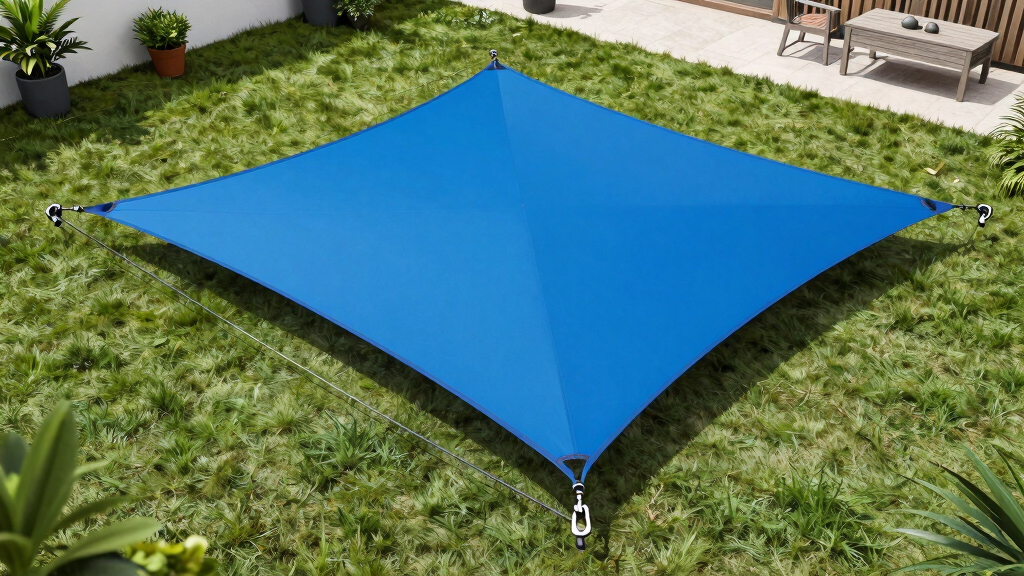
Design sails as triangles or hypar shapes to better shed wind and reduce flutter.
Monitor weather forecasts closely; plan to remove sails if high-wind alerts are issued.
Soil saturation weakens anchors — adapt your foundation with larger footings or specialized anchors for monsoon season.
Why Microbursts Are the Real Storm Threat — And How They Destroy Sails
A microburst is a sudden, intense downdraft from a thunderstorm. Winds can top 100 mph — enough to flatten trees and turn your shade sail into debris. Unlike steady wind, microbursts hit fast and hard, creating shock loads that can snap hardware or rip posts out of the ground.
In the Southwest, especially during monsoon season, microbursts are common. They often come with rain, lightning, and hail. Your sail needs to be engineered with these extremes in mind, or it becomes a loose kite in the wind. Consider the force: a 100 mph gust pushes with over 26 pounds per square foot. A 20×20 foot sail faces thousands of pounds of force — enough to crush a small car.
That’s why the best strategy isn’t just a heavy anchor — it’s knowing when to take the sail down and having a quick-release system ready. Otherwise, you risk damage, injury, and costly repairs.
heavy-duty steel posts for shade sail
As an affiliate, we earn on qualifying purchases.
As an affiliate, we earn on qualifying purchases.
How to Build a Microburst-Proof Anchor System in 5 Easy Steps
- Choose heavy-duty posts: Steel pipe (schedule 40, 4″+ diameter) beats wood 4x4s — steel resists snapping under shock loads. Steel posts provide a much higher tensile strength, reducing the risk of failure under sudden gusts. While wood may seem easier or cheaper, it’s more prone to cracking or splitting when subjected to shock loads, especially in wet conditions. Investing in steel ensures longevity and safety, but it also means your posts can withstand the force without bending or breaking.
- Dig deep footings: 3–4 ft deep, 12–18″ diameter concrete footings with rebar, belled at the bottom, give stability even in soaked soil. Deep footings distribute the force over a larger area, reducing the chance of the post pulling out. Reinforcing with rebar adds tensile strength, preventing cracking and failure. During monsoon conditions, soil saturation can weaken surface anchors, and shallow or poorly reinforced footings can fail under extreme winds. Choosing larger, deeper footings minimizes this risk because they provide a sturdier foundation that resists uplift and lateral forces. The added rebar increases tensile strength, ensuring the concrete can handle shock loads without cracking, which is critical when wind pressures spike suddenly. Essentially, deeper and reinforced footings act as the backbone of your anchoring system, absorbing and distributing the force, preventing catastrophic failure.
- Anchor to structural points: Attach to rafters, beams, or load-bearing walls—not fascia or gutters. Use welded pad eyes or heavy-duty eye bolts rated well above expected loads. Connecting to structural elements ensures the load is transferred to parts of your home designed to carry weight, rather than vulnerable fascia or gutter systems that can detach or break. Using welded hardware and proper fasteners ensures the connection remains secure, even under shock loads, reducing the risk of catastrophic failure during microbursts. This approach distributes the force evenly and minimizes the chance of ripping the sail free or damaging your structure, especially when wind pressures spike unexpectedly.
- Use rated hardware: Marine-grade stainless steel components, forged turnbuckles, and snap shackles allow quick removal and re-tensioning. These components are designed to withstand the corrosive environment and high stress of storm conditions. Choosing hardware with load ratings significantly above your expected maximum force provides a safety margin, preventing hardware failure during sudden gusts. Properly maintained rated hardware ensures your system remains reliable over multiple storm seasons. Investing in high-quality, rated hardware also means you can confidently tighten or release the sail as needed, knowing it won’t fail under extreme stress, which is crucial during microburst events.
- Design for wind shedding: Install the sail as a triangle with corners at different heights (hypar). Keep it drum-tight, with no sag, to minimize flutter and water pooling. A well-designed hypar shape allows wind to flow off smoothly, reducing pressure buildup. Proper tension prevents water pooling, which adds weight and increases stress on the anchors. This shape also minimizes flutter that can cause hardware fatigue over time, extending the lifespan of your setup and improving its chances of surviving microbursts. The shape’s aerodynamic advantage is significant: it reduces the overall wind load on the sail, helping it shed gusts more effectively and preventing water from pooling, which can add dangerous weight during heavy rains, further stressing your anchors.
Imagine a yard with steel posts, belled concrete footings, and a triangular sail with twist — it’s engineered to survive gusts of 100+ mph. But the key? Have a system that’s easy to unclip in moments.
quick-release hardware for shade sails
As an affiliate, we earn on qualifying purchases.
As an affiliate, we earn on qualifying purchases.
Why Quick-Release Hardware Is Your Best Friend During a Storm
Quick-release hardware turns a tough situation into a 5-minute task. Snap shackles, turnbuckle adjusters, and carabiners rated for heavy loads let you detach your sail fast. When a storm forecast shows 50+ mph winds, pulling the sail down prevents damage and flying debris.
Picture this: a storm warning hits at 3 pm. You reach for your quick-release tools, unclip the sail, and store it in the garage. The wind roars past, but your yard stays intact. Without this gear, you risk tearing the fabric, snapping hardware, or worse — someone getting hurt from flying panels.
Invest in hardware rated at least 1.5 times your expected maximum load. Practice removing the sail so you can do it in seconds, not minutes, when the weather turns nasty.
Having reliable quick-release hardware isn’t just about convenience — it’s a critical safety measure. It allows you to respond swiftly to sudden microbursts, minimizing the risk of hardware failure, property damage, or injury. Regularly test and familiarize yourself with the removal process so that when seconds matter, you’re prepared to act quickly and confidently.
monsoon storm resistant shade sail anchors
As an affiliate, we earn on qualifying purchases.
As an affiliate, we earn on qualifying purchases.
How Soil and Ground Conditions Affect Your Anchors
Wet soil isn’t your friend. During monsoons, rain saturates the ground, weakening the hold of concrete footings and ground anchors. A footing that’s solid in dry conditions may loosen or shift in saturated soil, risking failure when gusts hit.
Use larger footings — at least 3 ft deep — and reinforce with rebar. In loose or sandy soil, consider helical screw anchors or concrete-filled earth anchors. But always remember: saturated soil reduces the holding capacity by as much as 50%. This means that what held securely in dry conditions might become unreliable after heavy rain, increasing the risk of anchor failure during a storm. Recognizing this, you should adapt your anchoring method accordingly—using larger, deeper, or different types of anchors to compensate for the reduced soil strength. For example, in soft or loose soil, opting for helical screw anchors or earth anchors filled with concrete provides better grip than standard ground stakes or shallow footings. These specialized anchors grip the soil more effectively, especially when saturated, reducing the risk of pull-out during extreme winds. The tradeoff is that installation may take more effort and time, but this investment dramatically improves safety and resilience during storms. It’s crucial to assess your ground conditions before installation and choose anchors that match the soil type and saturation level, ensuring your sail remains secure even in the worst monsoon microbursts.
Take a moment to check your ground conditions before installation. If soil is saturated, add extra depth or switch to anchors designed for soft ground. In a microburst, a loose anchor can become a deadly projectile or cause your sail to rip free.
shade sail tensioning and anchoring kit
As an affiliate, we earn on qualifying purchases.
As an affiliate, we earn on qualifying purchases.
Triangle, Hypar, or Square — Which Shape Wins Against Wind?
A triangle with corners at different heights (hypar) handles wind better than a square or rectangle. The asymmetrical shape allows wind to flow off more smoothly, reducing flutter and water pooling.
For example, a triangular sail installed with one corner at 8 ft and another at 6 ft creates a twist that lets wind escape. This shape minimizes shock loads and flutter, which cause hardware fatigue.
Compare this with a square sail, which can act like a kite in gusts. Water pooling in the center adds weight, increasing stress on anchors and fabric. So, choose a hypar or triangular design for the best chance to survive monsoon storms. The shape you select directly influences how wind and water interact with your sail, affecting both durability and safety during extreme weather.
Fabric Choices That Help You Survive Monsoon Winds
Woven HDPE shade cloth breathes and passes some air, reducing wind pressure. Waterproof PVC fabrics catch more wind, pool water, and are more prone to tearing in gusts. For monsoon resilience, choose UV-stabilized, heavy-duty woven fabrics with reinforced edges.
Imagine a sail with stainless-steel webbing-reinforced corners and webbed edges — it resists tearing and handles shock loads better. Heavy UV-stabilized fabrics also last longer through the season’s intense sun and storms.
Remember: fabric weight and weave matter. Heavier, tightly woven fabrics withstand wind better. But if you want to keep your yard cooler, opt for breathable material and always avoid waterproof fabrics that tend to pool water and catch gusts. Choosing the right fabric involves balancing durability, breathability, and weight — all crucial factors in ensuring your sail can withstand the rigors of monsoon storms.
Latest Trends and Tools for Storm-Ready Shade Sails
Today’s innovations focus on quick deployment and storm detection. Motorized retractable sails with built-in wind sensors can automatically pull down when gusts hit preset speeds. Snap-shackle kits and adjustable hardware make manual removal quick and easy.
Storm warnings from the NWS, especially microburst alerts, give you precious minutes to act. Some homeowners automate their systems with wind sensors linked to smart controllers. This tech reduces the risk of damage and makes safety effortless.
Newer fabrics, heavy-duty webbing, and ground anchors designed for monsoon-soaked soil are also improving. Keep an eye on local codes, as many places are updating regulations for large, attached sails — making proper permitting essential.
Staying ahead with these tools and technologies allows you to be proactive rather than reactive. Automated systems can detect dangerous wind speeds and respond instantly, minimizing the risk of damage or injury. Combining these innovations with traditional robust hardware ensures your yard is prepared for even the fiercest monsoon microbursts.
Should You Anchor or Just Take It Down?
In most cases, the safest move during a microburst is to detach your sail. Anchoring well and having quick-release hardware makes this easy. Trying to withstand a microburst with a sail still up is a gamble — and not worth the risk.
Imagine you get a 30-minute warning from the weather app or NWS alert. You grab your tools, unclip the sail, and store it safely. You avoid damage, injury, and the hassle of repairs later. This quick action can be the difference between a minor inconvenience and a major catastrophe. The ability to remove your sail swiftly reduces the chances of hardware failure, flying debris, or property damage, especially during unpredictable microbursts.
Remember: no anchor is foolproof in saturated soil or with winds over 100 mph. The goal is to protect your property and safety first — if storm conditions are forecasted, your best bet is to take the sail down fast. Prioritizing quick removal over trying to brace against extreme winds is often the safest and most practical approach.
Frequently Asked Questions
How strong should my anchor hardware be for monsoon microbursts?
Choose hardware rated at least 1.5 times your maximum expected load — for example, marine-grade stainless steel components capable of handling over 1,000 pounds of force per connection. Always check manufacturer ratings and consult local codes.Can I leave my sail up during a thunderstorm?
Better not. Microbursts can hit suddenly, and even a well-anchored sail might fail. The safest move is to have a quick-release system so you can remove it in minutes when a storm is forecasted.What’s the best way to anchor in saturated soil?
Use larger, deeper concrete footings, or switch to helical screw anchors designed for soft ground. Remember, saturated soil can halve your anchor’s holding power, so plan for extra depth or stronger anchors. This ensures your sail remains secure during extreme winds, as saturated soil reduces grip and increases the risk of anchors pulling out. Choosing appropriate anchors like helical screw types or concrete-filled earth anchors provides better resistance, but may require more effort to install. The tradeoff is worth it for safety—an anchor that holds in saturated soil can prevent your sail from becoming a dangerous projectile or ripping free during a microburst.How can I tell if my hardware or anchors are rated for high winds?
Always check the manufacturer’s load ratings and ratings for shock loads. Look for marine-grade stainless steel, forged components, and hardware rated well above your expected maximum wind stress.Is it worth automating the retraction of my sail for storms?
If you have the budget, storm-responsive retractable systems with wind sensors can save you time and stress. They automatically pull the sail down when gusts exceed preset speeds, reducing risk of damage.Conclusion
Your yard’s safety during monsoon season depends on smart engineering and swift action. Build a sturdy, well-anchored sail system that’s easy to take down. When microburst warnings flash, don’t hesitate — pull that sail in and keep your yard standing tall.
Storms come fast, but with the right setup and a quick plan, you can protect your space and avoid costly damage. Think of your anchors as a safety net — solid enough to hold, but ready to fall away at a moment’s notice.
Fall Picks
fall essentials
As an affiliate, we earn on qualifying purchases.