
TL;DR

Get garden gear delivered free with Prime
- Fast, free delivery on millions of items
- Prime Video, Amazon Music and more included
- Member-only deals all year
In Phoenix, understanding the summer sun’s high arc helps you orient shade sails for better shade and cooling. Installing at the right angle, with proper tension, and considering the sun’s trajectory makes your outdoor space cooler and more comfortable.
Phoenix’s scorching summer sun can turn your outdoor space into a furnace if you don’t plan properly. The trick? Reading the sun’s path and orienting your shade sail accordingly. It’s not just about throwing a sail up — it’s about understanding how the sun moves across the sky from dawn to dusk, especially during the hottest months.
If you want your patio to stay cool, your plants to thrive, and your energy bills to stay lower, mastering this simple skill makes all the difference. Let’s break down how the sun’s summer journey influences your shade choices and what you can do to get it just right.
Shade Sail Orientation in Phoenix: Reading the Summer Sun Path
The essential move: follow Phoenix’s high northeast-to-northwest summer arc, then tilt a taut sail to intercept the hours you actually use. The right geometry delivers cooler surfaces, better comfort and less solar heat near the home.
A high arc changes where shade must work.
In summer, the Phoenix sun rises in the northeast, climbs to more than 80° above the horizon, then descends toward the northwest. Midday rays are nearly overhead, while the lower western sun pushes heat beneath poorly positioned sails later in the day.
Summer sun path · Phoenix
Conceptual June profile — use a location-specific sun-path tool for exact anchor placement.
The practical sweet spot is 30° to 45°.
A sloped plane intercepts high-angle sunlight, sheds rain and helps keep fabric under stable tension. The exact pitch depends on anchor heights, patio exposure and whether morning, midday or afternoon relief matters most.
Tilt spectrum
Target the green zone for a strong summer starting point.
Angle toward the heat you want to stop.
For a south-facing patio, biasing the sail toward the southwest can improve afternoon protection. A northeastern bias serves breakfast areas and other morning-use spaces.
Shade, airflow and tension work as one system.
Map the occupied zone
Mark where people, doors, glazing and sensitive plants sit between late morning and afternoon. Design the shadow for those targets—not merely the patio outline.
Best tool · compass app + sun-path chartPreserve air movement
A steeper sail can improve interception but may alter airflow. Keep enough clearance around edges for rising hot air and Phoenix breezes to escape.
Tradeoff · shade depth ↔ open airflowBuild in real tension
A taut, twisted plane resists flapping and keeps the intended shadow stable. Sagging creates heat gaps, collects debris and adds stress during gusts.
Material · UV-resistant breathable HDPEMatch the sail to your priority hours.
No single orientation wins every hour. Select the period that matters most, then confirm the projected shadow at multiple times before setting permanent anchors.
| Orientation | Best for | Coverage time | Typical angle | Peak-heat fit |
|---|---|---|---|---|
| East–West | Midday overhead shade | 10 AM–4 PM | 30°–45° | ✓Strong |
| North–South | Morning or late afternoon | Sunrise–10 AM / 4 PM–sunset | 20°–35° | ✗Limited |
| Diagonal | Flexible all-day reach | Across daylight hours | 35°–50° | ~Balanced |
Every installation decision changes the final shade.
Use this chain to diagnose a weak result before moving anchors.
Verify the shadow before committing.
Observe or model the site at 10 AM, solar noon and 4 PM. Seasonal adjustment is valuable when the anchor system safely supports it.
How the Summer Sun Moves Over Phoenix and Why It Matters
The summer sun in Phoenix climbs high — over 80° at noon around June 21. It starts in the northeast, arcs across the sky, and dips into the northwest. This high trajectory means the sun’s rays are almost directly overhead at midday, making overhead shade your best bet for relief.
Understanding this path is key. If you install your shade sail facing the wrong way, it’ll block little of the midday sun when you need it most. Think of the sun’s arc as a giant, fiery roller coaster — knowing where it peaks helps you catch the best shade.
Why does this matter? Because the sun’s high arc means that shade structures need to be strategically placed and angled to intercept the most intense rays. Misalignment can lead to wasted effort — your shade might block morning or evening sun but leave you exposed during peak heat hours, which defeats the purpose of shading. This understanding allows you to optimize your setup for maximum relief and energy savings, especially during the hottest months when sun exposure can significantly increase cooling costs.
As an affiliate, we earn on qualifying purchases.
Top Tips to Position Your Shade Sail for Maximum Summer Relief
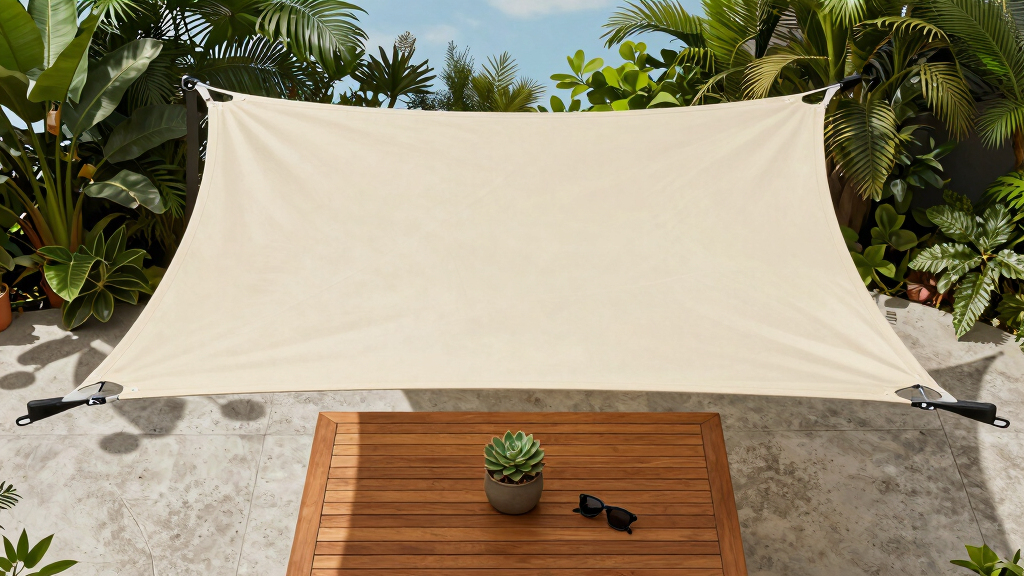
In Phoenix, positioning your sail to intercept the sun during peak hours means installing at an angle of about 30° to 45°. This tilt isn’t just a random choice — it’s a calculated position that aligns with the sun’s high arc, ensuring that the shade provides relief when the sun is at its zenith.
For example, if your patio faces south, angling the sail southwest can block the intense afternoon sun, which is often the hottest part of the day. Conversely, a northeast orientation might be better for morning shade, helping you start your day cool. Using a compass app or a sun path chart isn’t just about precision — it’s about understanding the tradeoffs. A steeper angle might block more sun during peak hours but could also reduce airflow, which is crucial in Phoenix’s dry heat. Conversely, a lower tilt might increase airflow but leave some heat unblocked. Balancing these factors ensures you optimize comfort while maintaining natural ventilation.
Proper tension is also critical. A taut sail not only withstands wind and weather but also ensures that the shade remains effective throughout the season. Sagging fabric creates gaps that let in unwanted heat and dust, reducing the intended cooling effect. Therefore, tensioning isn’t just about aesthetics — it’s about maximizing the functional lifespan and effectiveness of your shade, especially under Phoenix’s relentless sun and wind conditions.
As an affiliate, we earn on qualifying purchases.
Compare Common Shade Sail Orientations and When to Use Them
| Orientation | Best For | Sun Coverage Time | Typical Angle |
|---|---|---|---|
| East-West | Midday overhead shade | 10 AM – 4 PM | 30° to 45° |
| North-South | Morning or late afternoon shade | Sunrise to 10 AM / 4 PM to sunset | 20° to 35° |
| Diagonal | Extended coverage for entire day | All daylight hours | 35° to 50° |
Choosing the right orientation isn’t just about blocking the sun — it’s about understanding how each position impacts comfort and energy efficiency. For example, an east-west orientation at a 30° to 45° tilt is ideal for providing maximum relief during the hottest midday hours, which can significantly reduce cooling costs. Conversely, north-south setups are better if you want to shade your space during mornings or evenings when the sun is lower, but they may be less effective during peak heat times. The diagonal orientation offers a compromise, providing more flexible coverage but requiring careful angle adjustments to match seasonal sun paths. Recognizing these tradeoffs helps you tailor your shade setup to your specific needs, balancing shade, airflow, and durability as seasons change.
As an affiliate, we earn on qualifying purchases.
As an affiliate, we earn on qualifying purchases.
Halloween Picks
halloween
As an affiliate, we earn on qualifying purchases.