TL;DR

Get garden gear delivered free with Prime
- Fast, free delivery on millions of items
- Prime Video, Amazon Music and more included
- Member-only deals all year
An Amateur Gardening report published Nov. 8, 2026, presents seven plants recommended by garden designer Fi Boyle for sloping garden beds. The suggestions include spreading ground covers, roses, Mexican fleabane, trailing rosemary and sedum, with suitability depending on a slope’s soil, light and moisture.
Amateur Gardening published a list of seven plants recommended by award-winning garden designer Fi Boyle for adding colour and ground cover to sloping garden beds. The choices range from shade-tolerant geranium to sun-loving sedum, and Boyle says gardeners should match plants to their soil and aspect to help them thrive with less care.
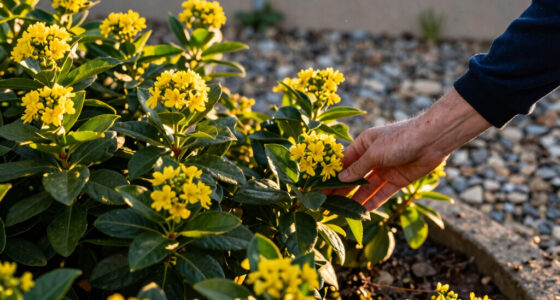
Boyle, of Fi Boyle Garden Design, recommends ground-covering plants to disguise bare patches of soil on slopes. Her list includes Geranium macrorrhizum, which tolerates dry shade and a range of soil types, forming a semi-evergreen mat with fuchsia-pink flowers in summer and foliage colour in autumn. The report gives its height as 10 to 50 centimetres and its spread as 50 centimetres to 1 metre.
Vinca minor, or lesser periwinkle, is evergreen and can flower from spring into September in suitable conditions, according to the report. It grows in sun or partial shade and needs well-drained soil; sunnier sites are expected to produce more flowers. Ajuga reptans is described as pollinator-friendly and suited to moist clay or loam, in partial shade or full sun. The report advises giving it water during drought and leaving space between it and other mat-forming plants, since it can compete with them.
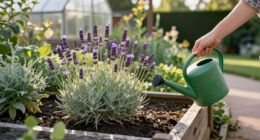
The remaining recommendations cover different garden conditions. Boyle suggests ground-cover roses for sunny to lightly shaded areas, noting they need moisture and benefit from mulch. Mexican fleabane (Erigeron karvinskianus) flowers from May to October in full sun and well-drained soil, and can self-seed. Trailing rosemary (Rosmarinus ‘Prostratus’) is a fragrant, fairly drought-resistant choice for full sun and chalk, loam or sandy soil. Sedum spurium is another sun-loving option for well-drained chalk, loam or sand, with summer flowers and foliage interest beyond its flowering period.
Plant Choices for Sloping Beds
Slopes can leave soil exposed and make it harder to establish plants suited to the site. The recommendations give gardeners a shortlist of spreading plants that can cover bare ground while providing flowers or foliage interest. The list also makes clear that there is no single solution for every bank: some plants suit dry shade, while others need full sun, moisture or sharply drained soil.
Matching plants to the conditions may reduce avoidable care, Boyle says. Some selections, including periwinkle and sedum, form mats; Mexican fleabane can seed itself into cracks. Their spreading habits can help fill gaps, but the report also cautions that ajuga may compete with nearby mat-forming plants. Gardeners should account for how each plant grows, not just its flower colour.
Popular right now

Dyson V15 Detect Cordless Vacuum

Sony WH-1000XM5 Premium Noise Cancelling Wireless Headphones – Midnight Blue

eufy E15 Gen 2 Wire-Free Robotic Lawn Mower
As an affiliate, we earn on qualifying purchases.
Boyle’s Slope-Garden Experience
The report identifies Boyle as a garden designer with experience creating a garden on a former quarry site. It says her award-winning site informs her advice on planting sloping ground. The recommendations are presented for a range of soil types and garden situations, rather than as a fixed planting scheme for every slope.
For gardeners choosing among the seven plants, the report’s central advice is to check soil type and aspect before planting. Aspect affects the light a site receives, while drainage and moisture needs vary among the recommendations. The listed plant dimensions also differ considerably, so the expected spread is relevant when planning how much of a bank a planting will cover.
“What works depends so much on the aspect and soil. The key is to match the plant to its surroundings, otherwise it won’t thrive and will need a lot of care.”
— Fi Boyle, Fi Boyle Garden Design, as quoted by Amateur Gardening
Conditions Shape Plant Success
The report does not specify a particular region, climate or slope for the recommendations, and it does not give comparative trial data on how quickly the plants cover ground or how much maintenance each requires. The suitability of a plant in an individual garden will depend on its local soil, drainage, light and moisture, as Boyle notes.
Some details are variety-dependent: the report says ground-cover rose height and spread depend on the variety. It also does not state how many plants are needed to cover a given area or provide a full planting plan. Gardeners will need to check the requirements of specific varieties and their site before deciding what to plant.
Check Site Before Planting
The next step for gardeners is to assess the slope’s light, soil and drainage, then compare those conditions with the needs listed for each plant. For example, the report points to geranium for dry shade, ajuga for moist clay or loam, and trailing rosemary or sedum for sunny, well-drained ground.
Care will continue after planting: the report recommends mulching roses to retain moisture, watering ajuga during drought, deadheading geranium to encourage regrowth, and cutting back sedum flowers after they fade. It also suggests dividing ajuga every few years and lifting and dividing sedum in spring to increase plants. These are the article’s gardening recommendations; no further trial results or follow-up planting outcomes are reported.
Key Questions
Which plant in the list is suited to dry shade?
Geranium macrorrhizum is described as tolerant of dry shade and a range of soil types. It forms a semi-evergreen mat and has summer flowers and autumn foliage colour.
Which recommendations need full sun?
The report lists Mexican fleabane, trailing rosemary and sedum spurium for full sun. Ground-cover roses are listed for full sun to light shade; actual suitability still depends on soil and moisture.
Can these plants cover bare soil on a bank?
Several recommendations are mat-forming or spreading, including periwinkle, geranium and ajuga. The report presents ground covers as a way to disguise bare soil, but does not provide a planting density or a guaranteed coverage timeframe.
What should gardeners check before choosing?
Boyle advises checking the slope’s aspect and soil. The report also gives differing needs for drainage and moisture, so gardeners should match those conditions to the plant and variety they select.
Source: amateurgardening.com