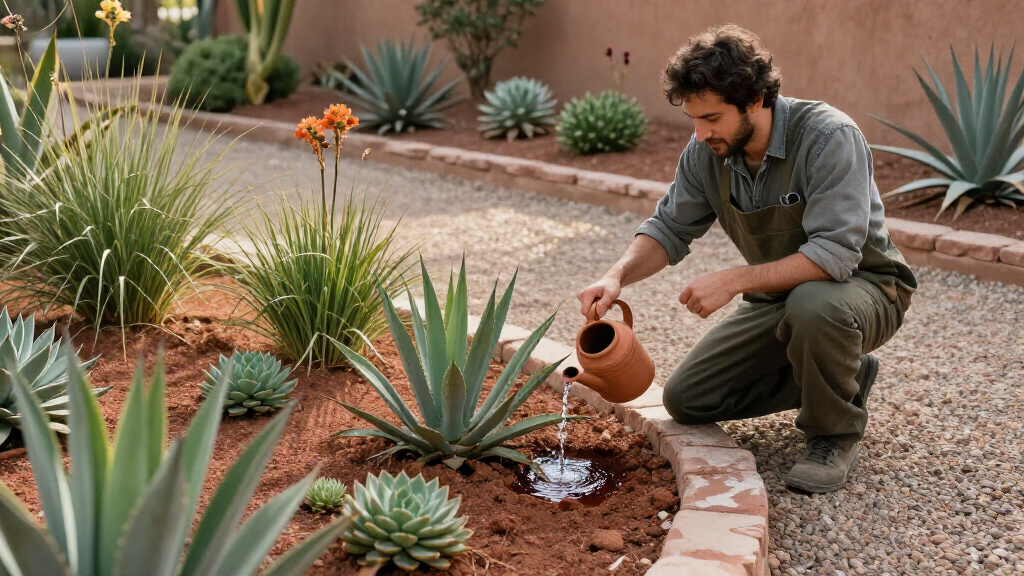
Use this guide to plan and plant drought-tolerant desert plants that match your climate and growing conditions. You will select suitable plants, prepare a well-drained site, plant them at the right depth, and water them while their roots establish. It is written for beginner gardeners; allow about 2–4 hours for a small planting, with follow-up watering and observation over the first year.

Get garden gear delivered free — and shop member deals
- Fast, free delivery on millions of items
- Access to Prime Big Deal Days deals on October 6–7
- Prime Video, Amazon Music and more included
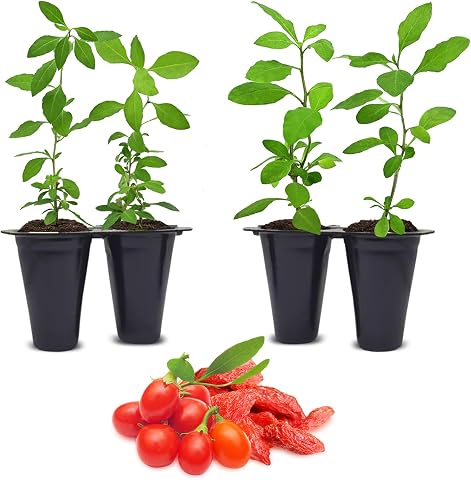
Goji Berry (Wolfberry) Live Starter Plants, 4-Pack
- ✔ Brand: Fam Plants
- ✔ Plant type: Listed as tropical plant; product is goji berry (wolfberry)
- ✔ Quantity: 4 starter plants

The Drought-Defying California Garden: 230 Native Plants for a Lush, Low-Water Landscape
- ✔ Format: Gardening book
- ✔ Plant coverage: 230 native plants
- ✔ Region: California

Dry Climate Gardening: Growing Beautiful, Sustainable Gardens in Low-Water Conditions
- ✔ Format: Gardening book
- ✔ Subject: Dry-climate gardening
- ✔ Water focus: Low-water conditions
Difficulty: Beginner | Time: 2–4 hours for a small planting, plus ongoing care during the first year
What You’ll Need
Tools & Materials:
- Spade or garden trowel
- Gloves
- Bucket or hose with a gentle spray setting
- Measuring tape
- Plant labels or a site plan
- Mulch such as gravel, if suitable for the chosen plants
Knowledge:
- Basic digging and planting skills
- Ability to identify the planting area’s sun exposure and drainage
- Willingness to check plant-specific care instructions
Choose plants for your actual conditions, not just for a desert-themed appearance. Desert climates vary in winter cold, summer heat, rainfall, soil, and elevation. Confirm each plant’s mature size, cold tolerance, sun needs, and water needs with a local nursery, extension service, or regional plant list. Avoid planting during extreme heat or when the ground is frozen or waterlogged. Check local rules before collecting or planting wild plants.
Goji Berry (Wolfberry) Live Starter Plants, 4-Pack
Among these three choices, this is the only one that arrives as a living plant rather than advice in book form, making it the most direct option for someone ready to grow. The four-pack of goji berry starters is described as drought-tolerant once established, self-fertile, and suitable for containers or in-ground planting. Self-fertility means a plant can fruit independently, so we need not rely on buying a separate pollinator variety just to pursue berries. The stated hardiness down to -10°F and zones 5–9 also gives this pick a broader cold-climate angle than the desert label alone might suggest.That does not make it a zero-water plant. Young starters need care as they establish, and the listing’s partial-sun guidance may not match every hot, exposed desert site. The product data also calls the plant type “tropical” while giving a cold-hardiness range, and lists an expected height of just 2 inches; those details are worth clarifying before purchase rather than treating them as reliable mature-size guidance. Compared with the California native-plant book, goji offers a tangible crop but less help designing a diverse, locally adapted landscape. Choose it for edible planting, not as a complete desert-garden plan.
Pros:
- Four live starter plants provide a direct way to begin growing rather than only planning.
- Described as self-fertile, with each plant able to fruit independently.
- Drought-tolerant once established and listed as hardy to -10°F.
- Can be grown in containers or planted in the ground.
Cons:
- Drought tolerance is specified only after establishment, so initial watering and care are still needed.
- The listed expected height of 2 inches is unclear as a useful mature-size specification.
- The supplied partial-sun guidance may not suit every hot, high-exposure desert location.
Best for: Gardeners who want a small group of fruiting plants and can provide establishment care in a suitable container or garden bed.
Not ideal for: Buyers seeking a ready-made native landscape, a no-irrigation plant from day one, or a clearly specified mature shrub size.
Bottom line: For buyers who want an edible living plant rather than landscape-planning advice, the goji pack is the clearest match, provided we account for establishment needs and confirm the size details.
“For buyers who want an edible living plant rather than landscape-planning advice, the goji pack is the clearest match, provided we account for establishment needs and confirm the size details.”
The Drought-Defying California Garden: 230 Native Plants for a Lush, Low-Water Landscape
If our goal is to shape a landscape rather than add one fruiting shrub, this book has the most clearly defined planning scope in the group. Its emphasis on 230 California native plants connects low-water gardening with regional selection, a useful distinction from simply choosing any plant described as drought-tolerant. For California readers, native options can make the search more focused than the goji pack, which is a single crop-oriented choice and is not presented as a local native plant.The limitation is also the selling point: California-specific coverage makes the book a weaker fit for gardeners elsewhere, whose conditions and suitable species may differ. The supplied information does not identify the particular plants, layout examples, or level of step-by-step instruction, so we should not assume it includes a complete design plan. Unlike Dry Climate Gardening, its stated plant count and region give us a concrete basis for deciding whether it fits. It is a reference for researching choices, not a live-plant order, and readers should still check each candidate against their local climate, soil, and exposure.
Pros:
- Covers 230 native plant options, giving readers more breadth than the single-plant goji pack.
- Explicitly centers low-water landscape planning.
- Regional California focus can make plant research more relevant to local gardening.
- Useful as a planning resource rather than a single-species recommendation.
Cons:
- Its regional emphasis may limit usefulness for gardens outside California.
- The supplied details do not identify specific species or explain the depth of design guidance.
- It provides information, not living plants or a guarantee that a chosen plant suits every site.
Best for: California gardeners who want to explore a broad selection of native plants for a low-water landscape.
Not ideal for: Gardeners outside California who need locally tailored species, or buyers expecting plants, seeds, or a detailed feature list from the product description.
Bottom line: For California readers planning a varied, low-water native landscape, this is the most region-specific resource here, but its local focus is a real constraint beyond the state.
“For California readers planning a varied, low-water native landscape, this is the most region-specific resource here, but its local focus is a real constraint beyond the state.”
Dry Climate Gardening: Growing Beautiful, Sustainable Gardens in Low-Water Conditions
This title is the broadest-sounding resource in the lineup: it addresses beautiful, sustainable gardens in low-water conditions, rather than promising a particular regional plant list or selling a live specimen. That makes it a possible starting point for readers whose main question is how to think about gardening in a dry climate. Compared with The Drought-Defying California Garden, it appears less geographically narrow from its title, while the California book gives a much more concrete scope through its stated native-plant count and region.We should be cautious about interpreting that broad title as proof of specific coverage. The supplied product details do not say which plants are included, where the advice applies, or whether the book offers design examples or practical step-by-step guidance. That uncertainty puts it behind the California guide for readers who need a defined reference and behind the goji pack for anyone ready to plant. Its value is therefore in matching the subject, not in verified detail. Before choosing it for a particular desert garden, check the book’s contents and confirm that its guidance fits our region and goals.
Pros:
- Directly addresses gardening in low-water conditions.
- Frames dry-climate gardening around sustainability as well as appearance.
- Its broad title may appeal to readers beyond the California-specific scope of the other book.
Cons:
- The supplied information does not specify plant selections, regional coverage, or methods.
- Less concrete for comparison than the California guide’s stated plant count and location.
- Does not provide a living plant for buyers who are ready to start planting.
Best for: Readers exploring sustainable gardening in dry conditions who want a broad topic-focused book and are comfortable checking its contents before relying on it.
Not ideal for: Buyers who need a confirmed plant list, location-specific recommendations, a live plant, or clearly documented instructions.
Bottom line: This book may suit readers seeking broad dry-climate gardening context, but limited product details make it harder to recommend over the more specifically described California guide.
“This book may suit readers seeking broad dry-climate gardening context, but limited product details make it harder to recommend over the more specifically described California guide.”
As an Amazon Associate we earn from qualifying purchases.
Before You Start
Check the forecast and plan to plant during a mild period, ideally in a cooler season when roots can grow before intense summer heat. Locate underground utilities before digging. Keep new plants in their nursery pots until the planting area is ready, and water dry root balls before planting. Do not assume every plant labeled “drought tolerant” has the same needs: succulents, shrubs, grasses, and desert trees can require different soil and watering routines. Follow the nursery label if its instructions differ from general guidance here.
Step-by-Step Instructions
Step 1: Map the planting site’s conditions
Observe the site through the day and note how many hours of direct sun it receives, where shade falls, and whether wind or reflected heat from walls makes it hotter. After rain or watering, check whether water drains away or sits in a puddle. Feel the soil a few inches below the surface to judge whether it is sandy, gritty, compacted, or clay-heavy. Record the space available so you can allow for each plant’s mature width.
Tip: Do not treat “desert plant” as a guarantee of full-sun tolerance. Some regional species need afternoon shade, particularly in very hot areas.
Check: You have a simple site record covering sun, drainage, soil texture, available space, and any unusually hot or windy spots.
Step 2: Select plants that fit the site
Choose plants recommended for your region and match their listed requirements to your site. Check the expected mature height and width, sunlight, soil drainage, cold tolerance, and watering needs. Mix plants with similar needs in the same bed so you can water them appropriately. For a small garden, select a few well-suited species rather than crowding many types together. Ask a local nursery or extension service to confirm choices when your winters are cold or your soil is heavy.
Tip: A plant can tolerate drought after establishment but still need regular water during its first growing season. Read the establishment instructions on its label.
Check: Every selected plant has a known mature size and is rated for your local climate and the conditions of its intended position.
Step 3: Lay out plants before digging
Set the potted plants on the ground in their intended positions. Space them according to their mature width, not the size of the pots. Leave access for maintenance and keep plants away from paths, drains, foundations, and utilities as appropriate for their mature roots and branches. Move each pot until the layout gives plants enough room and places sun- or shade-sensitive species correctly.
Tip: Check the nursery label for spacing guidance. A crowded planting may look full at first but can restrict airflow and require later removal or pruning.
Check: The layout leaves room for mature growth, provides access, and places each plant in a suitable light and drainage zone.
Step 4: Prepare the soil and planting holes
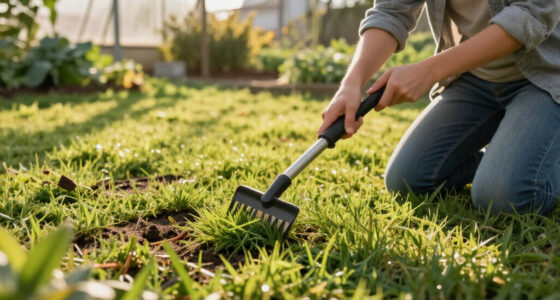
Remove weeds and loosen the soil across the planting area without working it when it is wet and sticky. Dig each hole as deep as the root ball and about two to three times as wide. In slow-draining ground, pause and test drainage before planting: fill a sample hole with water and see whether it drains away rather than remaining saturated. If drainage is poor, choose plants suited to the soil or create a raised, well-drained planting area using an appropriate local soil mix. Avoid placing a small pocket of amended soil inside heavy clay; it can hold water around the roots.
Tip: Do not add gravel to the bottom of a planting hole as a drainage layer. It does not fix poorly draining soil and can leave water collected around the root zone.
Check: Each hole is no deeper than the root ball, is wider than it, and the planting area is not persistently waterlogged.
Step 5: Plant at the correct depth
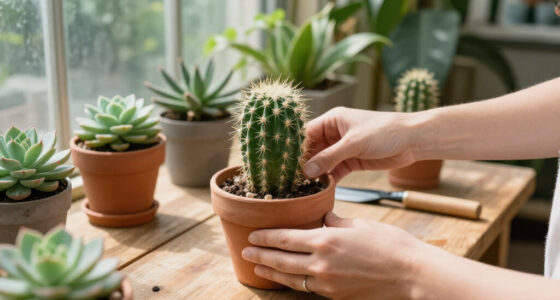
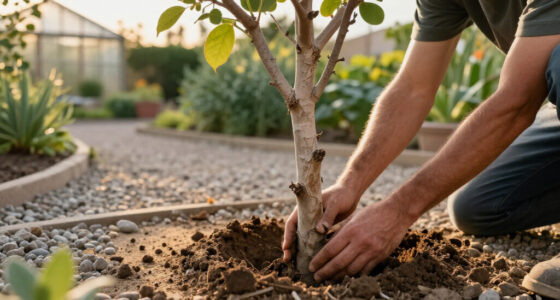
Remove a plant from its pot carefully, supporting the root ball rather than pulling on the stems. If roots circle tightly around the outside, gently loosen the outer roots; avoid tearing the root ball apart. Set the plant in the hole with the top of the root ball level with the surrounding soil, unless its label specifies otherwise. Backfill with the excavated soil, firming it lightly to remove large air pockets without compacting it. Keep the crown and stem base uncovered.
Tip: Planting too deeply can bury the crown and encourage rot, especially in many cacti and succulents. Handle spiny plants with thick gloves or folded cardboard.
Check: The plant stands upright, the root ball is at the recommended depth, and soil does not cover the crown or stem base.
Step 6: Water the root zone and add suitable mulch
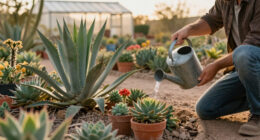
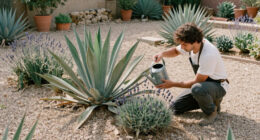
Water slowly at the base of each plant until the root ball and adjacent soil are moistened. Let excess water drain; do not leave plants standing in a basin of water unless their care instructions call for it. If using mulch, apply a shallow layer suited to the species and climate, keeping it clear of stems and crowns. Gravel mulch can suit many desert plantings, but some plants benefit from organic mulch or bare mineral soil instead.
Tip: A light surface sprinkle may not reach the root ball. Check below the surface with a finger or trowel to confirm water reached the roots.
Check: The root zone is damp but not saturated, and mulch, if used, does not touch plant stems or crowns.
Step 7: Set an establishment watering routine
Use the plant label or local guidance to set watering intervals for each species. During establishment, check soil moisture near the root ball before watering; water when the root zone has dried to the level appropriate for that plant. Water deeply enough to reach the roots, then allow suitable drainage. Increase checks during hot, dry, or windy weather, and reduce watering after rain or during cool weather. As roots establish, extend the time between watering rather than giving frequent shallow sips.
Tip: There is no single safe schedule for all desert plants. Cacti and many succulents are particularly vulnerable to repeated watering in wet soil; young shrubs may need more frequent checks.
Check: You have a plant-specific routine based on root-zone moisture and weather, rather than a fixed schedule applied to every plant.
Step 8: Monitor growth and adjust care
Inspect plants regularly during the first growing season for wilting, yellowing, soft or darkened stems, pests, and soil that stays wet too long. Check moisture below the surface before changing the watering routine. Remove weeds that compete for water, and replace any plant that proves unsuitable with a better match for the site. Keep labels or a care log with planting dates and watering notes so you can tell how plants respond as they establish.
Tip: Temporary transplant stress can happen, but worsening wilt in wet soil may point to root problems rather than thirst. Check drainage before adding more water.
Check: Plants remain stable or produce healthy new growth, and you can identify and respond to changing soil moisture or plant condition.
Common Mistakes to Avoid
- Choosing plants based only on appearance or a general drought-tolerant label. — Check regional suitability, mature size, cold tolerance, drainage, and light requirements before buying.
- Watering every desert plant on the same frequent schedule. — Group plants by water needs and check the root-zone moisture before watering; account for rain and seasonal changes.
- Planting too deeply or burying a succulent’s crown. — Set the top of the root ball level with the soil surface unless the plant label directs otherwise, and keep stems and crowns clear.
- Trying to correct heavy, wet soil with gravel at the bottom of each hole. — Test drainage first; choose suitable plants or make a properly designed raised bed instead of creating a gravel layer in the hole.
Troubleshooting
Problem: A plant wilts soon after planting.
Solution:
Check the root ball and nearby soil below the surface. If dry, water slowly at the base and confirm the water reaches the roots. If the soil is already wet, do not add more water; check drainage, planting depth, and whether the plant is receiving more heat or wind than its label allows.
Problem: Leaves or stems turn yellow, soft, or dark.
Solution:
Inspect the soil for persistent moisture and check that the crown is not buried. Reduce watering if soil remains wet, clear mulch away from stems, and correct drainage if possible. Remove badly damaged plant material with clean tools. Seek local plant advice if symptoms continue or spread.
Problem: Water runs off the surface without soaking in.
Solution:
Apply water slowly in short passes, allowing it to soak in between passes. Loosen compacted soil around the planting area without damaging roots. If runoff continues, use a suitable basin or watering ring temporarily, keeping water away from stems and crowns, or ask a local garden professional about the soil.
Problem: A plant fails after a cold spell or extreme heat.
Solution:
Compare the plant’s climate rating with the actual site conditions. Protect it from short-term exposure if the label allows, and avoid heavy pruning while damage is unclear. Replace a plant that cannot tolerate the site’s normal extremes with a locally recommended species suited to that position.
What Success Looks Like
The planting is successful when every plant is positioned for its mature size and site requirements, sits at the correct depth, and has a root zone that drains appropriately. During establishment, plants should remain stable and show healthy new growth without persistent wilting, soft or rotting stems, or standing water. You should also have a practical watering routine based on each plant’s needs, soil moisture, and weather—not a single fixed schedule.
Next Steps
Continue checking root-zone moisture through the first growing season and adjust for rainfall, temperature, and plant response. Remove weeds, keep mulch away from crowns, and record which species thrive. Once plants are established, reduce watering gradually according to local guidance; do not assume every species can be left without water. Before adding more plants, review the layout at mature size and choose replacements based on what performed well. Contact a local extension service or qualified nursery if symptoms persist or you are uncertain about a plant’s hardiness or water needs.
Frequently Asked Questions
How often should I water newly planted desert plants?
There is no universal interval. Follow each plant’s label, then check moisture near the root ball before watering. Water when the root zone has dried to the level appropriate for that species, and check more often during hot, windy weather. Reduce watering when the weather is cool or rain has moistened the soil.
Can I plant desert plants in clay soil?
Some regional plants tolerate clay, but many desert species need fast drainage. Test how water moves through the site and select plants suited to the result. If water remains for a long time, consider a properly built raised bed or another site; a gravel layer in the planting hole will not solve the problem.
Should I use gravel mulch around every desert plant?
No. Gravel works for many dry-climate plantings, but mulch choice depends on the species, climate, and soil. Keep any mulch away from stems and crowns. Follow the plant’s care instructions if it calls for organic mulch or bare soil.
When is the best time to plant drought-tolerant desert plants?
Plant during a mild period when roots have time to establish before severe heat or cold. The best season varies by region and plant type, so check local recommendations and avoid planting into frozen, waterlogged, or extremely hot ground.
How do I know whether a plant is established?
Look for stable growth and healthy new leaves or stems over time, without repeated wilting or signs of root rot. Establishment speed varies by species, season, and site. Keep using the plant’s care guidance and check soil moisture rather than stopping care on a preset date.
Halloween Picks
halloween
As an affiliate, we earn on qualifying purchases.