
TL;DR

Get garden gear delivered free — and shop member deals
- Fast, free delivery on millions of items
- Access to Prime Big Deal Days deals on October 6–7
- Prime Video, Amazon Music and more included
A Laidback Gardener report published Oct. 3 describes how juglone, a compound associated with walnut trees, can inhibit some nearby plants. The effects depend on factors including soil moisture, exposure time and plant species; the report says some plants tolerate juglone better than others.
A Laidback Gardener report published Oct. 3 explains how juglone, a chemical compound found in walnut trees, can inhibit the growth of some nearby plants, while emphasizing that the effect is not the same for every species or garden. The report challenges the common claim that nothing can grow under a walnut, a point that matters to gardeners choosing plants and deciding where to put beds or shrubs.
The report says juglone occurs in several parts of walnut plants, but its effects are primarily associated with soil exposure. Walnut roots release the compound into the surrounding soil, where it moves through the rhizosphere. The report describes its effects on susceptible plants as interference with cellular respiration and photosynthesis. It does not provide measurements of juglone concentrations or experimental data for specific gardens.
According to the article, the effects may take 10 to 15 years to become apparent around a walnut tree, and they can be more severe in dry soil than in well-irrigated conditions. The report lists onions, beets and parsnips as plants that can grow under young walnuts, and blackcurrants, elderberries and grapevines as shrubs or vines that may tolerate nearby conditions. It identifies blueberries, cranberries and rhododendrons as particularly sensitive, and says apple and pear trees can also struggle.
The report also describes ginseng as relatively resistant to juglone. That observation is presented as a potential gardening consideration, not as a guarantee of successful cultivation. The article does not give specific planting distances, soil-test results or varieties that would allow readers to predict outcomes for an individual site.
Choosing Plants Near Walnut Trees
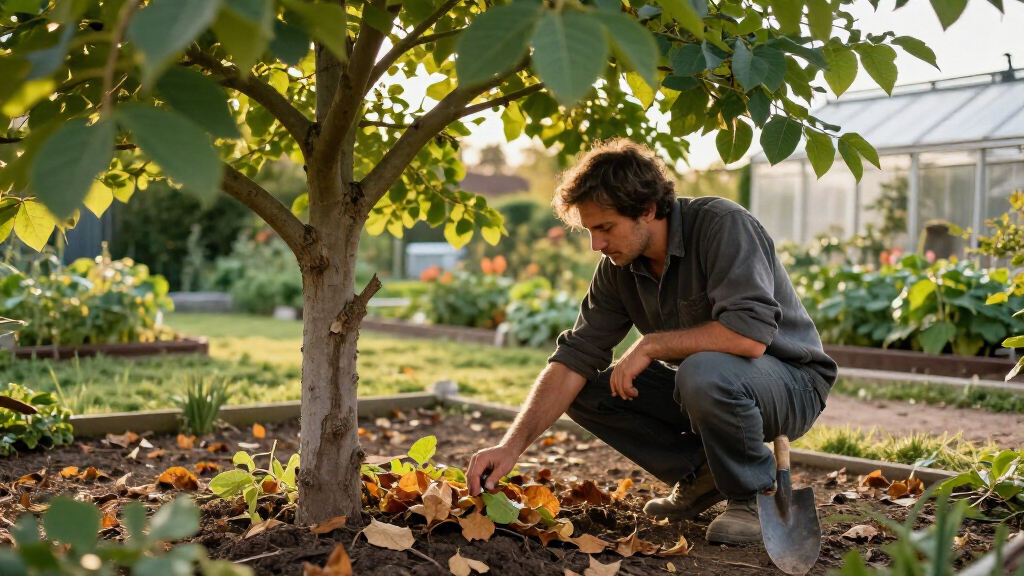
For gardeners, the practical point is that a walnut tree does not automatically make the ground beneath it unusable. Species tolerance, moisture and time all affect what may grow nearby, so a failed planting cannot necessarily be attributed to juglone alone. Shade, competition for water and other site conditions may also influence plant health, though the report focuses on allelopathy.
The distinction can prevent two common mistakes: avoiding all planting near a walnut, or assuming a young tree’s flower bed will keep thriving as it matures. The report says a sunny bed may perform for years before the tree’s shade and possible soil effects become more relevant. Gardeners should treat the plant lists as guidance rather than a promise, since local conditions and the strength of exposure can vary.
As an affiliate, we earn on qualifying purchases.
How the Juglone Explanation Developed
The report places walnut trees within a plant interaction known as allelopathy—the influence of one plant on another through chemical compounds. It says botanist Hans Molisch named the phenomenon in the 1930s, while broader scientific understanding developed later, particularly from the 1980s. The term originally covered beneficial as well as harmful interactions, but is now commonly associated with negative effects.
Walnuts are not the only plants discussed in connection with allelopathy. The report points to rice and eucalyptus, and notes that oats, sunflowers, clover, garlic mustard and mustard contain compounds that may produce allelopathic effects. It cautions, in effect, that the presence of a compound does not by itself establish that a plant will harm its neighbors in every setting.
“The walnut tree, like the other species of the Juglans genus, releases a substance that hinders the growth of other plants.”
— Laidback Gardener report
As an affiliate, we earn on qualifying purchases.
What Gardeners Cannot Predict Yet
The report does not establish how much juglone is present in any particular garden, what concentration causes harm, or how reliably the listed plants perform across different climates and soils. Its 10-to-15-year estimate is not accompanied by a study design or site-specific measurements in the supplied material. It is also unclear how much of a struggling plant’s condition could be due to juglone rather than shade, root competition, drought or other causes.
The article describes research interest in allelopathy, but does not identify particular studies, researchers or findings that would support commercial applications. Its suggestion that research could contribute to biopesticides or help control invasive plants is a possible direction, not a demonstrated outcome. The report’s speculative reference to a future cancer treatment is not supported by evidence in the material and should not be read as a medical claim.
As an affiliate, we earn on qualifying purchases.
Research and Garden Results
The next practical step for gardeners is to observe how chosen plants perform under local conditions, especially as a walnut matures, and avoid treating the report’s lists as guarantees. Moisture and light should be considered alongside possible juglone exposure when diagnosing poor growth.
For the wider scientific question, further research would be needed to measure how allelopathic compounds act in real soils and whether those effects can be used safely in agriculture or invasive-plant management. The report gives no upcoming study, release date or policy decision, so there is no specific next milestone confirmed at present.
planting distance from walnut tree
As an affiliate, we earn on qualifying purchases.
As an affiliate, we earn on qualifying purchases.
Key Questions
Can anything grow under a walnut tree?
Yes. The Laidback Gardener report says some plants, including onions, beets and parsnips, can grow under young walnut trees. Results depend on plant species and site conditions.
What is juglone?
Juglone is a chemical compound found in several parts of walnut plants. The report says walnut roots release it into surrounding soil, where it may inhibit some plants.
Which plants may be sensitive to walnut trees?
The report names blueberries, cranberries and rhododendrons as especially sensitive, and says apple and pear trees may also struggle near walnuts.
Does watering reduce the effects?
The report says effects can be more severe in dry soil than in well-irrigated soil. It does not specify an amount of water that would prevent damage or guarantee plant survival.
When might walnut-related effects become noticeable?
The report gives a timeframe of 10 to 15 years for effects to become apparent around a walnut tree. It does not establish that this timing applies to every tree or garden.
Source: rss
Fall yard work Picks
leaf blowers
As an affiliate, we earn on qualifying purchases.