
TL;DR

Get garden gear delivered free with Prime
- Fast, free delivery on millions of items
- Prime Video, Amazon Music and more included
- Member-only deals all year
Agave snout weevils are deadly pests that often hide inside plants. Regular inspections, good plant hygiene, and early removal are key to preventing major damage. Prevention beats cure in desert gardening.
If you grow agaves in a desert landscape, you know how cherished they are. But lurking inside many of these plants is a tiny, deadly enemy: the agave snout weevil. It’s a sneaky pest that often damages plants long before you notice the first symptoms. Once inside, it tunnels through crown and roots, turning a healthy plant into a fragile, collapsing mess.
This guide will show you how to spot those early warning signs and keep your agaves safe. You’ll learn what to look for, how to prevent infestation, and what to do if the weevil strikes. Protecting your drought-tolerant garden starts with knowing the enemy—and acting fast.
Early signs like yellowing leaves, softening, and sour smell often appear before visible damage, making regular inspection vital.
Healthy, well-drained plants resist attack better—avoid overwatering and crown injuries.
Routine sanitation, including removing infested material immediately, prevents silent spread.
Use chemical controls proactively in high-risk areas, but always follow label instructions and consider environmental impacts.
Combining monitoring tools like pheromone traps with biological controls improves long-term management.
Agave Snout Weevil: Early Warning Signs and Prevention
This tiny beetle can hollow out an agave long before the plant looks critically ill. Frequent inspection, low-stress growing conditions, clean tools, and rapid sanitation offer the strongest defense. In desert gardening, prevention beats cure.
Soft tissue, an unusual odor, or slight movement may appear before obvious collapse.
A loose spear, wet decay, grubs, or adult beetles strongly suggests infestation.
Prompt removal of infested material helps interrupt movement to nearby hosts.
A small, armored beetle built to stay hidden
A compact, shiny body and curved snout create its distinctive profile.
Adults shelter beneath lower leaves, debris, and protected crevices near the base.
Cream-colored, legless larvae destroy crown, root, structural, and vascular tissue.
Feeding wounds allow microbes to enter, speeding crown and root breakdown.
Read the clues before the rosette collapses
One symptom can resemble drought or transplant stress. Several symptoms appearing together should trigger an immediate crown and base inspection.
Lower leaves fade or flatten
Watch for yellowing, wilting, or leaves lying lower than normal around the rosette.
Dull gray-green foliage
Adequately watered plants may still appear washed out when internal flow is disrupted.
Soft or dark crown tissue
Softening at the crown or leaf bases signals breakdown beneath the surface.
Punctures and dark scars
Small wounds near the base can indicate feeding or egg-laying sites.
Sour or fermented smell
A rotting odor points to active tissue decay associated with internal damage.
Loose spear or rocking plant
A central spear that pulls free or a rosette that shifts easily indicates serious damage.
Separate ordinary stress from a possible infestation
| Observation | Drought or transplant stress | Possible weevil activity | Response |
|---|---|---|---|
| Lower leaves yellow | Possible | Possible | Check moisture, crown firmness, wounds, and odor. |
| Sour or fermenting odor | Unusual | Strong clue | Inspect the crown and base immediately. |
| Wet, collapsing crown tissue | Unusual | High concern | Isolate the plant and look for larvae or adults. |
| Loose central spear | Unusual | Late sign | Assume extensive internal damage until ruled out. |
| Rosette tips with little resistance | Unusual | Critical | Remove promptly; recovery is generally unlikely. |
Prioritize plants with stacked risk factors
These bars show relative inspection priority, not measured infestation probabilities. Local climate, plant condition, and pest pressure can change the risk.
No agave is guaranteed immune
Smaller, tougher-leaved, locally adapted plants may perform better, but resistance claims should be judged against reliable local experience.
How one hidden entry point becomes plant collapse
A crown injury, excess moisture, or weakened base offers access.
Females use protected tissue near lower leaves, crown, or base.
Hidden feeding destroys vascular and structural tissue.
Feeding wounds help microbial rot spread through the crown.
The agave loosens, topples, or declines suddenly.
Build protection into everyday garden care
Screen new plants
- Buy from nurseries that inspect for pests.
- Examine crowns, roots, drainage holes, and lower leaf bases.
- Isolate new plants temporarily when practical.
- Never propagate pups from a declining parent plant.
Keep crowns firm and dry
- Use fast-draining soil and the correct planting depth.
- Keep mulch away from the crown.
- Avoid chronic overwatering and irrigation into the rosette.
- Apply nitrogen sparingly to limit soft growth.
Avoid unnecessary wounds
- Protect the base from tool and equipment damage.
- Make clean cuts when removing leaves, pups, or stalks.
- Sanitize cutting tools between plants.
- Inspect recent frost, sunburn, and pruning injuries.
Inspect every few weeks
- Focus on lower leaf attachment points.
- Check the crown, spear, soil surface, and nearby debris.
- Test suspicious plants gently for softness or movement.
- Use traps only as part of a broader monitoring plan.
Remove breeding material
- Seal infested debris in heavy bags.
- Dispose of it according to local requirements.
- Do not compost infested plant material.
- Remove dead leaves and old stalks that provide shelter.
Match treatment to local risk
- Consider proactive controls only where pest pressure warrants them.
- Follow the product label and local regulations exactly.
- Protect pollinators and other beneficial organisms.
- Combine chemical, biological, and monitoring methods responsibly.
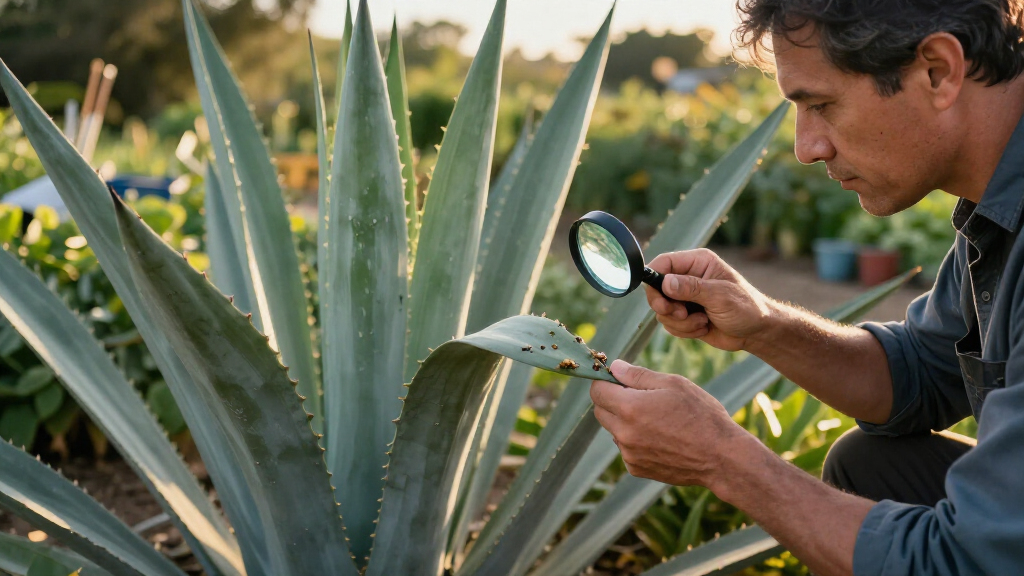
Look beneath lower leaves, smell near the crown, check for scars or fibrous debris, press gently for soft tissue, and test the rosette for unusual movement without injuring healthy growth.
Act before hidden insects reach the next host
Isolate
Limit contact with neighboring plants and avoid moving loose debris through the garden.
Confirm
Check for crown decay, grubs, adult beetles, feeding scars, odor, and loss of structural support.
Remove
Promptly remove severely infested plants, nearby organic debris, and visible pest stages.
Monitor
Inspect surrounding agaves repeatedly and clean every tool used in the affected area.
A plant that lifts, rocks, or tips with little resistance usually has extensive crown or root damage and is unlikely to recover. Rapid sanitation protects the rest of the planting.
What does an agave snout weevil look like? Recognize the tiny beetle hiding in plain sight
The agave snout weevil (*Scyphophorus acupunctatus*) is just 10–15 mm long—about the size of a paperclip. Its dark brown or black body is shaped like a tiny tank, with a curved, snout-like mouth that gives it a distinctive profile. Adults tend to hang out around the lower leaves, under debris, or at the plant’s base where they’re hard to spot.
Imagine a small, shiny beetle with an elongated nose—like a tiny, armored warrior lurking in your agave’s shadow. They’re most active during warm evenings, slipping quietly beneath leaves or into crevices. Spotting one in the act is rare, but recognizing their look helps you catch early signs of trouble.
As an affiliate, we earn on qualifying purchases.
How to spot early signs of infestation before your agave collapses
Early warning signs of agave snout weevil attack are subtle—often mistaken for drought stress or natural aging. Recognizing these signs is crucial because the damage occurs internally, long before external symptoms become severe. For instance, yellowing or wilting lower leaves might seem minor, but when combined with other clues, they suggest internal decay. The dull, gray-green hue indicates stress, often caused by disrupted vascular flow from tunneling. Softening or darkening around the crown signifies tissue breakdown, which can weaken structural integrity. These signs matter because they allow you to intervene early, before the plant’s core is compromised.
Tiny punctures or scars near the base are more than superficial wounds—they are entry points for pests and signals of feeding activity. A sour, fermenting smell indicates decay, which results from bacterial activity facilitated by the weevil’s tunneling. Inside, the tissue may be wet, discolored, or collapsing—clear signs that larvae are tunneling and feeding. When the central spear becomes loose or pulls out easily, it’s a sign that internal support has been compromised. Spotting a cream-colored grub or a dark adult beetle beneath leaves confirms infestation. The rapid decline of a seemingly healthy plant is often the last warning, highlighting the importance of early detection to prevent total loss.
As an affiliate, we earn on qualifying purchases.
Which agaves are most vulnerable? Know your plant’s risk factors
Susceptibility depends on plant size, condition, and environment. Larger, mature agaves, especially those nearing flowering, are more attractive to weevils because their tissues are softer and more accessible for tunneling. These plants also tend to have more extensive vascular systems, providing more nutrients for the pests. Stressed plants—wounded, recently transplanted, or overwatered—are particularly vulnerable because their defenses are compromised, making it easier for weevils to establish and reproduce. Recognizing these risk factors helps prioritize inspection efforts, as early detection in high-risk plants can prevent widespread infestation. For example, a 12-year-old agave in full sun, planted in well-drained soil but showing early signs of stress, can become a weevil magnet. Smaller, tough-leaved species or those adapted to local conditions may resist better, but no plant is completely immune. Paying attention to plants that look slightly off—less vibrant, with some lower leaf yellowing or minor wounds—can make the difference between saving and losing your agave. Early detection in these vulnerable plants is critical because it allows for prompt action before the damage becomes irreversible.
As an affiliate, we earn on qualifying purchases.
Simple steps to prevent agave snout weevil problems in your desert garden
Prevention is your best defense. Start with healthy, clean plants from reputable nurseries that inspect for pests—this initial step reduces the risk of introducing pests into your garden. Examine the crown, roots, and lower leaves thoroughly before planting, as these are common entry points for weevils. Isolating new plants for a few weeks allows you to monitor for signs of pests or damage, preventing inadvertent spread. Reducing plant stress through proper watering, soil drainage, and placement is essential because healthy plants are more resistant to pests, but not invulnerable. Plant in fast-draining soil at the proper depth, avoiding burying the crown or piling mulch against it—these conditions can create a moist, protected environment for pests. Never overwater or irrigate directly into the rosette, as soft tissues are easier for weevils to tunnel into. Make clean cuts when removing pups or flower stalks—using sanitized tools to avoid transmitting pests—and avoid damaging the crown, which can serve as an entry point. Excess nitrogen encourages softer, more attractive growth but can also make plants more susceptible; hence, fertilize sparingly. Regular inspections every 2-3 weeks during active seasons are vital because early detection is key to control. Focus on the underside of lower leaves, the crown, and soil surface—gently lift or wiggle suspect plants; if they move easily or feel soft, they might be compromised. These practices collectively reduce the chances of infestation and help maintain resilient, healthy agaves.
As an affiliate, we earn on qualifying purchases.
Sanitation and hygiene: Your secret weapon against weevil invasion
Sanitation is critical. Remove and destroy infested plants immediately—seal debris in heavy bags and dispose of according to local rules. Do not compost infested material, as insects can survive or escape, potentially spreading the pest further. Check surrounding soil and debris for larvae, pupae, and adults, as these stages can hide in organic matter or crevices around the plant. Cleaning tools thoroughly after working on infested plants prevents inadvertent spread of pests to healthy plants. Keep the area tidy—removing fallen leaves, old flower stalks, and plant debris—reduces hiding spots for weevils and their offspring. If you notice a plant with signs of infestation, isolate it from healthy neighbors to prevent the pest from spreading unnoticed. Regular monitoring and prompt removal of suspect material are essential because even a single overlooked infested plant can serve as a source for further infestation. These sanitation practices are foundational—they break the pest’s lifecycle and create an environment less conducive to their survival, ultimately protecting your garden’s health.
Chemical defense: When and how to safely use insecticides
Preventive systemic insecticides like imidacloprid or dinotefuran can be effective in high-risk areas, especially when applied before signs of infestation appear. Use only products labeled for agave and pest control, following the label instructions exactly. Timing is critical—applying these treatments in early spring or fall, before pests become active, provides the best protection. Be cautious: these chemicals can harm pollinators and beneficial insects. Avoid spraying during flowering or when bees are active, and always apply during calm weather to prevent drift. Protect waterways, pets, and people by applying carefully and disposing of leftover product properly. Remember, chemicals aren’t a cure for an active infestation but serve as a preventative measure; once the plant shows severe damage or collapse, removal is often the only practical option. Using insecticides judiciously helps maintain a balance between pest control and environmental safety, but over-reliance can lead to resistance or harm to non-target species. Integrating chemical use with other methods enhances overall effectiveness and sustainability.
Nonchemical tactics: Natural allies and innovative tricks to fight weevils
Emerging methods focus on combining sanitation, early detection, and natural controls to reduce reliance on chemicals. Pheromone traps lure adult weevils, helping you monitor activity—especially in larger landscapes or nurseries—and can provide early warning of pest presence. Using traps with food-based attractants enhances their effectiveness, allowing targeted interventions. Biological controls like entomopathogenic nematodes or fungi (*Beauveria*, *Metarhizium*) target immature stages inside the plant, disrupting the pest’s lifecycle naturally. These work best in warm, moist conditions but require precise application to be effective. Sanitation treatments, like hot-water dips for nursery plants, can eliminate eggs and larvae before planting, reducing initial pest load. Selecting less susceptible or native agave species can also be a strategic move to minimize risk, as they often have better natural defenses. While these methods aren’t foolproof, their layered approach—combining biological, mechanical, and cultural controls—creates a resilient defense system that reduces chemical dependence and promotes ecological balance.
Can a badly infested agave be saved? When to act and when to cut losses
If caught early, some agaves can survive with prompt and targeted action. Removing infested tissue, destroying visible insects, and improving drainage can help contain the problem and support plant recovery. Keeping the plant healthy through proper watering and nutrition enhances its natural defenses. However, once the crown becomes soft, foul-smelling, or extensively tunneled, the internal damage is often too severe. In such cases, the pest has compromised the plant’s structural integrity, and attempting to save it may only delay inevitable failure. Cutting away the damaged parts might not reach all larvae hidden deep inside, making eradication impossible. Removing the plant altogether prevents the pest from spreading further, protecting neighboring plants. In severe infestations, replacing the plant with a resistant species or native cultivar is a practical solution. The key is early detection—once the plant shows signs of collapse, recovery becomes unlikely, and removal is the most responsible choice to safeguard your garden’s overall health.
Distinguishing weevil attack from other problems? Know the signs
| Symptom | Weevil Clues | Other Causes |
|---|---|---|
| Loose or collapsing rosette | Strong hint of internal tunneling and feeding damage | Severe crown or root rot caused by fungi or microbial infections, often accompanied by wet, foul-smelling tissue |
| Cream-colored grubs | Confirmed insect presence inside, indicating active infestation | Other beetle larvae, which may look similar but require proper identification for targeted control |
| Dark adult with curved snout | Signature weevil feature, a key diagnostic trait | Other beetles can look similar; careful observation or expert ID may be necessary | Sour smell from crown | Advanced attack with bacterial activity facilitated by tunneling | Bacterial or fungal rot, often associated with overwatering or microbial disease, which can mimic weevil symptoms |
| Yellow lower leaves | Early stress indicator, often a sign of internal disruption | Drought stress, nutrient deficiencies, or environmental factors affecting overall plant health |
| Central spear pulls easily | Serious crown damage, often with internal tunneling | Other causes like freeze damage or microbial crown rot, which can cause similar symptoms but differ in underlying cause |
Latest developments in agave snout weevil management
Modern strategies focus on prevention and early detection, with ongoing research improving tools and methods. Researchers are developing more effective pheromone traps that combine aggregation and host-specific cues, enhancing monitoring accuracy and reducing false positives. Biological controls like entomopathogenic nematodes and fungi (*Beauveria*, *Metarhizium*) are gaining traction, especially in nursery settings, because they target immature stages inside the plant without chemical residues. These biocontrol agents work best when environmental conditions are optimized—warm, moist environments increase their efficacy. Efforts to prevent spread via nursery shipments and planting material movement are also advancing, involving certification programs and quarantine protocols. As climate change and global trade expand the pest’s range, surveillance and rapid response become even more critical. For home gardeners, the key takeaway is that a proactive approach—starting with clean plants, consistent monitoring, and early intervention—is the most effective way to manage this pest. Prevention remains far more sustainable and cost-effective than trying to treat a full-blown infestation, which can be devastating to valuable garden specimens.
Frequently Asked Questions
What does an agave snout weevil look like?
The agave snout weevil is a tiny, dark beetle about 10–15 mm long, with a curved, snout-like mouth. It often hides around the lower leaves or at the plant’s base, making it hard to see during the day.
What do the larvae look like?
The larvae are pale, cream-colored, legless grubs with a curved shape and a darker head capsule. They tunnel inside the crown and roots, causing extensive damage before you notice anything outside.
Why did my agave suddenly collapse?
Internal feeding by larvae can silently weaken the plant’s crown and roots over weeks or months. Once enough tissue is destroyed, the agave loses support and can topple rapidly, often with little warning.
Does finding one weevil mean the entire garden is infested?
Not necessarily, but nearby plants are at higher risk. Regularly inspect all susceptible agaves and act quickly if you notice signs of attack to prevent wider spread.
Can I treat an infested agave with insecticide?
Preventive systemic insecticides can help in high-risk areas, but once the plant is collapsing, removal is usually the only option. Always follow label instructions and consider environmental impacts.
Conclusion
Your best defense against the agave snout weevil is vigilance. Regular inspections, good hygiene, and early removal of suspect plants can save your garden from heartbreaking collapse. Remember, catching the problem early turns a potential disaster into a manageable situation—so stay alert.
Think of your agaves as resilient desert survivors. Protecting them requires patience and quick action. The tiny weevil might be small, but your awareness and prompt response make all the difference in keeping your xeriscape thriving.
Halloween Picks
halloween
As an affiliate, we earn on qualifying purchases.