
TL;DR

Get garden gear delivered free with Prime
- Fast, free delivery on millions of items
- Prime Video, Amazon Music and more included
- Member-only deals all year
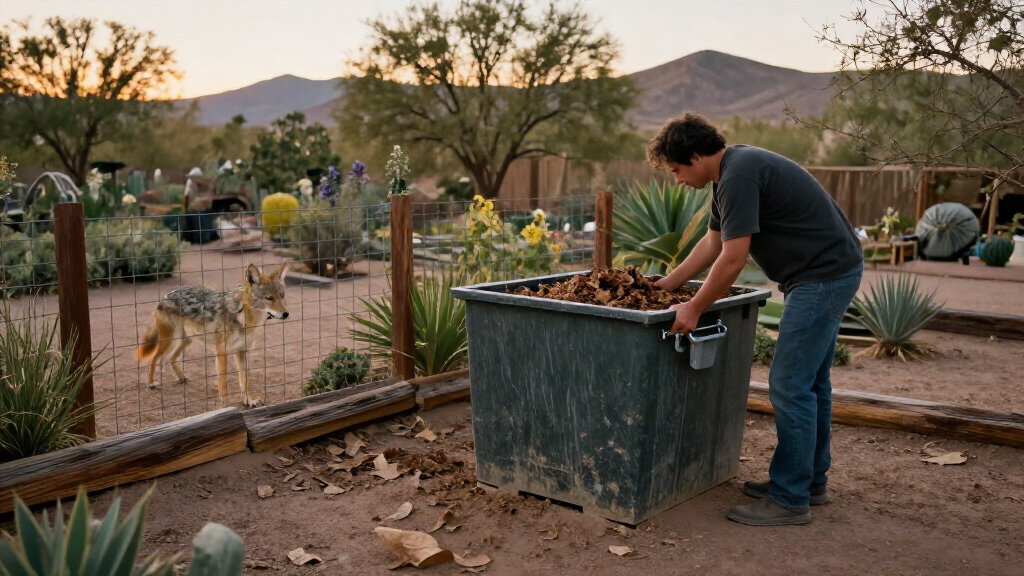
A desert compost bin is less likely to attract scavengers when it has a rigid body, a close-fitting latched lid, and a stable base. Keep meat, dairy, bones, grease, and cooked food out of ordinary backyard bins, cover fresh scraps with dry leaves or cardboard, and clean spills promptly. Check local wildlife guidance because the animals near your home—and the barriers that work against them—vary by area.
A loose compost lid can turn Tuesday’s vegetable peels into a midnight buffet, and desert wildlife is good at finding the menu. Depending on your neighborhood, visitors may include coyotes, foxes, rodents, skunks, raccoons, or javelinas; bears are a concern in some areas. A bin full of food scraps may attract animals seeking an easy meal, especially when the lid swings open or scraps sit uncovered in the heat.
You can keep composting in a desert climate without making your yard an invitation. The useful combination is straightforward: choose a sturdy bin, keep its lid latched, cover fresh scraps, and clean up smells and spills. This guide walks you through those habits, explains what to leave out, and shows how to respond if an animal keeps coming back.
Choose a rigid bin with a close-fitting lid and secure latch, suited to wildlife reported in your area.
Keep the bin stable and away from convenient climbing routes, and use barriers designed for local animals.
Leave meat, fish, bones, dairy, grease, and cooked foods out of ordinary backyard bins.
Cover acceptable fresh scraps with dry leaves, shredded cardboard, or finished compost, and clean spills promptly.
If an animal returns, remove attractants and ask local wildlife authorities for safe, species-specific advice.
DESERT COMPOSTING · WILDLIFE SMARTS
Secure the bin.
Keep the buffet closed.
A rigid bin, a close-fitting latched lid, and a stable base help keep desert scavengers out. Cover fresh scraps, clean spills, and check local guidance because wildlife and effective barriers vary by area.
01 / BUILD A BETTER BARRIER
Start with the bin itself
Match the container and its placement to the animals reported near you. No single bin feature makes every system wildlife-proof.
Rigid body
Choose sturdy construction with fewer edges an animal can grip, chew, deform, or pry. Thin plastic and loose covers can give way more easily.
Close fit + latch
A close-fitting lid limits gaps at the rim. A secure latch keeps the lid from becoming a lever a curious paw can lift.
Firm base
Set the bin on level ground and anchor it when its design allows. A secured lid cannot protect food if the whole bin tips over.
02 / KNOW YOUR NEIGHBORS
Wildlife tests barriers differently
These are possible visitors, not a universal checklist. Ask a local wildlife agency which animals residents should plan for.
Common possibilities
- Coyotes and foxes may investigate food smells.
- Rodents can take advantage of small openings.
- Javelinas may push at a container or dig around it.
- Skunks, raccoons, and bears occur in some communities.
Match the weak point
A barrier designed for a small animal may not hold against a larger one. Some animals climb, dig, or push through weak enclosures. Check local advice before investing in a fence, locking lid, or animal-resistant container. Availability and rules vary by municipality.
Skip the improvised fix
A brick or bungee cord may resist a light bump, but it is not a dependable closure for a strong or persistent animal. Use the fitted latch and a stable base.
03 / SORT BEFORE YOU ADD
Keep high-odor scraps out
Ordinary backyard bins can be difficult to secure against every animal. Strong-smelling foods give visitors a reason to keep testing them.
LEAVE OUT OF BASIC BACKYARD BINS
High-odor foods
Meat, fish, bones, dairy, grease, and cooked foods. Use the waste stream or closed municipal program your area allows.
COVER ACCEPTED PLANT SCRAPS
Cover every fresh addition
Use dry leaves, shredded cardboard, or finished compost. Keep the pile balanced and aerated to help prevent odors.
04 / A REPEATABLE ROUTINE
Close. Latch. Cover. Clean.
A simple habit after every addition keeps the bin secure and the surrounding area less inviting.
Add
Bring acceptable scraps from a sealed kitchen container.
Cover
Top fresh scraps with dry leaves, cardboard, or finished compost.
Latch
Close the lid fully and fasten its proper latch every time.
Clean
Wipe residue and pick up spills. Keep food and pet food indoors overnight.
05 / PLACE IT WITH CARE
Stable, accessible, and harder to approach
Balance protection with upkeep
Choose firm, level ground away from doors and windows when practical. Avoid positioning the bin beside a fence, shed, or stacked object that can act as a climbing route. Keep it accessible enough that latching and cleaning remain easy habits.
06 / IF A VISITOR RETURNS
Remove the reward. Get local advice.
Repeated visits call for a careful reset and guidance specific to the species in your area.
Respond safely
Remove nearby attractants, secure the bin, and clean spills promptly. Contact local wildlife authorities for species-specific advice. Do not feed, approach, trap, or poison wildlife.
Choose a bin that stands up to the wildlife near you
Securing compost bins against desert scavengers starts with a rigid container, a close-fitting lid, and latches that stay fastened. These parts work together: a rigid body offers fewer places to grip or deform, a close fit limits access at the rim, and a latch keeps the lid from becoming a lever an animal can lift. A light cover or thin plastic body can give an animal an easy grip or an edge to pry, while a loose lid can lift in wind or under a curious paw. Pick the strongest practical construction you can manage and check local guidance for animals common in your area.
Local wildlife makes a difference because animals test barriers in different ways. Rodents may exploit a small gap, while javelinas can push at a container or dig around it. Coyotes and foxes may investigate food smells, and some communities also have raccoons, skunks, or bears. A barrier that deters a small animal may not hold up to a larger one, so ask a local wildlife agency which species residents should plan for. That information helps you avoid spending effort on a feature that addresses the wrong weakness.
For example, if a tumbler rocks when you turn it and its lid merely clips shut, put it on a stable, level base and check whether its closure actually locks. A bin that shifts can loosen its closure over time, and an awkward design can make it tempting to leave the lid unlatched. Keep it accessible enough to use regularly; a bin you avoid because it is awkward to reach tends to collect scraps in an open pail nearby. Look for strong hinges and a latch you can close with one hand.
There is no single technology that makes every bin wildlife-proof. Stronger latches, rigid construction, and animal-resistant enclosures are common features in current guidance, while some communities offer closed food-waste collection or bear-resistant containers. More substantial barriers may cost more or make routine access less convenient, so match the investment to the wildlife risk and your habits. Availability and rules vary; check with your municipal waste service before relying on a particular container.
Popular right now

Breville Bambino Espresso Machine, Brushed Stainless Steel (BES450BSS)

Sony BRAVIA 5 85-Inch Mini LED 4K HDR Smart TV (K-85XR50)

Shark HydroVac MessMaster Corded Wet/Dry Vacuum, Mop & Self-Clean (WD161)
As an affiliate, we earn on qualifying purchases.
Anchor the bin so a determined visitor cannot tip it
Securing compost bins against desert scavengers also means keeping the container from shifting, tipping, or sliding when an animal tests it. A lid can be well latched and still leave food accessible if the whole bin falls over or moves away from its base. Set the bin on a firm, level surface and anchor it to a stable base when its design allows. A small, secure enclosure can add protection, but it must be built for the animals in your area: some can dig, climb, or push through a weak barrier.
A loose brick or bungee cord may help against a light bump, but it is a stopgap, not a dependable closure for a strong or persistent animal. A fitted latch holds the lid shut more consistently, and a stable base makes the whole bin harder to move. Improvised weights can also shift during wind or when you turn the pile, creating a new gap without anyone noticing. If your bin rocks on gravel or leans against a fence, level the spot before you add another improvised weight.
Imagine finding the bin tipped over after a windy night and scattered scraps on the path. Move it to firm ground, secure the lid with its proper latch, and clean the spill rather than simply tossing the scraps back on top. The spill can continue to draw an animal even after you have corrected the lid, so cleanup is part of restoring the barrier. If you add an enclosure, leave enough room to open the bin and turn the pile without wrestling with the barrier every time; otherwise, the added protection may make regular maintenance less likely.
Placement matters too. Keep the bin away from doors and windows where practical, and avoid setting it next to a shed, fence, or stacked object that gives a climbing animal a convenient route to the lid. Keep it accessible for regular care. The best location balances those needs: it should limit easy approaches while still making routine latching and cleaning simple. A secure bin that you can reach easily is more likely to stay closed and well maintained.
Keep the scraps that smell strongest out of an open backyard bin
Meat, fish, bones, dairy, grease, and cooked foods can create strong odors and draw scavengers to an ordinary backyard compost bin. Many home composting guides recommend leaving these scraps out of open or basic home systems. The concern is practical: a bin may be difficult to secure against every animal, and strong food smells can give visitors a reason to keep testing it. If a municipal program accepts these materials in a managed, closed system, follow that program’s rules rather than assuming your backyard bin can handle the same materials.
For a desert gardener, a practical routine is to keep vegetable peelings, coffee grounds, and other accepted plant scraps in a sealed container until compost day. This keeps odor sources contained inside the house and makes it easier to add scraps in one tidy batch. Empty it regularly, then cover the fresh material inside the bin. A lidded kitchen container is easier to manage than a bowl of scraps left beside the back door overnight, where warm air can carry the smell across the yard.
Say you made a cheesy casserole and have a pile of leftovers. That food belongs in the waste stream or collection program your municipality allows, not uncovered in a backyard pile that animals can investigate. Keeping the categories separate also prevents a common mistake: assuming that because a municipal service accepts an item, a home pile will compost it safely. Check local composting rules before adding unfamiliar materials; a closed municipal service may accept items your home system should exclude.
Food scraps may still attract animals if you bury them, since hungry visitors can dig toward a smell. Dry leaves, shredded cardboard, or finished compost can reduce the odor at the surface, but they do not make meat or dairy suitable for a simple open bin. Covering is useful as one layer of odor management, while sorting determines what goes into the system in the first place. Use careful sorting and a secure lid together, like two doors between the food and a curious visitor.
Cover fresh scraps and control odors in desert heat
Covering each fresh addition with a layer of dry leaves, shredded cardboard, or finished compost helps keep food smells from rising straight out of the bin. This surface cover also helps keep flies from reaching scraps, but it works best alongside a latched lid because it only reduces, rather than eliminates, odors. In hot, dry weather, a pile can dry quickly, so add water as needed to keep the material damp rather than waterlogged. Good airflow and a balanced mix of scraps and dry carbon-rich material also help limit unpleasant odors.
Use a simple rhythm: add plant scraps, spread them through the pile, and cover the top with dry material. Spreading scraps avoids leaving one concentrated patch of food near the surface, where odors and pests are easier to notice. If you add a handful of juicy melon rind, for instance, tuck it under dry leaves instead of leaving its bright, sweet surface exposed. The leaves act like a soft blanket over the food and help keep flies from finding it as well.
Odor control starts outside the bin too. Keep the lid closed, wipe residue from the rim, and sweep up spills promptly. Store scraps in a sealed container until you can add them, and do not leave pet food beside the compost overnight. A visitor follows the smell, not just the location of the bin, so a small smear of food on the ground can keep an animal searching even after you have shut the lid.
Dryness has its own tradeoff: a dusty, brittle pile breaks down slowly, while a soggy pile can smell sour. Check it during your normal garden routine. If the compost feels bone dry, add water gradually; if it smells unpleasant, mix in dry leaves or cardboard and improve airflow. The goal is a pile that stays active without becoming a wet, odorous pocket of scraps. A quick check after adding kitchen scraps can prevent a small odor problem from growing into a nightly attraction.
Use a simple routine to secure the bin every time
Securing compost bins against desert scavengers works best as a repeatable routine: close the lid, latch it, cover fresh scraps, and leave the area clean. A strong container helps, but daily habits determine whether its protection stays in place. The routine matters because any missed step can undermine the others: a latch does little if scraps are scattered nearby, and covered scraps still need a closed lid. The following steps take only a few minutes after you add food waste.
- Sort first. Keep meat, fish, bones, dairy, grease, and cooked foods out of a basic backyard bin unless your system specifically accepts them.
- Add and cover. Mix acceptable scraps into the pile, then cover them with dry leaves, shredded cardboard, or finished compost.
- Close and latch. Check that the lid sits flat and its latch catches securely.
- Clean the area. Wipe drips from the rim and ground, then put away any open scrap container or pet food.
- Check the base. Make sure the bin is stable, upright, and still secured after turning or watering the pile.
For example, after pruning and making lunch, you might add vegetable trimmings, cover them with a small scoop of dry leaves, shut the latch, and rinse the pail before bringing it inside. That routine prevents a trail of smell from the kitchen to the compost and makes it easier to spot a missed step while the scraps are still in your hands. If a family member adds scraps later, a simple reminder on the lid can help everyone follow the same steps.
Run through the routine again after high winds, heavy watering, or turning the pile. A lid can shift, and a bin can creep off its level spot. Those changes can quietly weaken the setup, so regular checks catch small problems before an animal does.
Respond safely when an animal keeps visiting
If wildlife keeps visiting your compost, remove easy food sources, secure the bin, clean spills, and ask local wildlife authorities for advice about the species in your area. Repeated visits usually mean an animal has found a reliable food cue or access point; identifying which one is more useful than guessing at a deterrent. Do not approach, feed, trap, or poison an animal. Those actions can injure wildlife or pets, and local rules may restrict what you can do.
Start by looking for the simple clues: a loose latch, scraps on the ground, pet food left outside, or a gap around the enclosure. Tighten the setup and keep the area clean for several nights. If the animal returns, note what you see from a safe distance and contact the appropriate local agency for species-specific guidance. This gives them information about the animal and its behavior, which can make their advice more useful than a general remedy.
A neighbor who finds fresh digging near the bin may assume the lid is the only problem. But if the container is closed and the ground nearby still smells of spilled food, the animal may be investigating that residue. Clean the area, move food sources indoors overnight, and check whether the barrier is suitable for the visitor rather than adding a random deterrent. Each change addresses a likely cause, making it easier to tell whether the problem was access, nearby food, or a barrier that does not fit the local animal.
Avoid poisons, traps, and repellents unless local authorities recommend a legal method and you can use it safely. A deterrent that is unsuitable for the species or placement can create risks for pets and children without solving the visits. If any pesticide or herbicide is recommended for a separate garden issue, follow its label exactly and wear the protective equipment listed there. Keep treated products away from children and pets, and remember that many common garden plants can also be toxic if children or animals eat them; check plant-specific guidance before planting near play or pet areas.
Frequently Asked Questions
What animals are most likely to get into a desert compost bin?
It depends on your region and neighborhood. Coyotes, foxes, rodents, skunks, raccoons, and javelinas may be present in different desert communities, while bears are a concern in some areas. Ask a local wildlife agency which animals are common near your home.
Can I compost meat, dairy, or bones?
These scraps can create strong odors and attract animals in an ordinary backyard bin, so many home composting guides recommend keeping them out. A managed, closed municipal system may accept them; check that program’s rules before adding them.
Does burying scraps keep animals away?
Burying scraps under dry leaves, cardboard, or finished compost can reduce smells at the surface. It does not replace a sturdy lid and secure latch, since animals may dig toward food they can smell.
Will a bungee cord or brick secure the lid?
A cord or brick may help against light disturbance, but a determined or strong animal may defeat an improvised weight or tie. A rigid bin with a fitted latch and stable base is more dependable.
Where should I put my compost bin?
Choose a stable, accessible spot away from doors and windows when practical. Avoid placing it beside fences, sheds, or stacked objects that can give climbing animals an easy route to the lid.
What should I do if an animal keeps visiting?
Remove nearby food sources, clean spills, secure the bin, and contact local wildlife authorities for species-specific advice. Do not feed, approach, trap, or poison wildlife.
Can composting work in a desert climate?
Yes. Hot, dry conditions can dry a pile quickly, so add water as needed to keep it damp rather than waterlogged. Cover food scraps with dry carbon-rich material, keep the bin latched, and check it regularly for odors.
Conclusion
Make your compost harder to smell, open, and tip: sort scraps carefully, cover each fresh addition, latch a rigid bin, and clean the ground around it. Keep the pile damp in desert heat, but not soggy, and check local guidance for the wildlife that actually lives near your home.
A good compost routine should leave you with dark, crumbly soil and a quiet yard after sunset—not a trail of scraps under the moon.