
TL;DR
A little-known lawn product called a wetting agent can help grass survive heatwaves by improving water absorption. Many gardeners have not heard of this soil treatment, which works by reducing water repellency in soil. Its use can lead to healthier, drought-resistant lawns.
Most gardeners have never heard of a soil treatment called a lawn wetting agent, which can significantly improve grass survival during heatwaves. This product, which helps water penetrate dry, water-repellent soil, is largely unknown despite its potential to enhance drought resilience and reduce water waste. Experts say its use could benefit many lawns struggling in extreme summer conditions.

Get garden gear delivered free with Prime
- Fast, free delivery on millions of items
- Prime Video, Amazon Music and more included
- Member-only deals all year
A lawn wetting agent is a soil surfactant that lowers the surface tension of water, allowing it to spread and soak into dry, hydrophobic soil more effectively. These products are typically nonionic surfactants derived from synthetic compounds or plant extracts such as coconut or yucca. They are designed to break down a waxy, water-repellent film that forms on soil particles after prolonged heat or organic matter breakdown, which causes water to bead up and run off instead of reaching the roots.
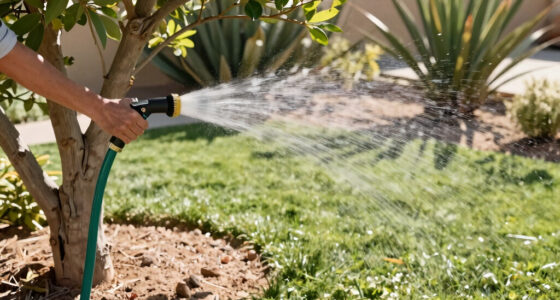
When applied, often via hose-end sprayers or granular spreaders followed by watering in, these agents enable water to reach more of the root zone. This results in a more even distribution of moisture, especially crucial during heatwaves when soil can become baked and hydrophobic. They do not add water but make existing water more effective, reducing runoff and waste. Many lawn care professionals recommend applying these products preventively every four weeks during hot spells, ideally in early morning or evening to avoid scorching.
However, lawn wetting agents are not a cure-all. They cannot create water where none exists, making them ineffective in severe droughts without rainfall or irrigation. They also have limited impact on clay soils that retain water excessively or on lawns with poor watering habits, such as shallow daily watering or mowing too short. Experts emphasize that good lawn care practices remain essential, with these products serving as a supplementary aid rather than a replacement.
Potential Impact of Lawn Wetting Agents on Summer Lawn Care
The use of lawn wetting agents could significantly improve the resilience of lawns during increasingly frequent heatwaves and drought conditions. By enabling water to penetrate dry, hydrophobic soil, these products help maintain greener, healthier grass with less water and effort. This is especially relevant as many regions face water restrictions and rising temperatures, making efficient water use more important than ever. Widespread adoption could reduce water waste and decrease lawn maintenance costs, but awareness remains limited among general gardeners.
Popular right now

Roborock Q10 S5+ Robot Vacuum and Mop with Self-Emptying Station

Roborock Qrevo S Pro Robot Vacuum and Mop with 18,500 Pa Suction

De'Longhi Magnifica Evo Automatic Espresso Machine with Milk Frother, Silver
As an affiliate, we earn on qualifying purchases.
Limited Awareness and Growing Need for Drought-Resistant Lawn Practices
Despite their benefits, lawn wetting agents are relatively unknown outside professional turf management and some gardening circles. Most gardeners rely on traditional watering and mowing practices, which often fail during heatwaves when soil becomes water-repellent. Recent hot summers have increased interest in soil treatments that improve water retention, but knowledge about these surfactants remains sparse. Historically, the focus has been on watering more or using drought-tolerant grass varieties, but soil treatments are emerging as a complementary solution.
“Wetting agents can make a real difference in how water interacts with dry, baked soil, ensuring more of it reaches the grass roots during heat stress.”
— an anonymous researcher
Unclear Adoption and Long-Term Effectiveness of Wetting Agents
It is not yet clear how widely lawn wetting agents will be adopted by the average gardener or whether their long-term use maintains effectiveness without negative soil impacts. While some experts advocate for preventive application during heatwaves, comprehensive studies on long-term soil health and turf performance are limited. Additionally, the specific formulations and concentrations suitable for different soil types are still being evaluated.
Monitoring Adoption and Further Research on Soil Treatments
Researchers and lawn care experts plan to conduct more field trials to assess the long-term benefits and potential drawbacks of using wetting agents regularly. Increased public awareness campaigns and product availability could lead to broader usage among homeowners, especially as drought conditions persist. Consumers should stay informed about proper application and limitations, and manufacturers may refine formulations based on ongoing studies.
Key Questions
Can lawn wetting agents replace regular watering?
No, they do not add water but improve how existing water penetrates dry soil. They should be used alongside proper watering practices.
Are lawn wetting agents safe for pets and children?
Most products are formulated for outdoor use and are generally safe when used as directed. Always follow label instructions and keep pets and children away during application.
How often should I apply a lawn wetting agent?
Application every four weeks during hot, dry periods is recommended, but always check the product label for specific instructions.
Will wetting agents work on all soil types?
They are most effective on sandy or loamy soils. Heavy clay soils may benefit less, as their main issue is drainage rather than water repellency.
Can I use a wetting agent if my lawn is already brown or dormant?
Yes, they can help improve water absorption when the soil is dry, but they won’t revive grass that is dead or severely damaged.
Source: rss