
TL;DR

Get garden gear delivered free with Prime
- Fast, free delivery on millions of items
- Prime Video, Amazon Music and more included
- Member-only deals all year
Hardneck garlic generally suits colder regions and produces a firm central stalk, larger cloves and edible scapes. Softneck garlic generally fits milder climates and tends to store longer when properly cured; local variety performance and growing conditions can affect both types.
Hardneck and softneck garlic differ in their stalks, clove patterns and typical climate preferences, according to a Grow Organic growing guide. The distinctions can help gardeners choose what to plant, but local conditions and individual varieties matter: the guide says the broad patterns are not fixed rules.
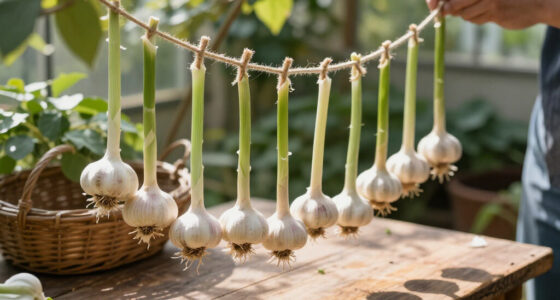
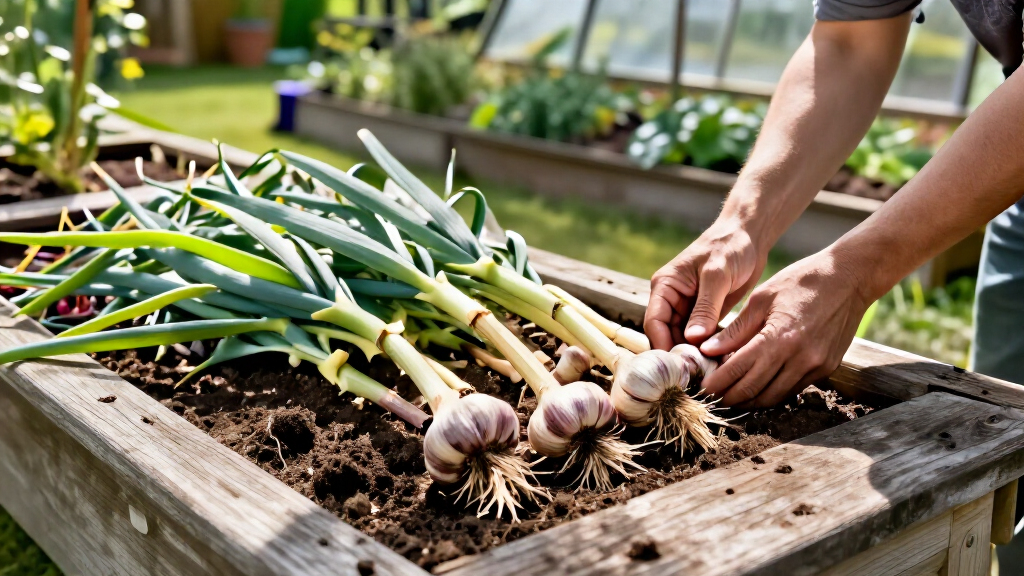
Hardneck bulbs usually have a firm central stalk surrounded by one ring of relatively large cloves. The plants generally produce edible flower stalks called scapes, and their cloves are often easy to peel. Softneck bulbs usually lack a rigid central stalk and contain several layers of cloves, often with smaller ones toward the center. Their flexible dried stems can be braided.
The guide describes hardnecks as generally better adapted to cold regions, while softnecks often perform well where winters are milder. Softnecks typically keep longer than hardnecks after proper curing, but storage time varies with the variety and conditions. Flavor is not a simple dividing line: both types can taste sharp raw and mellow when cooked, and the guide cautions that neither group is always stronger-flavored.
For planting, the guide recommends comparing named varieties and checking with nearby growers about performance over several seasons. It lists Siberian and German Extra Hardy as hardneck options and California Early White, California Late White and Inchelium Red as softneck options. These are examples, not guarantees of success in every garden.
Match Garlic to Your Garden
Choosing a type affects more than the shape of the harvested bulb. A gardener in a cold-winter region may find hardneck varieties a useful starting point, while someone prioritizing braiding or longer storage may prefer to try softneck garlic. The guide presents these as general tendencies; a variety’s actual performance depends on local conditions.
The decision also shapes harvest and kitchen use. Hardneck scapes provide an additional edible crop, while bulbs with fewer, larger cloves may be easier to peel. Softneck bulbs often offer more cloves and stems suited to braiding. Storage expectations should remain approximate, since curing, ventilation, and variety affect how long garlic keeps.
For gardeners unsure which type will work, the guide suggests starting with a small order, keeping variety labels with each row and stored batch, and comparing results across seasons. That approach can help distinguish local performance from broad descriptions.
As an affiliate, we earn on qualifying purchases.
Clues in the Bulb and Stem
Garlic is usually planted in fall so roots can form before winter, but the right planting time depends on regional conditions. The guide recommends following local timing rather than relying on one nationwide date. It says to plant healthy cloves pointed end upward in sunny, well-drained soil; planting depth recommendations can vary by region.
Hardneck and softneck are identified more reliably by bulb structure than by outer color. Both may have white or purple wrappers, so color alone is not a dependable identifier. For bulbs bought for planting, the guide advises checking the variety name and supplier description. It also notes that “seed garlic” commonly means cloves intended for planting, not botanical seed.
Among named groups, the guide lists Porcelain, Rocambole and Purple Stripe as hardneck types, and Artichoke and Silverskin as softneck groups. A variety’s name does not always make its type obvious: Early Purple Italian is softneck, despite its colorful name.
“These are general patterns, not fixed rules.”
— Grow Organic growing guide
As an affiliate, we earn on qualifying purchases.
Variety Results Can Vary
The source offers general growing guidance, not a controlled comparison of varieties or a location-specific planting recommendation. It does not give a publication date, identify a particular growing region, or provide quantified storage durations. How well a cultivar performs in a specific garden remains uncertain without local experience and details such as winter cold, spring temperatures and day length.
The guide says softnecks typically store longer than hardnecks when both are properly cured, but it does not specify a number of weeks or months. Storage outcomes depend on variety and conditions. Readers should also check regional advice for planting timing and depth rather than assuming one recommendation applies everywhere.
As an affiliate, we earn on qualifying purchases.
Test Local Varieties Over Seasons
Gardeners can compare supplier descriptions with advice from nearby growers, then plant a small amount of a named cultivar suited to their conditions. Keep labels with the rows through harvest and with each stored batch. After several seasons, notes on growth, bulb formation and storage can help guide future choices.
At harvest, the guide advises checking bulbs when lower leaves have browned while several upper leaves remain green. Digging a sample can show whether cloves are well formed and wrappers intact. Lift bulbs carefully, cure them in a dry, shaded place with airflow for several weeks, and store cured garlic somewhere dry and ventilated. Use damaged bulbs first; the source does not provide a fixed storage deadline.
As an affiliate, we earn on qualifying purchases.
Key Questions
How can I tell hardneck and softneck garlic apart?
Hardneck bulbs usually have a firm central stalk and one ring of larger cloves. Softneck bulbs generally lack a rigid center and have several layers of cloves. Outer color alone is not a reliable way to tell them apart.
Which type is better for a cold climate?
Hardneck garlic is generally better adapted to colder regions, according to the guide. Local conditions and cultivar choice still matter, so check with nearby growers about varieties that have performed well.
Does softneck garlic store longer?
Softneck garlic typically stores longer than hardneck garlic when properly cured, but the duration varies by variety and storage conditions. The guide does not give a single storage period that applies to every batch.
Can I braid hardneck garlic?
Hardneck stems are stiff, which makes them difficult to braid. Softneck stems are flexible after drying and are better suited to braiding.
When should I plant garlic?
Garlic is usually planted in fall so roots can form before winter, but planting dates vary by region. Follow local growing advice rather than applying one national date.
Source: rss
Fall yard work Picks
leaf blowers
As an affiliate, we earn on qualifying purchases.