
TL;DR

Get garden gear delivered free with Prime
- Fast, free delivery on millions of items
- Prime Video, Amazon Music and more included
- Member-only deals all year
Renters can split one hose bib into four watering zones with portable manifolds that require no permanent plumbing. These setups are easy to install, support automation, and help manage water efficiently.
Imagine watering your garden with four different zones—each tailored to what it needs—using just one outdoor faucet. No fuss, no permanent plumbing work, just a clever setup that fits in a renter’s toolkit. That’s what a manifold system can do for you.
If you’re renting and tired of dragging hoses around or juggling multiple connectors, this guide will show you how to split one hose bib into four zones easily. You’ll learn what parts work best, how to install them without breaking the bank, and how to keep your garden thriving without risking your security deposit.
Choose a durable, lightweight manifold with individual shut-offs for easy control.
Follow a simple step-by-step process to install your four-zone system without tools or plumbing work.
Monitor water pressure and flow, using flow restrictors if needed to prevent weak sprinkling.
Add timers or smart controllers for automated, hands-free watering—perfect for busy renters.
Always remove or store your system when moving to prevent damage and preserve your deposit.
Split One Hose Bib Into Four Zones
Turn one outdoor faucet into a tailored watering system for vegetables, flowers, lawn and containers—without permanent plumbing, specialized tools or a fight over the security deposit.
A power strip for water
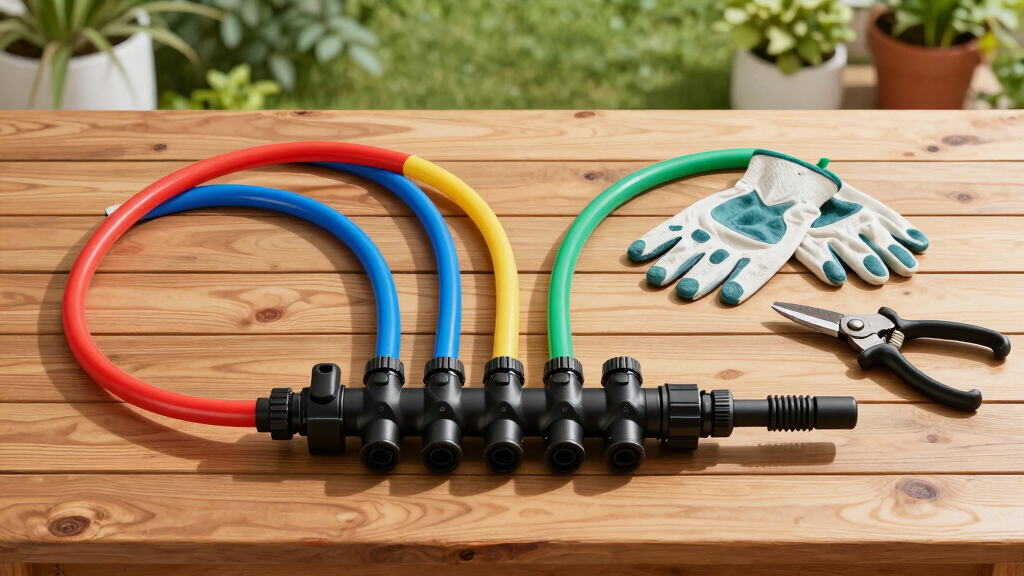
A portable manifold threads onto the hose bib and divides the source into independently controlled outlets. Each valve can feed a different watering method or stay closed when unused.
Hose bib
The property’s existing outdoor faucet remains untouched. A rubber washer creates the removable seal.
Four-way manifold
One threaded inlet feeds four standard outlets from a compact, portable central hub.
Individual valves
Dedicated shut-offs balance flow and isolate each zone without disconnecting the other hoses.
Hoses or drip lines
Match the outlet to the job: drip irrigation for beds, a sprinkler for lawn or a wand for pots.
Flow regulation
Restrictors and pressure-compensating fittings help prevent one thirsty branch from starving another.
Timers and smart control
Add schedules without altering the building. Disconnect the entire system when the tenancy ends.
Plastic or brass?
Both can work. Prioritize four individual shut-offs, standard hose threads, replaceable washers and controls that remain easy to grip when wet.
Corrosion-resistant plastic
Best for frequent repositioning, seasonal use and renters who want a lower-cost, lightweight kit.
- Easy to carry and remove
- Usually budget-friendly
- Resists ordinary corrosion
- Protect from impact, frost and prolonged UV exposure
Solid brass
Best for extended outdoor use, frequent valve operation and gardeners willing to trade weight for durability.
- Strong threaded connections
- Long service life
- Better resistance to knocks and wear
- Heavier and typically more expensive
| Renter criterion | Basic splitter | Four-way manifold | Permanent plumbing |
|---|---|---|---|
| Four independent outlets | ✗ Usually 2 | ✓ Built for 4 | ✓ Configurable |
| No property alteration | ✓ Yes | ✓ Yes | ✗ Approval needed |
| Individual flow control | ~ Limited | ✓ Four valves | ✓ Full control |
| Automation support | ~ Basic | ✓ Timer-ready | ✓ Advanced |
| Move-out portability | ✓ Seconds | ✓ One removable kit | ✗ Stays behind |
| DIY installation | ✓ Easy | ✓ Easy | ✗ Plumber likely |
From faucet to four zones
Build the system dry, then introduce water slowly. Test one branch at a time before running combinations of zones.
Clean the hose-bib threads and confirm the manifold inlet has an intact rubber washer.
Hand-tighten the manifold onto the faucet. Use thread tape only if the fitting requires it.
Add four hoses or drip lines. Quick-connect fittings make seasonal removal faster.
Open the faucet slowly, then test each outlet alone for leaks, kinks and blocked emitters.
Adjust each valve and set timers according to plant needs, flow rate and available pressure.
Do not overtighten. Hand-tight plus a sound washer is normally enough. Excess force can crack plastic fittings, deform washers or damage the hose-bib threads.
Four outlets do not create four full-strength supplies
Pressure and flow are related but not interchangeable. The simple 60 ÷ 4 example illustrates the constraint—not a guaranteed real-world pressure reading.
The simplified split
If a 60 PSI source were divided evenly in a simplified model, each of four simultaneously open zones would represent roughly one quarter of the available capacity.
Preserve usable flow
The system often performs better when demand is reduced or scheduled sequentially instead of opening every zone at once.
Run fewer zones together. Alternate high-demand sprinklers and use simultaneous operation mainly for low-flow drip lines.
Keep hoses short. Avoid unnecessary length, small-diameter extensions and tight coils.
Remove restrictions. Straighten kinks, flush debris and replace clogged washers or emitters.
Balance each valve. Throttle low-demand branches so one zone does not consume most of the available flow.
Add regulation where needed. Flow restrictors and pressure-compensating drip components improve consistency.
One source, four tailored destinations
Give every branch a clear purpose. Labeling hoses and valves makes balancing, scheduling and move-out disassembly much easier.
Hose bib
One removable connection
Manifold
Four shut-off valves
Vegetables
Early-morning drip cycle
Flowers
Moderate targeted soak
Lawn
Short sprinkler session
Containers
Low-flow frequent watering
Hands-free, still renter-friendly
Automation can sit upstream of the manifold or control individual branches. Confirm thread compatibility, operating pressure and whether the controller is designed for outdoor exposure.
Schedule the demand, not just the clock.
Staggering zones protects flow. Water vegetables early, flowers next, lawn separately and containers with shorter, more frequent cycles.
Common setup mistakes
Most failures come from excess force, uncontrolled demand, neglected leaks or leaving portable hardware exposed to damaging weather.
Opening all four valves fully
High-demand branches can produce weak sprinkling everywhere. Test combinations and stagger zones when necessary.
Overtightening fittings
Extra force can crack plastic and damage threads. Start with a clean washer and hand-tight connection.
Ignoring small leaks
Persistent drips waste water and can stain walls or create slippery areas near the building.
Forgetting seasonal removal
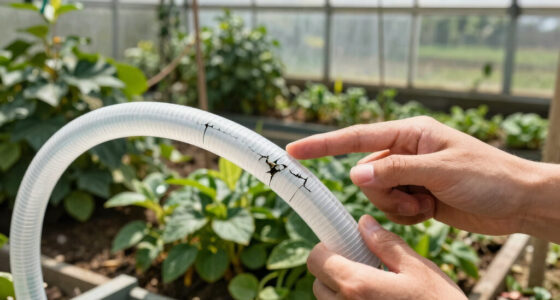
Disconnect, drain and store the manifold before freezing weather or when moving out.
What Is a Manifold System and Why Renters Love It
A manifold system is a hub that attaches to your hose bib, dividing water into multiple outlets. Think of it like a power strip—but for water. It lets you control several watering zones from one main source, perfect for gardens, flower beds, or even outdoor potted plants.
For renters, the biggest perk is flexibility. You can set up a four-zone watering system that’s portable, easy to remove, and doesn’t require any permanent modifications. Plus, it helps you conserve water by scheduling each zone independently.
Picture this: you have a patch of vegetables, a flower bed, and a lawn area. Instead of running separate hoses or risking damage with permanent fixtures, you connect a manifold. Now, each zone gets just the right amount of water—no overwatering, no waste.
As an affiliate, we earn on qualifying purchases.
What to Look for in a Portable Manifold for Your Rental
When choosing a manifold, durability and ease of use top the list. You want something that can handle outdoor conditions—think corrosion-resistant plastics or brass—and that’s lightweight enough to move around.
Some features to consider:
- Number of outlets: Four is common and manageable for most gardens.
- Material: Plastic for lightness, brass for longevity.
- Flow control valves: Individual shut-offs for each zone.
- Compatibility: Fits standard garden hoses and faucets.
- Ease of installation: No tools or permanent fixtures needed.
Choosing a manifold with these features ensures that your setup remains reliable and adaptable. For instance, plastic manifolds are lightweight and easy to carry, making them ideal for frequent repositioning, but they may wear faster under harsh weather. Brass manifolds, while heavier and slightly more expensive, offer superior durability and resistance to corrosion, which is crucial if you plan to leave it outdoors for extended periods. The flow control valves are equally important because they allow you to customize water delivery to each zone, preventing overwatering or under-watering and optimizing your water use. Compatibility with standard hoses and faucets ensures quick setup without additional adapters, saving you time and frustration. Ease of installation means you can set up or remove your system in seconds, which is essential for renters who may need to move or adjust their setup frequently.
outdoor faucet splitter with shut-off valves
As an affiliate, we earn on qualifying purchases.
As an affiliate, we earn on qualifying purchases.
Step-by-Step: How to Set Up Your Four-Zone Watering System
- Attach the manifold: Connect it directly to your hose bib. Use thread tape if needed for a snug fit. Ensure the connection is tight to prevent leaks, but avoid overtightening which can damage fittings.
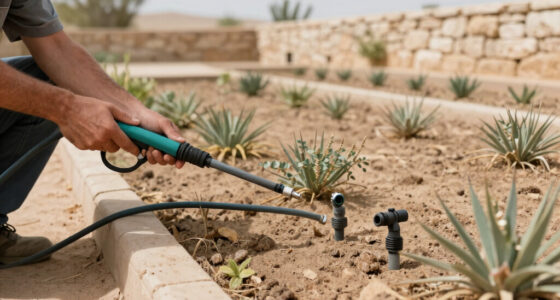
- Connect hoses: Attach separate hoses or drip lines to each outlet on the manifold. Use quick-connect fittings if available for faster setup and removal.
- Adjust valves: Open or close valves to control water flow to each zone. Testing each zone individually helps you identify and fix any leaks or flow issues early.
- Test your setup: Turn on the faucet and observe each zone. Check for leaks, uneven water flow, or blockages. Adjust valves as needed to ensure even distribution.
- Schedule watering: Use manual control or attach timers for automatic schedules. Consider individual timers for each zone to customize watering times based on plant needs.
Imagine watering your vegetable patch early morning, then switching to the flower bed in the afternoon—all from one faucet, with no permanent changes. Just disconnect and store when you move out. Properly setting up and testing your system ensures efficient watering and prevents water waste or damage to your rental property.
multi-zone garden irrigation manifold
As an affiliate, we earn on qualifying purchases.
As an affiliate, we earn on qualifying purchases.
How to Avoid Water Pressure Problems When Splitting Water
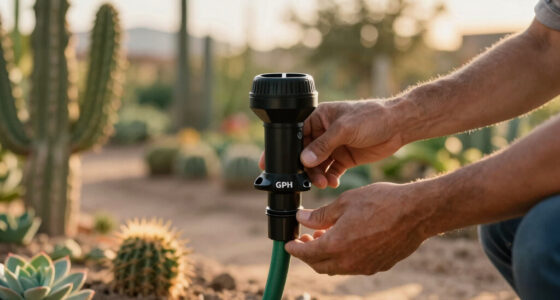
Splitting one hose bib into four zones can reduce water pressure if not done properly. The key is choosing a high-quality manifold that distributes flow evenly. Understanding why pressure drops matter helps you troubleshoot and maintain effective watering.
For example, if your main water pressure is 60 PSI, splitting into four zones might drop each zone to about 15 PSI if flow isn’t balanced. Low pressure can cause uneven watering, dry patches, or incomplete irrigation, especially for plants with higher water demands. To prevent this, look for manifolds with flow restrictors or pressure compensating valves—these devices help balance flow and maintain consistent pressure across all outlets. They act as regulators, ensuring each zone receives an appropriate amount of water regardless of pressure fluctuations upstream.
Additionally, keep hoses short and free from kinks or clogs to maintain pressure. If pressure drops too much, consider upgrading your hose bib or installing a booster pump, especially if your water supply has inherently low pressure. Regularly checking for leaks or blockages in hoses and fittings also preserves system pressure. These measures help you achieve uniform watering, prevent over- or under-watering, and extend the lifespan of your system. Recognizing the tradeoff between the number of zones and pressure levels allows you to optimize your setup—sometimes fewer zones with higher flow are better than many zones with inadequate pressure.
As an affiliate, we earn on qualifying purchases.
How to Automate Your Four-Zone Setup Without Damage
Automation is a game-changer. Many manifolds support simple timers or smart controllers, letting you schedule watering without manual effort. And most are renter-friendly—no permanent plumbing modifications needed.
For instance, a plug-in timer can connect to your hose bib or manifold, controlling each zone’s valve independently. Some smart systems even connect via Wi-Fi, letting you water from your phone. This flexibility allows you to customize watering schedules based on weather, plant types, or personal preferences, saving you time and effort.
Just remember: check the system’s compatibility and ensure your water pressure and flow are sufficient for automated operation. Using timers with adjustable flow settings helps prevent overwatering or water wastage. Always follow manufacturer instructions to avoid leaks, pressure issues, or damage to your system. Properly installed automation extends your watering capabilities without risking your rental property’s integrity, making it easier to maintain a healthy garden even when you’re away or busy.
Common Mistakes Renters Make When Setting Up a Manifold
Many renters forget to check the flow rate or pressure before installing. This can result in weak watering or uneven distribution, which might harm your plants and waste water. Understanding your water supply’s capacity and matching it to your system is crucial for optimal performance.
Another mistake? Using low-quality hoses or connectors that leak or disconnect easily. Testing your setup with water running at full pressure reveals potential issues early, giving you the chance to fix or replace parts before planting or scheduling.
Lastly, neglecting to store or remove the system when moving out can lead to damage or loss. Keep your manifold and hoses in a labeled container for easy transfer, and always disconnect hoses and fittings to prevent weather damage or theft. For example, a renter in Arizona learned this the hard way—left the system connected during a move, and some parts cracked under the summer sun. Always plan to remove or store your setup when not in use to protect your investment and avoid issues with the property manager or future tenants.
Frequently Asked Questions
Do I need a plumber to install a manifold system?
No, most portable manifolds are designed for DIY installation. You simply connect them to your hose bib with a few fittings—no plumbing skills or permanent changes needed.Will splitting water reduce pressure in my hoses?
It can, if not managed properly. Use manifolds with flow restrictors or pressure regulators to maintain even pressure across all zones and avoid weak watering.Can I automate watering with a portable manifold?
Yes, many systems support timers or smart controllers. Just attach a compatible timer to your hose bib or manifold, and set your watering schedule with ease.How many zones can I split from one hose bib?
Most setups handle 2 to 4 zones comfortably. Some advanced manifolds can support even more, but four zones strike a good balance between control and pressure.What’s the best way to store my manifold system when I move?
Keep all parts in a labeled container, disconnect hoses, and store them in a shaded, dry place. Always remove or pack your system carefully to prevent damage or loss.Conclusion
Splitting one hose bib into four zones with a portable manifold transforms your outdoor watering. It’s flexible, efficient, and renter-friendly—no drilling, no permanent changes required. With the right setup, you’ll keep your garden thriving and your water bills in check.
Imagine a lush yard without the hassle—just a simple turn of the faucet and your zones are managed effortlessly. That’s the power of a well-chosen manifold system. So, gear up, set it up, and enjoy your thriving garden, no matter where you rent.
Halloween Picks
halloween
As an affiliate, we earn on qualifying purchases.