
TL;DR

Get garden gear delivered free — and shop member deals
- Fast, free delivery on millions of items
- Access to Prime Big Deal Days deals on October 6–7
- Prime Video, Amazon Music and more included
Start with deep, consistent watering close to the trunk. As roots extend, gradually move emitters outward to encourage broad, deep root growth. Regularly monitor soil moisture to avoid over- or under-watering.
When you plant a desert tree, you’re not just sticking a sapling into the ground. You’re setting the stage for a long, thirsty journey. Proper watering isn’t just about quenching initial thirst — it’s about guiding roots to grow outward and downward, anchoring your tree in the harshest conditions.
Think of watering as planting a path for roots to follow. If you keep emitters too close, roots circle around, making your tree vulnerable to drought and wind. Moving emitters out as roots grow isn’t just a good idea; it’s how you build a resilient, drought-tolerant giant in your desert yard.
Start watering close to the trunk, then move emitters outward as roots grow, usually after 3-6 months.
Gradually shift your emitters every 2-3 months to match root expansion, aiming for 2-3 times the canopy diameter.
Regularly check soil moisture and root signs to time emitter movement and avoid over- or underwatering.
Use targeted drip systems with adjustable emitters for water efficiency and deep root development.
Embrace new tech like soil sensors and smart timers to optimize watering and promote drought-resilient roots.
Why Moving Water Emitters Out Is the Secret to Strong Roots
Watering your new desert tree near the trunk is just the start. Roots naturally spread out to find moisture, seeking the water’s path to sustain the tree’s growth. If you keep emitters too close, roots tend to stay confined, growing in circles or staying shallow instead of expanding outward. This confinement results in a weak, shallow root system that can’t access deeper soil moisture, making the tree highly vulnerable during droughts or heatwaves.
Imagine planting a young mesquite. Initially, water near the trunk encourages roots to grow downward, anchoring the tree. But if you don’t move the emitters outward after a few months, the roots tend to stay tightly circling at the base, like a dog chasing its tail. When roots naturally expand, they reach deeper and wider, anchoring the tree more securely and enabling it to access moisture from a broader area. This lateral expansion is crucial for drought resilience because it allows the tree to tap into hidden water reserves in the soil, especially during dry seasons.
Research shows that roots of desert trees can grow several feet beyond the canopy’s drip line. Moving your emitters gradually outward encourages roots to follow the water, creating a broad, deep network that can withstand droughts and high heat. This strategic movement reduces the risk of shallow, circling roots that compromise the tree’s stability and health.
Deep and wide root growth is essential in arid environments because it determines how well your tree can access water during droughts. Shallow roots are more susceptible to drying out when surface moisture evaporates quickly under intense sun and wind. By encouraging roots to grow deeper and further, you improve your tree’s ability to survive prolonged dry spells, making your planting more resilient over time. The tradeoff is that moving emitters too rapidly or too far without proper soil moisture can stress roots, so gradual, consistent movement is key to balancing growth and health.
drip irrigation system for desert trees
As an affiliate, we earn on qualifying purchases.
As an affiliate, we earn on qualifying purchases.
Step-by-Step: How to Move Your Emitters as Roots Grow
Here’s a clear process to follow that maximizes root development and drought resistance:
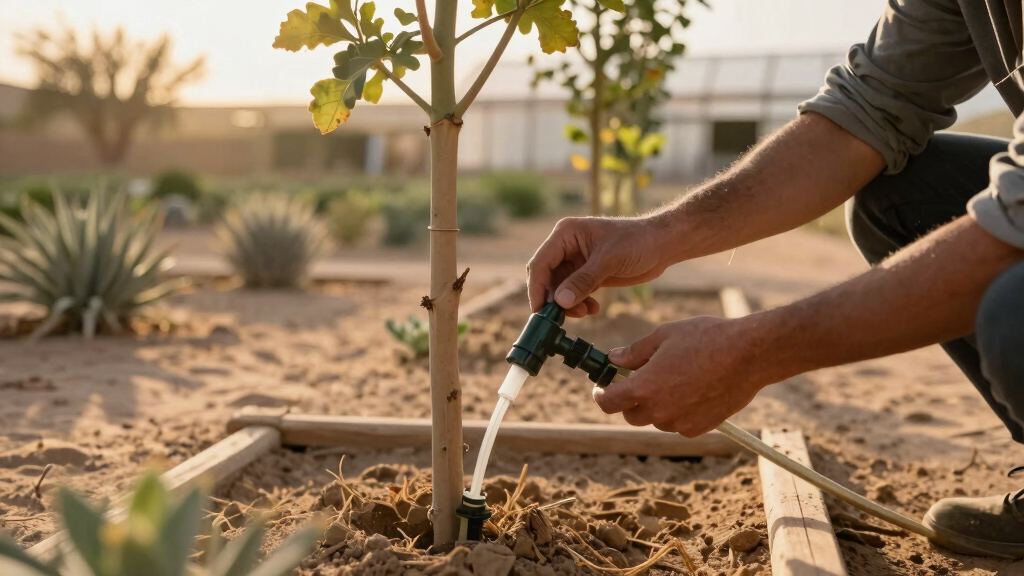
- Initial Setup: Place emitters about 1-2 feet from the trunk, close enough for deep watering but not so close that roots stay confined. This initial placement encourages roots to grow downward and outward without becoming circling or shallow.
- Monitor Root Growth: After 3-6 months, check if roots are reaching the water zone. Look for signs such as roots near the soil surface, roots circling at the base, or roots extending outward beyond the initial watering zone. Recognizing these signs helps determine when to move the emitters.
- Gradually Move Out: Every 2-3 months, shift the emitters 6-12 inches further away, aligning with the expected root extension. This gradual movement prevents shock and allows roots to adapt to new moisture zones, promoting a strong, widespread root system.
- Adjust Frequency: Keep watering deeply once a week, adjusting based on weather conditions and soil moisture levels. Deep, infrequent watering encourages roots to grow deeper and further out rather than staying shallow.
- Repeat: Continue moving emitters outward as roots grow, aiming for a distance that covers at least 2-3 times the canopy diameter. This strategy ensures roots are well-anchored and capable of accessing moisture from a broad area, increasing drought resilience.
For example, a young palo verde with a 4-foot canopy will need emitters moved out to about 8-12 feet over 2 years, fostering a resilient, drought-ready root system that supports healthy growth and stability.
Remember, patience is key. Moving emitters gradually allows roots to adapt without stress, which is crucial for long-term health. Rushing this process might cause roots to become damaged or stressed, potentially weakening your tree’s foundation. The goal is to strike a balance between encouraging growth and maintaining healthy, stress-free roots.
adjustable drip emitters for garden
As an affiliate, we earn on qualifying purchases.
As an affiliate, we earn on qualifying purchases.
Comparison Table: How Different Watering Strategies Affect Root Growth
| Strategy | Root Development | Water Efficiency | Drought Resistance |
|---|---|---|---|
| Water close to trunk | Limited, circling roots | High waste, uneven moisture | Low, shallow roots |
| Gradually move emitters outward | Broad, deep roots | High, targeted watering | High, resilient roots |
As an affiliate, we earn on qualifying purchases.
Monitoring Your Tree’s Root Growth and Soil Moisture
Keeping an eye on your tree’s roots and soil moisture is key to promoting healthy growth and drought resilience. Use a simple soil probe or moisture meter to check how deep the water penetrates. Roots tend to follow water, so if you see roots extending beyond the current emitter zone, it’s a sign that it’s time to move your emitters outward. Recognizing this natural root behavior helps you maintain optimal watering zones.
Look for signs like roots near the surface or roots circling at the base, which indicate the roots are confined or shallow. If the soil feels dry a few inches down, it’s a cue to water more deeply or move emitters to encourage roots to extend further into the soil profile. Regular checks prevent overwatering, which can rot roots, and underwatering, which stresses the tree. This proactive approach ensures your tree develops a resilient, deep root system capable of withstanding drought conditions.
During summer’s peak, you might need to water twice a week to maintain soil moisture. In winter, once every 2-3 weeks may suffice, but always adjust based on rainfall, soil type, and the tree’s response. Consistent monitoring and timely adjustments are key to fostering a healthy, drought-ready root system.
By paying close attention to root behavior and soil moisture, you can better understand your tree’s needs. This knowledge helps you fine-tune your watering schedule, ensuring water reaches the roots where it’s needed most. Proper timing and depth of watering are essential to prevent shallow root development, which makes your tree more vulnerable to drought stress. When roots grow deeper and wider, your tree’s ability to access underground water improves significantly, making it more resilient against prolonged dry periods. The tradeoff here is that neglecting these signs can lead to either overwatering—causing root rot and diseases—or underwatering, which weakens the tree’s stability and health. Regularly assessing soil moisture and root extension allows you to strike the right balance, fostering a robust, drought-resistant root system.
smart watering timer for outdoor plants
As an affiliate, we earn on qualifying purchases.
As an affiliate, we earn on qualifying purchases.
Frequently Asked Questions
When should I start moving the emitters away from my newly planted desert tree?
Typically after 3 to 6 months, once you notice roots reaching beyond the initial watering zone. Signs include roots near the surface or circling at the base. Adjust gradually—every 2-3 months—until the emitters are well outside the canopy’s drip line.
How far should I move the emitters outward?
Move them gradually to match the estimated root spread, usually 2-3 times the canopy diameter. For example, a 4-foot tree should have emitters moved out to about 8-12 feet over the first couple of years.
How often should I water my new desert tree?
Deep watering once a week during the first year works well. Adjust based on rainfall, soil type, and how your tree responds. Less frequent, deeper watering encourages roots to grow downward and outward.
What are signs I’m over- or under-watering?
Overwatering causes yellowing leaves, soggy soil, and root rot. Underwatering shows as wilting, dry soil, and shriveled roots. Use a moisture meter or dig gently to check soil and root health regularly.
Can I use mulch to help with watering?
Yes! Mulch conserves moisture, stabilizes soil temperature, and encourages healthy root growth. Keep mulch a few inches away from the trunk to prevent rot and pests.
Conclusion
Watering new desert trees isn’t just about pouring water at the base and hoping for the best. It’s a strategic dance—moving your emitters outward as roots push into the soil. That’s how you grow a sturdy, drought-ready tree that can survive the hottest summers.
Keep a close eye, stay flexible, and remember: roots follow water. When you give them room to grow, your desert garden becomes a resilient oasis instead of a fragile mirage.
Fall yard work Picks
leaf blowers
As an affiliate, we earn on qualifying purchases.