
TL;DR

Get garden gear delivered free — and shop member deals
- Fast, free delivery on millions of items
- Access to Prime Big Deal Days deals on October 6–7
- Prime Video, Amazon Music and more included
For citrus in caliche soil, water should penetrate at least 12-18 inches deep to reach roots. Using slow, multiple drip cycles and soil amendments improves infiltration and promotes healthy growth.
Imagine planting a citrus tree in the desert, then watching it struggle to grow. Your soil is packed with caliche — that solid, limestone-like layer that resists water and roots. If you want your citrus to flourish, understanding exactly how deep your drip water should soak is key.
Getting this right means healthier trees, better fruit, and fewer wasted drops. In this guide, you’ll learn how to water effectively in caliche soil, what to watch for, and simple tricks to make your citrus thrive even in the toughest conditions.
Water citrus trees to a depth of at least 12-18 inches to reach roots in caliche soil.
Use multiple short drip cycles to improve water infiltration past caliche’s density.
Amend soil with gypsum or organic matter to loosen the caliche layer and enhance water flow.
Regularly monitor soil moisture at root level to avoid over- or underwatering.
Mulch around trees to reduce evaporation and keep soil moist longer.
Why Caliche Soil Makes Watering a Challenge (And How to Beat It)
Caliche is a hardened deposit of calcium carbonate that forms a dense, almost cement-like layer beneath the soil surface. This layer acts like a barrier, slowing or blocking water from reaching the roots below.
Imagine pouring water on a brick wall — it just sits there, slowly seeping in or running off. For citrus trees, this means their roots struggle to get enough moisture, especially if you just water superficially.
To succeed, your watering needs to reach at least 12-18 inches deep, bypassing that stubborn layer. Using multiple short drip cycles can help water seep in gradually, reducing runoff and ensuring your roots get what they need.
Reaching this depth is crucial because citrus roots tend to grow downward in search of water and nutrients. If water only soaks the surface, roots may remain shallow, making trees more susceptible to drought stress and less resilient during dry periods. Conversely, deep watering encourages a more extensive root system, which improves drought tolerance and overall health. However, pushing water past the caliche layer requires patience and careful management; too much water too quickly can cause runoff or waterlogging, so staged, incremental watering is the key.
drip irrigation system for citrus trees
As an affiliate, we earn on qualifying purchases.
As an affiliate, we earn on qualifying purchases.
How Deep Should Your Drip Water Soak? The Exact Number
The goal is to water to a depth of at least 12-18 inches when irrigating citrus in caliche soil. This depth is vital because it ensures the water reaches the primary zone where most of the citrus roots are actively growing. Roots tend to extend downward to access moisture, especially in dense soils like caliche, which naturally limit water penetration.
Watering less than this depth leaves roots shallow, making trees vulnerable to drought stress and reducing their ability to absorb nutrients effectively. On the other hand, attempting to water too deeply or too quickly can lead to runoff, wasting water, and potentially eroding soil around the roots.
For example, if you’re using a drip emitter delivering 1 gallon per hour, running it continuously for 1-2 hours may seem sufficient, but in caliche soils, this can cause water to pool or run off before reaching the desired depth. Instead, breaking the watering into 4-6 short cycles of 15-30 minutes allows water to infiltrate gradually, giving it time to percolate past the caliche barrier and reach the root zone effectively. This staged approach minimizes runoff, conserves water, and promotes healthy, deep root growth, which is essential for drought resilience and fruit production.
soil moisture meter for citrus in caliche soil
As an affiliate, we earn on qualifying purchases.
As an affiliate, we earn on qualifying purchases.
Step-by-Step: How to Water Deeply Without Wasting Water
- Test your soil: Dig a small hole or use a soil probe to see if water reaches 12-18 inches deep after watering. This helps you assess if your current watering method is effective or needs adjustment.
- Set your drip system: Use slow-release emitters (1-2 GPH) and schedule multiple short cycles—say, 4 times for 15 minutes each—to allow water to gradually penetrate past the caliche layer. This staged approach ensures deeper infiltration without runoff.
- Monitor moisture: Insert a soil moisture meter or tensiometer at root level to check moisture levels regularly. Consistent monitoring helps you fine-tune your watering schedule and avoid over- or underwatering.
- Adjust as needed: Increase or decrease watering time based on soil absorption and moisture readings. In dry, caliche-rich soils, you might need more frequent or longer cycles, whereas in moist conditions, less watering suffices.
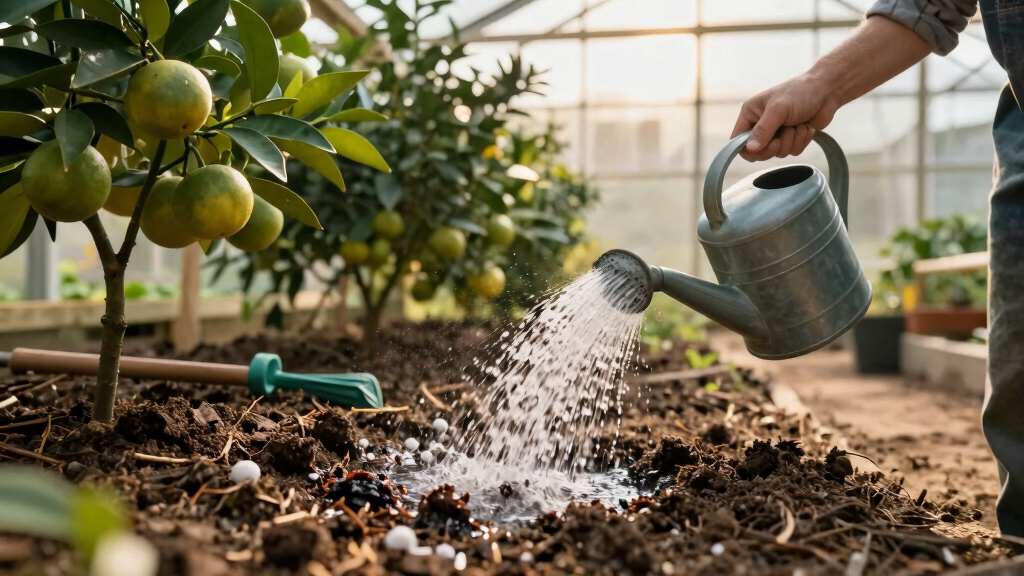
- Incorporate amendments: Mix in gypsum or organic matter like compost to loosen caliche and improve water penetration over time. These amendments help break up the dense layer, making future watering more effective and reducing runoff.
For example, I set my timer for four 15-minute cycles, checking moisture after each session. Initially, I had to adjust the duration and number of cycles to find the sweet spot where water reached 12-18 inches without runoff. Over time, this staged watering became a reliable routine, ensuring my citrus trees get the deep, consistent moisture they need to thrive in challenging caliche soils.
garden soil amendments for caliche
As an affiliate, we earn on qualifying purchases.
As an affiliate, we earn on qualifying purchases.
Frequently Asked Questions
How do I know if my citrus tree is getting enough water in caliche soil?
Check for wilting, leaf drop, or poor growth. Using a soil moisture sensor or probing the soil at root depth reveals whether watering reaches 12-18 inches deep. Adjust your schedule accordingly.
How often should I water my citrus in caliche soil?
Typically every 1-2 weeks during the growing season. But always base it on soil moisture levels and weather conditions. Overwatering can cause root rot, while underwatering stresses the tree.
Can I improve water penetration in caliche soil?
Yes. Incorporate organic matter, gypsum, or soil conditioners to loosen the caliche. This helps water move more freely and encourages deeper root growth over time.
What are signs of overwatering or underwatering?
Overwatering causes yellowing leaves, root rot, and a soggy smell. Underwatering leads to wilting, leaf drop, and stunted growth. Monitoring soil moisture helps prevent both issues.
Are there specific drip emitter flow rates recommended?
Yes. Generally, 1-2 GPH emitters work well. Adjust flow rate based on how quickly your soil absorbs water, especially in dense caliche, to prevent runoff and ensure deep infiltration.
As an affiliate, we earn on qualifying purchases.
Conclusion
Deep watering in caliche soil isn’t just a trick — it’s a necessity. By soaking your citrus roots to at least 12-18 inches, you give them a fighting chance to grow strong and resilient.
Remember, patience and tweak your approach based on what the soil tells you. With the right tools and a little effort, your citrus can thrive even in the toughest soils — and produce more juicy, vibrant fruit than you imagined.
Halloween Picks
halloween
As an affiliate, we earn on qualifying purchases.