TL;DR

Get garden gear delivered free — and shop member deals
- Fast, free delivery on millions of items
- Access to Prime Big Deal Days deals on October 6–7
- Prime Video, Amazon Music and more included
Mulching containers with appropriate top dressings cuts water evaporation by up to half, keeps roots cooler, and reduces watering frequency. Organic mulches add nutrients, while inorganic options last longer. Proper application is key to healthy, water-efficient container gardens.
Water evaporates fast from container soil. If you’ve ever watched your plants wilt on a hot afternoon, you know the fight isn’t just about watering more often—it’s about stopping water loss before it starts.
Mulching top dressings are your best weapon. They act like a blanket, slowing down evaporation, keeping roots cooler, and even adding some nutrients to the soil. Whether you’re growing tomatoes in a pot or herbs on a balcony, understanding how to mulch smartly makes all the difference.
Mulching containers can cut water evaporation by up to 50%, especially with organic materials like bark or coconut coir.
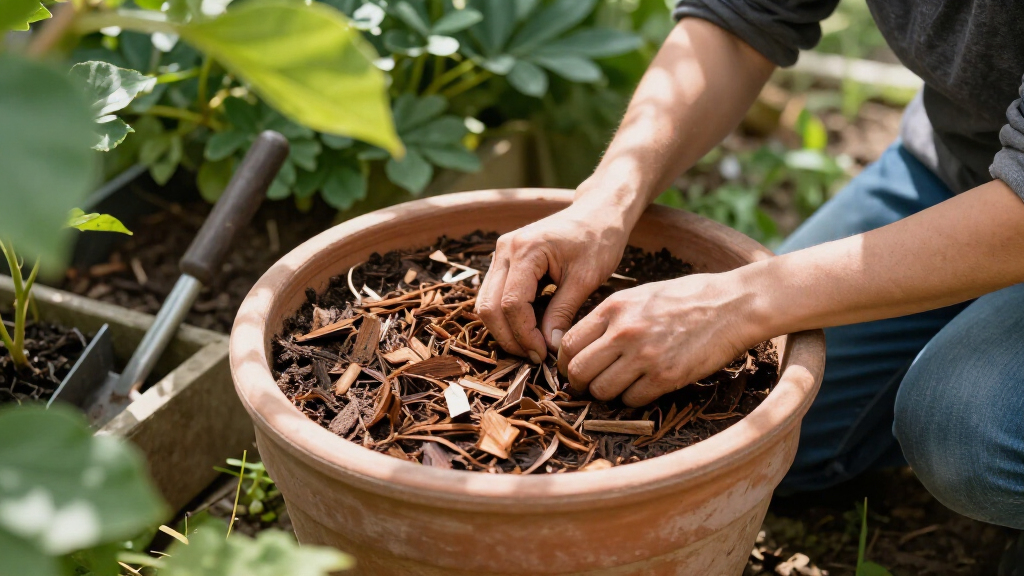
Apply a 1-3 inch layer, keeping mulch away from stems to prevent rot and pests.
Replenish organic mulches every 6-12 months; inorganic options last longer but need cleaning.
New eco-friendly mulching options, like coconut coir and reflective fabrics, help conserve water and reduce heat stress.
Proper mulching not only saves water but also improves soil health and plant resilience in desert climates.
Mulching Containers: Top Dressings That Slow Evaporation
Container soil can lose moisture in a single hot afternoon. A well-chosen top dressing acts as a protective blanket—slowing evaporation, moderating root-zone heat and stretching the time between watering sessions.
What mulch does above the soil
The right top dressing reduces air movement across moist soil and shields the surface from direct sun. Material choice determines whether the container also gains nutrients, durability or extra drainage.
Slows evaporation
A physical barrier keeps moving air and intense sun away from damp potting mix.
Buffers root heat
Insulation reduces sharp surface-temperature swings during exposed summer days.
Feeds as it breaks down
Organic materials gradually add structure and organic matter to the container mix.
Reduces plant stress
Steadier moisture helps plants avoid repeated cycles of wilting and recovery.
| Top dressing | Durability | Water retention | Nutrient contribution | Best fit |
|---|---|---|---|---|
| Bark chips | Long-lasting | ✓High | ~Moderate | General-purpose pots |
| Coconut coir | Moderate | ✓High | ✓High organic matter | Hot, water-wise gardens |
| Straw | Decomposes faster | ~Moderate | ✓High | Vegetables and herbs |
| Gravel | Very durable | ~Lower retention | —None | Low-maintenance displays |
Decision lens: organic mulch enriches soil; inorganic mulch prioritizes longevity.
A lid on a thirsty container
Mulch interrupts the evaporation pathway. Less exposed soil means more irrigation remains available to roots instead of escaping into hot, dry air.
Relative surface evaporation
Four steps, one healthy moisture barrier
Application matters as much as material. Too little offers limited protection; too much can trap excess moisture, impede airflow or encourage stem rot.
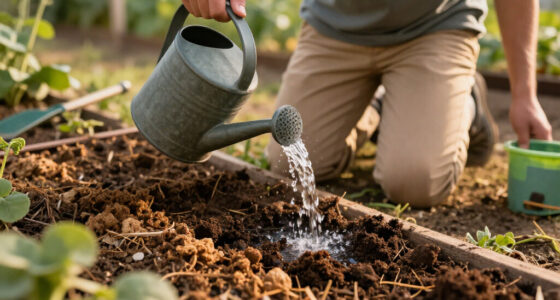
Water first
Thoroughly moisten the container so the mulch starts above an evenly hydrated root zone.
Spread evenly
Distribute the chosen dressing across the surface rather than piling it in one area.
Protect the stem
Leave a few inches of breathing room around stems and trunks to discourage rot and pests.
Inspect and top up
Restore thin or displaced areas after decomposition, strong wind or repeated watering.
The 1–3 inch sweet spot
A 2-inch layer is a useful starting point for many containers. Adjust for material texture, climate and plant moisture needs.
Refresh by condition, not habit alone
Organic and inorganic dressings age differently. A quick inspection every few months keeps the surface covered without letting debris, algae or decomposed material undermine the system.
Replenish every 6–12 months
Top up when bark, straw, leaves or coir become thin and crumbly. Their decomposition contributes organic matter but gradually reduces surface coverage.
Clean and redistribute
Gravel and pebbles can last for years. Remove dust, debris or algae and move displaced material back over exposed soil.
The layer has settled, decomposed or shifted and no longer provides continuous coverage.
Pull material away immediately to restore airflow around the plant base.
Reduce excessive depth and confirm that the container’s drainage holes remain clear.
From top dressing to plant resilience
The strongest results come from combining sustainable mulch, correct application and efficient irrigation rather than treating any single technique as a complete solution.
Delivers water directly to the container mix.
Creates an evenly hydrated starting point.
Slows evaporation and surface heating.
Reduces stress during hot afternoons.
Supports steadier growth with less wasted water.
Choose mulch for either soil enrichment or durability, apply it 1–3 inches deep, keep it clear of stems and maintain full surface coverage. Done well, container mulching can reduce evaporation by up to 50% while keeping roots cooler and watering schedules lighter.
Why Mulching Containers Saves Water (And Helps Your Plants Survive Hot Days)
Mulching containers is like putting a lid on a boiling pot. It traps moisture, cuts down on water loss, and keeps roots comfortable. In desert zones, where every drop counts, this practice can slash water needs by up to 50%.
Imagine you’re watering your tomato plant. Without mulch, moisture quickly seeps into the dry air and evaporates. With a 2-inch layer of bark chips, the soil stays moist longer, meaning less frequent watering—and less water wasted.
Research shows that mulched containers require watering only every 4-6 days instead of daily. That’s a huge savings, especially during peak summer when watering can become a chore.
Understanding why mulch is so effective helps you appreciate its role in water conservation. The mulch acts as a barrier, reducing the air movement directly above the soil, which is a major factor in evaporation. Additionally, it moderates soil temperature, preventing excessive heat from reaching plant roots, which can otherwise stress plants and inhibit growth. The tradeoff is choosing the right type and thickness of mulch: too thick or inappropriate material could potentially suffocate roots or retain excess moisture, so balance is key.
organic mulch for container plants
As an affiliate, we earn on qualifying purchases.
As an affiliate, we earn on qualifying purchases.
Best Mulch Types for Water-Saving in Desert Container Gardens
Not all mulches are created equal when it comes to slowing evaporation. Your choice depends on your goals—whether you want organic benefits or durability and low maintenance.
Here’s a quick comparison:
| Type of Mulch | Durability | Water Retention | Nutrient Contribution |
|---|---|---|---|
| Bark Chips | Long-lasting | High | Moderate |
| Coconut Coir | Moderate | High | High (adds organic matter) |
| Straw | Decomposes faster | Moderate | High (adds nutrients) |
| Gravel | Very durable | Low (reflects heat) | None |
Choosing the right mulch involves understanding the implications of each type. Organic mulches like bark or coconut coir decompose over time, gradually enriching the soil with organic matter and nutrients that support healthy plant growth. This slow breakdown means you may need to replenish organic mulches periodically, but the added nutrients help plants resist drought stress and improve overall vitality. Conversely, inorganic options like gravel last longer and require less maintenance, but they do not contribute nutrients and may reflect heat, potentially increasing soil temperature and stressing plants. The tradeoff is between longevity and soil enrichment—consider your specific needs and climate conditions when selecting mulch.
As an affiliate, we earn on qualifying purchases.
How to Apply Mulch on Containers Without Causing Damage
Applying mulch correctly makes all the difference. Here’s a step-by-step guide:
- Water your container thoroughly. Moist soil helps mulch settle and reduces the risk of roots rotting due to excess moisture retention around the base.
- Spread a 1-3 inch layer of your chosen mulch evenly over the soil surface. The thickness should be enough to slow evaporation but not so thick that it suffocates roots or impedes drainage.
- Keep mulch a few inches away from plant stems or trunks to prevent rot, pest issues, and fungal growth. Proper clearance allows air circulation and reduces disease risk.
- Replenish or top up mulch as it decomposes, settles, or gets displaced over time, especially after heavy watering or wind events. Regular maintenance ensures continuous moisture conservation and a tidy appearance.
For example, a gardener in Phoenix spreads shredded bark around her basil pots, keeping the mulch away from the stems. Every few months, she adds a new layer to maintain moisture and appearance. Proper application maximizes the mulch’s benefits and minimizes potential downsides, like suffocation or pest attraction.
As an affiliate, we earn on qualifying purchases.
When and Why to Replenish Mulch in Your Containers
Organic mulches decompose over time, losing their effectiveness. You’ll notice the layer thinning, turning into dark, crumbly soil, which indicates that the mulch is breaking down and no longer providing optimal moisture retention. Replenishing every 6-12 months restores the protective layer, ensuring consistent water savings and soil health. This periodic renewal maintains the mulch’s insulating properties and prevents weeds or pests from establishing.
Inorganic mulches like gravel or stones last longer—up to several years— but should be cleaned periodically to remove accumulated dust, debris, or algae that could reduce their reflectivity and effectiveness. Heavy watering, wind, or disturbance can displace mulch, exposing soil and reducing its water-conserving capacity. Recognizing signs of decomposition or displacement—such as a visibly thinned layer or accumulated debris—helps you decide when to replenish or refresh your mulch. Marking your calendar when you first apply mulch is a practical tip, as regular checks every few months enable you to maintain that continuous moisture barrier and optimal plant environment.
reflective garden fabric for containers
As an affiliate, we earn on qualifying purchases.
As an affiliate, we earn on qualifying purchases.
Eco-Friendly Mulching Trends and New Materials That Save Water
Gardeners are shifting toward sustainability, and mulching is no exception. Recent innovations include biodegradable options like coconut coir mats and recycled rubber mulches. These materials break down naturally or last long without harming the environment. Choosing eco-friendly mulches reduces waste and minimizes chemical runoff, contributing to a healthier garden ecosystem. Reflective mulches are also gaining popularity—like silver landscape fabric—that bounce sunlight away, reducing heat stress and evaporation. Combining these with drip irrigation creates a water-smart, eco-friendly system that conserves resources while supporting plant health.
For example, a gardener in Tucson replaced her plastic pots’ mulch with coconut coir, noticing her watering needs dropped by 40%. She also added reflective fabric underneath to keep roots cool during peak summer. These trends highlight the importance of selecting sustainable materials that align with environmental goals and optimize water efficiency, demonstrating that eco-conscious choices can have tangible benefits in desert gardening.
Real-World Example: How Mulch Turned a Dying Herb Container Into a Lush Oasis
Jessica’s herb container was struggling—dry soil, wilting basil, and constant watering. She topped it with a 2-inch layer of shredded straw, which acted as an effective moisture barrier and insulation. This layer slowed evaporation and kept roots cooler, allowing her herbs to recover quickly. Within a week, her herbs looked perkier, and she watered less often. The straw decomposed over several months, enriching the soil with organic matter and nutrients, which further improved plant resilience. Six months later, she added a fresh layer, and her container now looks lush, healthy, and surprisingly low-maintenance—proof that mulching not only conserves water but also promotes healthier, more vigorous plants in desert environments.
Frequently Asked Questions
What is the best mulch for container gardening?
Organic mulches like bark chips, coconut coir, or shredded straw are best for soil health and moisture retention. Inorganic options like gravel last longer and require less upkeep but do not add nutrients.
How often should I replenish mulch in containers?
Organic mulches typically need reapplication every 6-12 months as they decompose. Inorganic mulches like gravel may last several years but should be checked periodically for debris or displacement.
Can mulching harm my plants?
Yes, if mulch is piled against stems or trunks, it can cause rot or pests. Keep mulch a few inches away from plant bases and check regularly for signs of distress.
Does mulching affect drainage?
Mulching can improve drainage with materials like gravel, but too thick organic layers may retain excess moisture, risking root rot. Adjust layer thickness based on your plants’ needs.
Are there environmentally friendly mulching options?
Absolutely. Coconut coir, compost, straw, and recycled rubber are sustainable choices that help conserve water and enrich your soil without harming the environment.
Conclusion
Mulching isn’t just about neatness; it’s a powerful tool in your desert gardening toolkit. A well-chosen, properly applied top dressing can turn a thirsty, stressed container into a thriving oasis with less watering effort.
Next time you plant or tend your pots, remember: a simple layer of mulch can make a big difference. Think of it as your secret weapon for healthy, water-wise plants that flourish even in the hottest months.
Fall yard work Picks
leaf blowers
As an affiliate, we earn on qualifying purchases.