TL;DR

Get garden gear delivered free with Prime
- Fast, free delivery on millions of items
- Prime Video, Amazon Music and more included
- Member-only deals all year
Self-watering containers use reservoirs to supply water directly to plant roots, greatly reducing evaporation—especially in desert climates. They save water, promote healthier growth, and need less maintenance than traditional pots.
Self-watering containers with reservoirs cut water use by up to 70% in dry climates.
Keeping water below the soil surface drastically reduces evaporation—by as much as 80%.
Use large reservoirs and quality wicks for best water efficiency and plant health.
Smart sensors and eco-friendly materials are making reservoirs more reliable and sustainable.
Regularly check and top off reservoirs to maintain consistent moisture and healthy growth.
Self-Watering Containers Explained: How Reservoirs Beat Desert Evaporation
Self-watering containers use a hidden reservoir to send water directly toward plant roots. By keeping moisture below the soil surface, they reduce sun and wind exposure, smooth out drought stress, and make every refill work harder in hot, dry climates.
Water stored below the soil can cut evaporation by up to 80% in hot environments.
Potential water-use reduction versus traditional containers.
Possible refill rhythm when reservoir size, shade, and plant demand align.
Why reservoirs keep desert plants happier
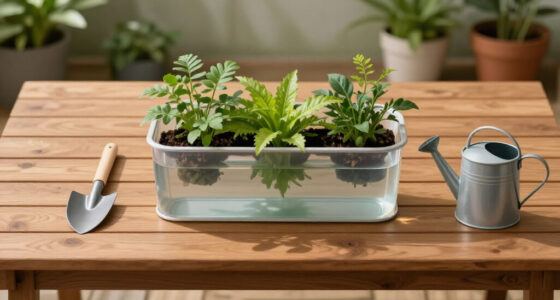
Traditional pots expose water at the soil surface, where heat and wind pull it away fast. A self-watering container stores water underneath, then lets roots draw moisture upward through wicks or capillary action.
Water sits below the sun line
The reservoir shields water from direct heat, reducing the exposed surface area that drives desert evaporation.
Roots drink at their pace
Wicks and soil pores pull water upward only as the growing medium dries, creating steadier root-zone moisture.
Extra water has an exit
Overflow holes prevent waterlogging, helping containers balance conservation with oxygen-rich roots.
Fill
Water enters the lower reservoir instead of soaking only the topsoil.
Store
Moisture stays below the surface, away from direct sun and wind.
Wick
Capillary action moves water upward as the root zone needs it.
Stabilize
Plants experience fewer drought shocks and more consistent growth.
How the reservoir changes the water equation
In dry heat, the biggest win is simple: the water is not sitting on top of the soil waiting to disappear. The container becomes a buffer between climate stress and root demand.
Less exposed water
Subsurface storage reduces contact with sun and wind, the two forces that punish desert containers fastest.
Healthier root rhythm
Steady moisture reduces wilt cycles, leaf drop, blossom stress, and stalled fruiting.
Better refill timing
Larger reservoirs stretch the time between waterings, especially when paired with partial shade.
Still needs checking
If the reservoir runs dry, the advantage disappears. Monitoring remains part of the system.
Traditional pots vs. self-watering containers
The difference is not magic; it is exposure. Put the water where the plant can access it and where the desert cannot steal it as easily.
| Feature | Traditional Pot | Self-Watering Container | Desert Result |
|---|---|---|---|
| Water exposure | ✗ Surface water exposed to sun and wind | ✓ Water protected below the soil surface | Lower direct evaporation |
| Water loss | ✗ High loss in hot, dry conditions | ✓ Evaporation reduced by up to 80% | More moisture reaches roots |
| Watering frequency | ✗ Often daily during heat | ✓ Often less frequent with a large reservoir | Lower maintenance burden |
| Overwatering risk | ~ Depends on drainage and habits | ✓ Overflow holes help regulate excess | Better root oxygen balance |
Size up
Choose a bigger reservoir for heatwaves, large crops, or vacation gaps.
Use good wicks
Quality capillary material keeps moisture even across the root zone.
Add shade
Partial shade lowers surface temperature and extends refill intervals.
Check levels
Top off before the reservoir runs dry, especially during peak heat.
Harvest water
Pair with rain barrels or drip lines for a more resilient system.
What is making reservoirs smarter
Modern self-watering systems are moving beyond simple tubs and wicks. Sensors, modular parts, and recycled materials are turning them into scalable water-conservation tools.
Smart sensors
Moisture monitors reduce guesswork and help gardeners refill before stress begins.
Eco materials
Recycled plastics and biodegradable options reduce the footprint of container gardening.
Modular builds
Expandable systems adapt to herbs, vegetables, flowers, and larger urban gardens.
Hybrid water
Rainwater harvesting and drip irrigation can feed reservoirs with less tap water.
How do they really work?
A reservoir supplies water through wicks or capillary action, keeping soil moist without constant top-watering.
Are they suited for every plant?
Most vegetables, herbs, and flowering plants benefit. Drought-tolerant or root-sensitive plants may need drier settings.
How often do you refill?
It depends on container size, plant demand, and weather. In deserts, expect anything from daily to weekly checks.
Can they prevent overwatering?
Overflow mechanisms help, but gardeners still need to avoid constantly topping beyond the safe fill level.
The desert-proof moisture chain
Each piece of the system supports the next: protected storage, controlled movement, stable roots, healthier plants, and fewer wasted gallons.
Reservoir
Water waits below the soil line.
Wick
Capillary action meters moisture upward.
Roots
Plants access steady moisture.
Growth
Less wilt, shock, and heat stress.
Water
Fewer gallons vanish into dry air.
Why Self-Watering Containers Keep Plants Happy in the Desert
Self-watering containers (SWCs) are designed to keep your plants moist without constant babysitting. They use a water reservoir tucked underneath the planting medium, connected via wicks or capillary action. This setup means water slowly feeds the roots, avoiding the big swings in moisture that stress plants.
Imagine a clay pot sitting in the sun. The surface quickly loses moisture to evaporation, leaving roots dry and stressed. Swap that out for a SWC, and most of the water stays hidden below the soil, shielded from the sun and wind. As a result, plants stay healthy longer, even during a heatwave.
Understanding this mechanism is crucial because it highlights how SWCs can stabilize moisture levels in extreme conditions. By providing a consistent water supply, they reduce the risk of drought stress, which can cause plants to wilt, drop leaves, or fail to produce flowers or fruit. The tradeoff is that if the reservoir isn’t refilled regularly, plants can still suffer, so monitoring remains essential. Overall, this system is a game-changer for desert gardening, where water conservation and plant health are often at odds.
As an affiliate, we earn on qualifying purchases.
How Reservoirs Slash Water Loss Compared to Traditional Pots
| Feature | Traditional Pot | Self-Watering Container |
|---|---|---|
| Water exposure | Surface, directly exposed to sun and wind | Below soil surface, protected from evaporation |
| Water loss | High — up to 70% in hot areas | Low — reduces evaporation by up to 80% |
| Watering frequency | Frequent, often daily | Less frequent, maybe weekly |
This significant reduction in water loss isn’t just about saving water—it’s about creating a more stable environment for your plants. In desert climates, where every drop counts, the reservoir acts as a buffer, maintaining consistent moisture levels despite rapid evaporation. This stability minimizes plant stress, encouraging healthier growth and higher yields. The tradeoff is that reservoirs require proper design and regular monitoring; otherwise, the water level can drop too low, negating the benefits. By understanding these dynamics, gardeners can better appreciate why reservoirs are a smart investment for arid environments, balancing water efficiency with plant vitality.
As an affiliate, we earn on qualifying purchases.
Simple Steps To Maximize Water Savings With Self-Watering Systems
- Choose the right size: Bigger reservoirs mean less refilling, especially in heat. Larger water stores provide a buffer during drought periods, but they also add weight and cost. Finding a balance ensures you get enough water capacity without making containers cumbersome.
- Use quality wicks or capillary mats for steady water flow. The quality and placement of these wicks directly influence how evenly water is distributed. Poor-quality wicks can cause uneven watering, leading to dry spots or overwatering, which can promote root rot. Regularly inspect and replace them if necessary to maintain optimal performance.
- Place containers in partial shade if possible, to reduce surface evaporation. While full sun is beneficial for many plants, some species or containers might benefit from some shading to minimize water loss. Strategically positioning your containers can extend the time between refills, especially during peak heat.
- Monitor reservoir levels regularly—top off when needed, but avoid overfilling. Consistent monitoring ensures plants always have access to water without risking overflow or waterlogging, which can harm roots. Developing a routine helps prevent drought stress or wastage.
- Combine with rainwater harvesting or drip irrigation for even better efficiency. Integrating these methods maximizes water conservation, reduces reliance on tap water, and can provide a more sustainable watering system, especially in drought-prone areas.
drought-resistant plant containers
As an affiliate, we earn on qualifying purchases.
As an affiliate, we earn on qualifying purchases.
Latest Innovations Making Reservoirs Even Better
Modern self-watering systems now include smart sensors that monitor soil moisture and automatically refill reservoirs when levels are low. This technology reduces the guesswork and ensures plants always have the right amount of water, which is especially critical during heatwaves or droughts. Eco-friendly materials like recycled plastics or biodegradable options are trending, reducing environmental impact and promoting sustainability. Modular designs allow gardeners to customize setups for different plants or larger gardens, offering flexibility and scalability. Some innovative systems even incorporate rainwater collection, turning your garden into a water-wise oasis. These advancements not only improve efficiency but also make self-watering systems more accessible and adaptable to various climates and gardening styles. The result is a more reliable, eco-conscious approach that supports resilient plant growth in extreme environments.
self-watering planters with sensors
As an affiliate, we earn on qualifying purchases.
As an affiliate, we earn on qualifying purchases.
Key Facts: What Makes Reservoirs a Game-Changer
- Water savings: Up to 70% less water use versus traditional pots, which is crucial in drought-prone areas where every drop counts.
- Plant growth: Steady moisture levels reduce stress and promote faster, more vigorous development, often resulting in better yields or blooms.
- Evaporation reduction: Up to 80% less water lost in hot environments, significantly conserving resources and reducing the frequency of watering.
- Market trend: Growing demand driven by urban gardens and drought concerns highlights how reservoirs are becoming essential tools for sustainable gardening.
Your Burning Questions About Self-Watering Containers
Q: How do they really work? They rely on a reservoir that supplies water via wicks or capillary action, keeping soil moist without constant watering. This process creates a steady supply of moisture, reducing drought stress. However, if the reservoir isn’t maintained, plants can still suffer from dry conditions, so regular checks are vital.
Q: Are they suited for all plants? Most benefit from steady moisture—think vegetables, herbs, and flowering plants—but drought-tolerant species might need adjustments or supplemental watering to prevent oversaturation.
Q: How often do I refill? Depends on plant size, container volume, and weather—anywhere from daily to weekly. Larger reservoirs extend the time between refills but still require regular monitoring to prevent drying out.
Q: Can they prevent overwatering? Yes, most have overflow mechanisms to stop waterlogging, but improper setup or neglect can still lead to issues. Proper design and maintenance are key to avoiding root rot or other problems.
Q: Are they worth the cost? Over time, savings on water, reduced maintenance, and healthier plants justify the investment, especially in water-scarce environments. The initial expense is often offset by long-term benefits and environmental impact.
Frequently Asked Questions
Can I use self-watering containers indoors or in shaded spots?
Absolutely. They work well indoors or in shaded areas where evaporation is less aggressive. Just make sure to monitor water levels and adjust watering frequency accordingly.What’s the best material for these containers in a desert setting?
Durable plastics, ceramics, or biodegradable materials work well. Just pick options that withstand intense sun and won’t degrade quickly, ensuring your reservoir stays sealed and effective.Do reservoirs ever run dry in extreme heat?
They can, if not checked regularly. In high heat, you might need to refill more often or choose larger reservoirs to keep up with plant needs.Conclusion
In dry, scorching weather, self-watering containers aren’t just a convenience—they’re a lifesaver for plants. By storing water below the surface, they cut evaporation, save water, and give your garden a fighting chance against drought. Think of them as your garden’s water-saving secret weapon—quiet, efficient, and built for the heat.Halloween Picks
halloween
As an affiliate, we earn on qualifying purchases.