TL;DR

Get garden gear delivered free with Prime
- Fast, free delivery on millions of items
- Prime Video, Amazon Music and more included
- Member-only deals all year
This guide breaks down the low desert garden calendar for Zone 9b, offering specific monthly tasks for planting, watering, pruning, and protecting plants. It emphasizes water conservation, native plants, and seasonal timing to help gardeners succeed year-round.
Plant in early spring or fall for best results in Zone 9b’s mild climate.
Mulch heavily and water deeply early in the day to conserve water and keep roots cool.
Use shade cloth and frost protection for tender plants during cold snaps.
Focus on native, drought-tolerant plants to reduce water use and boost resilience.
Plan your garden layout and plant choices ahead of the growing season for success.
The Low Desert Garden Calendar
Month-by-month tasks for Zone 9b. Follow the desert’s seasonal rhythm to turn blazing sun, scarce water and sudden cold snaps into a resilient garden filled with native structure, spring color and year-round life.
What to do, month by month
Use this calendar as a flexible field guide. Local elevation, exposure and weather can shift tasks by a few weeks, so check soil moisture and forecasts before acting.
Plan & protect
Clear debris, remove dead branches and map new native plants. Sow desert wildflowers late in the month. Cover tender seedlings during cold snaps.
Frost cloth readyPlant & prune
Install native shrubs and succulents as soil warms. Prune winter damage from ocotillo or desert spoon without forcing unnatural shapes.
Deep soak firstAdd desert color
Plant perennials, cacti and drought-tolerant annuals. Try desert marigold and globe mallow to feed pollinators and extend bloom.
Avoid soggy rootsMulch & monitor
Top-dress with gravel or decomposed granite. Water early, check moisture below the surface and watch for aphids or scale.
Cool the root zonePrepare for heat
Apply gentle organic fertilizer only where needed. Deep-soak established trees and install shade cloth over vulnerable plants.
Shade before stressReduce disturbance
Pause major planting and pruning. Inspect irrigation, shield tender foliage from afternoon sun and water deeply at dawn.
Heat protocolWatch water flow
Adjust irrigation after meaningful rain. Stabilize loose soil, clear blocked drainage and inspect plants for wind damage.
Drain, do not drownMaintain resilience
Continue deep, infrequent watering. Remove only broken growth, check mulch depth and note gaps for the fall planting plan.
Plan the fall editPrepare beds
Refresh soil surfaces, test drip lines and source native plants. Begin cool-season vegetables as temperatures moderate.
Second season beginsPlant for roots
Install shrubs, perennials and trees while soil remains warm. Plant lettuce, spinach and carrots for the cool season.
Prime planting windowWater to establish
Keep new roots evenly supported without saturating soil. Reduce irrigation frequency as days shorten and heat fades.
Weather-led wateringPrepare for frost
Monitor overnight forecasts, stage frost cloth and move vulnerable containers under cover. Avoid stimulating tender growth.
Cold-snap readinessLet climate set the workload
Relative intensity shifts through the year. Summer demands protection and careful irrigation; spring and fall reward establishment work.
Deep, not frequent
Slow morning irrigation encourages roots to explore deeper soil and reduces evaporative loss.
Keep roots cool
Gravel or decomposed granite limits evaporation, buffers soil temperature and suppresses weeds.
Stage your covers
Use shade cloth in extreme heat and breathable frost cloth when overnight temperatures plunge.
Choose resilience
Native and adapted plants need fewer inputs while supporting pollinators and regional biodiversity.
Match the task to the season
Timing is the difference between strong establishment and avoidable stress. Use the highlighted fall column as a reminder that warm soil plus milder air creates an excellent rooting window.
| Garden task | Winter | Spring | Summer | Fall | Field note |
|---|---|---|---|---|---|
| Plant shrubs | ~ Frost watch | ✓ Excellent | ✗ High stress | ✓ Excellent | Favor native and drought-adapted species. |
| Plant vegetables | ✓ Cool crops | ✓ Early crops | ~ Shade needed | ✓ Cool crops | Lettuce, spinach and carrots suit cooler periods. |
| Structural pruning | ✓ Deadwood | ~ Selective | ✗ Avoid | ~ Light only | Remove damaged growth; preserve natural form. |
| Deep irrigation | ~ Weather-led | ✓ Establish | ✓ Essential | ✓ Establish | Check soil before watering; avoid fixed assumptions. |
| Fertilize | ✗ Usually pause | ✓ Gentle feed | ✗ Heat risk | ~ As needed | Choose balanced, slow-release or organic inputs. |
| Sun protection | ✗ Rarely | ~ New plants | ✓ Critical | ~ Early fall | Protect tender plants from peak afternoon exposure. |
The resilient-garden chain
Each smart choice compounds. Appropriate plants reduce irrigation demand; careful watering builds deeper roots; deeper roots improve survival through heat and drought.
Plants matched to desert conditions
Slow delivery with less evaporation
Better access to stored soil moisture
Reduced stress through extreme periods
Color, habitat and lower resource use
Low-desert essentials
The most useful answers begin with timing, drainage and restraint. Desert gardens usually suffer more from mismatched care than from a lack of attention.
Which plants handle drought best?
Agave, aloe vera, yucca, desert marigold, penstemon and desert willow are strong choices once established.
How should summer watering work?
Use drip irrigation or soaker hoses early in the morning. Water deeply, then allow the root zone to breathe.
What protects plants from frost?
Use frost cloth, move containers under cover and protect roots with mulch. Remove covers when temperatures recover.
Can vegetables grow in Zone 9b?
Yes. Prioritize cool-season crops in fall and early spring. Summer crops need shade, attentive irrigation and heat planning.
Work with the calendar.
A thriving desert garden is not built through constant intervention. It grows from well-timed planting, thoughtful protection and water delivered only where it creates lasting resilience.
January: Prepare Your Garden for the Growing Season
January might seem quiet, but it’s the perfect time to plan ahead. You’ll want to clean up debris, prune dead or damaged branches, and start thinking about what native plants or succulents to add this year.
In zones 9b, the winter is mild, but occasional cold snaps call for frost protection for tender plants. Cover young seedlings with frost cloths or bring vulnerable potted plants indoors.
For example, a gardener might start planting desert wildflower seeds in late January, preparing for an early spring bloom.
drought-tolerant native plants for Zone 9b
As an affiliate, we earn on qualifying purchases.
As an affiliate, we earn on qualifying purchases.
February: Time to Plant and Prune Early-Bloomers
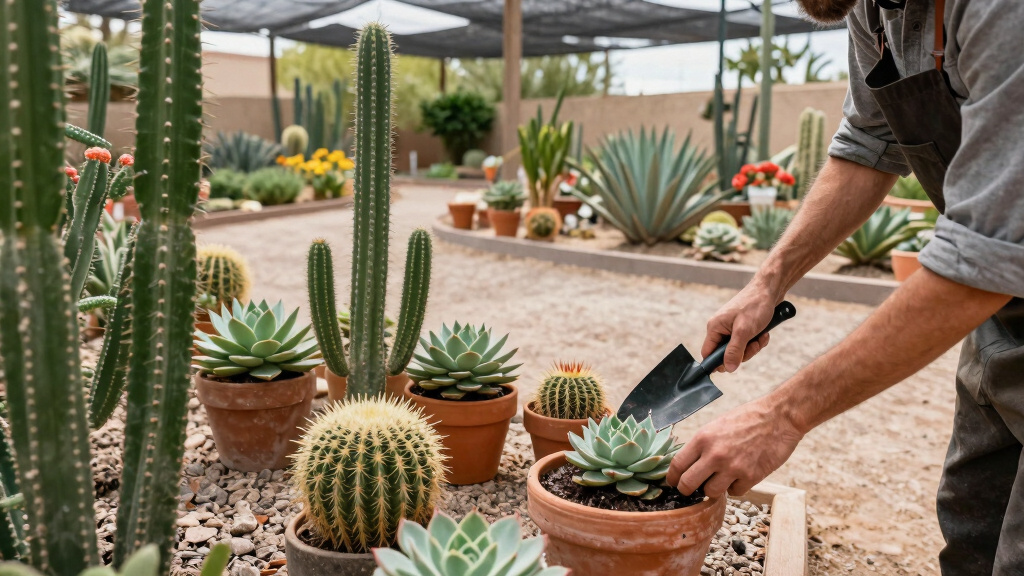
February is prime planting time for many native shrubs and succulents. The soil begins to warm, and the risk of frost drops, making it ideal for establishing new plants.
Pruning back winter-damaged branches and shaping your existing plants is essential because it promotes healthy growth and improves flowering potential. For example, pruning desert spoon or ocotillo helps remove deadwood and stimulates new growth, which can lead to more vibrant blooms later in the season. Proper pruning also prevents disease and encourages a balanced structure, reducing the risk of storm damage or pest infestations.
Use a 3-step process: 1) Water deeply before planting, 2) Plant in well-draining soil, 3) Mulch with gravel or rocks to conserve moisture and suppress weeds. These practices ensure your plants establish strong roots and are less vulnerable to water stress and soil erosion, especially important in arid environments where soil can quickly dry out or erode.
As an affiliate, we earn on qualifying purchases.
March: Jumpstart Your Garden with Spring Planting
In March, the desert wakes up. It’s the best month to plant most perennials, cacti, and drought-tolerant annuals. The ground warms, and days are longer and sunnier.
For example, you might plant colorful desert marigold or globe mallow along your garden border. These plants add vibrant color and attract pollinators, which is vital for maintaining a healthy, balanced ecosystem in your garden. Choosing plants that bloom at different times ensures continuous visual interest and supports local wildlife, creating a resilient landscape that can withstand the stresses of desert conditions.
Remember to water newly planted specimens carefully and avoid overwatering—desert roots hate soggy soil. Overwatering can lead to root rot and fungal diseases, which are common pitfalls for novice gardeners. Proper watering techniques promote drought tolerance and help plants develop deep, resilient root systems that can access moisture deep in the soil, reducing the need for frequent watering and conserving water resources.
As an affiliate, we earn on qualifying purchases.
April: Mulch, Water, and Protect Your Plants
April is about conserving water and protecting your garden’s new growth. Mulch with gravel or decomposed granite to keep moisture in the soil and reduce evaporation. Mulching also helps regulate soil temperature, protecting roots from extreme heat or cold, which is especially important during seasonal transitions.
Water deeply early in the morning, but only as needed. Check your plants’ moisture levels to avoid overwatering, which can lead to root rot or fungal issues. Deep, infrequent watering encourages roots to grow deeper into the soil, making plants more drought-tolerant and resilient during hot months.
For example, if you have young aloe vera or agave, give them a light watering and shade during the hottest afternoons. Protecting tender plants from intense sun and heat prevents sunburn and dehydration, which can quickly kill sensitive species. Proper protection and watering practices contribute to a healthier, more sustainable garden where plants can withstand the summer stress with less water and fewer resources.
Also, keep an eye out for pests like aphids or scale. Use organic controls and wear gloves and masks to protect yourself. Early pest detection and management prevent infestations from spreading and causing long-term damage, ensuring your garden remains healthy and productive.
water-saving drip irrigation system
As an affiliate, we earn on qualifying purchases.
As an affiliate, we earn on qualifying purchases.
May: Fertilize and Prepare for Summer Heat
May signals the start of intense heat, so it’s time to boost your plants with gentle, organic fertilizer. Use compost tea or a liquid cactus fertilizer to give them a nutrient boost. Proper fertilization supports healthy growth and flowering, but overdoing it can lead to excessive lushness that makes plants more susceptible to drought stress or disease. Therefore, using balanced, slow-release, or organic fertilizers minimizes the risk of nutrient runoff and environmental harm.
Deep watering becomes critical. For example, mature desert willow or palo verde need weekly deep soakings to prevent stress and encourage robust root systems that can access water deep underground. Deep, infrequent watering also discourages shallow root growth, which makes plants more vulnerable during drought conditions.
Install shade cloth over vulnerable plants during peak afternoon heat to prevent sunburn and dehydration. Shade reduces stress, preserves plant vigor, and extends the lifespan of sensitive species, allowing your garden to flourish even during the hottest months.
Frequently Asked Questions
When is the best time to plant native shrubs in Zone 9b?
The ideal planting windows are early spring and fall when temperatures are moderate. This helps plants establish roots before the intense summer heat or winter cold.How can I water my desert garden efficiently during summer?
Use drip irrigation or soaker hoses early in the morning. Mulch heavily around your plants to reduce evaporation and keep roots cool. Deep, infrequent watering encourages drought tolerance.What are the most drought-tolerant plants for Zone 9b?
Native succulents like agave, aloe vera, and yucca, along with desert marigold, penstemon, and desert willow, thrive with minimal water once established.How do I protect my plants from unexpected frosts?
Cover tender plants with frost cloths or bring potted plants indoors during cold snaps. Mulching and using small heaters or heat lamps can also help.Can I grow vegetables in a low desert garden?
Yes, but timing is key. Plant cool-season crops like lettuce, spinach, and carrots in fall and early spring. Summer is tough for vegetables unless you provide shade and extra water.Conclusion
Your desert garden isn’t just surviving — it’s thriving, if you follow the seasonal rhythm. Think of it as a living calendar, where each month’s tasks build a resilient, water-wise oasis. Keep an eye on the weather, respect your plants’ needs, and your garden will reward you with vibrant blooms and lush foliage year-round.Halloween Picks
halloween
As an affiliate, we earn on qualifying purchases.