
TL;DR

Get garden gear delivered free — and shop member deals
- Fast, free delivery on millions of items
- Access to Prime Big Deal Days deals on October 6–7
- Prime Video, Amazon Music and more included
Aligning raised beds to face the afternoon sun can increase sunlight exposure during peak hours, leading to healthier plants and higher yields. Using geographic and seasonal data helps optimize bed placement for your specific climate.
Imagine your garden basking in the warm glow of late-day sun, the air thick with the scent of ripening tomatoes. That late afternoon sunlight isn’t just pretty; it’s a powerhouse for your plants. If you want your vegetables, herbs, and flowers to thrive, you need to think about how you position your raised beds around the sun’s path.
In this guide, you’ll learn how to plan your rows so they soak up the most beneficial sunlight during those critical late hours. We’ll cover the why, the how, and the recent tools that make this easier — all tailored for desert and water-wise gardens. Ready to turn your garden into a solar-powered factory of growth? Let’s go.
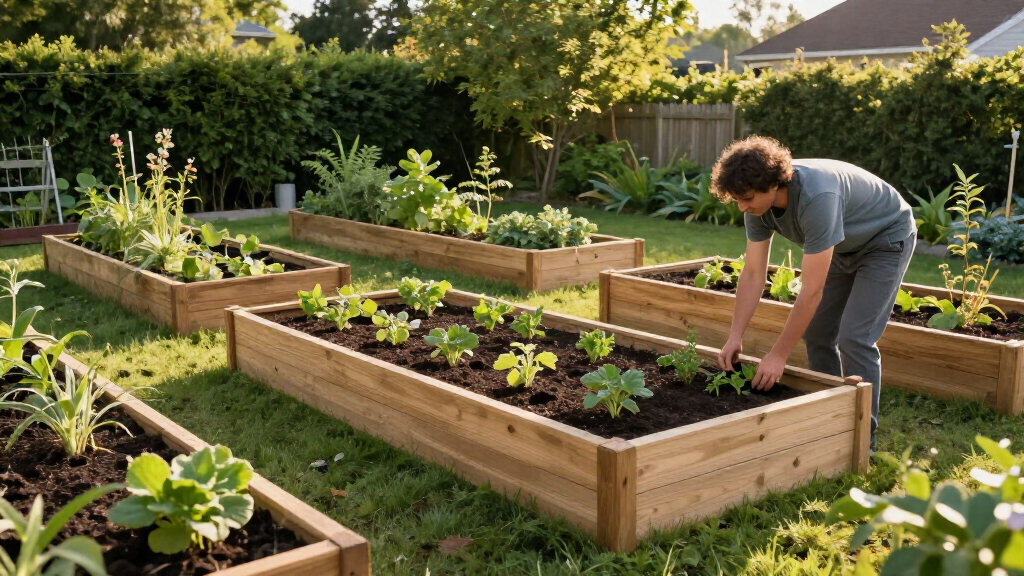
In the Northern Hemisphere, orient your raised beds north-south to maximize afternoon sun exposure.
Using solar path tools helps tailor bed placement to your specific climate and microclimate conditions.
Adjust bed orientation seasonally if your region’s sun angle shifts significantly.
Consider nearby structures and wind patterns; small tweaks can boost sunlight and airflow.
A well-oriented raised bed can boost crop yields by up to 20%, especially in desert gardens.
Raised Bed Orientation: Planning Rows Around Afternoon Sun
TL;DR: In the Northern Hemisphere, north–south beds usually distribute sunlight most evenly and capture valuable late-day exposure. Refine that baseline with seasonal sun paths, nearby shade, prevailing winds, crop needs, and comfortable access.
The afternoon is a high-energy growth window
Late-day sunlight is often intense and sustained. It can support photosynthesis, flowering, fruit development, and surface drying—especially for warmth-loving crops in arid gardens.
Power for fruiting crops
Tomatoes, peppers, eggplants, and many herbs benefit from long, bright exposure during their active growing season.
Faster surface drying
Sun and airflow help foliage and upper soil layers dry after irrigation, potentially reducing conditions that favor disease.
Better-informed irrigation
Known sun exposure makes it easier to group crops, anticipate evaporation, and direct water where heat demand is highest.
From sun observation to build-ready rows
North–south is the starting point, not an automatic final answer. Test it against real shadows, seasonal angles, prevailing winds, and the way you move through the garden.
Map the sun
Record light and shadow in the morning, at midday, and in late afternoon.
Start north–south
Run the long bed axis north–south for balanced exposure on both sides.
Dodge shadows
Rotate slightly if walls, trees, fences, or sheds block critical western light.
Protect access
Keep paths practical so watering, pruning, and harvesting remain comfortable.
Review by season
Compare summer and winter sun angles before making permanent changes.
North–South
Each side takes a turn facing the moving sun, supporting more even daily light distribution.
East–West
Useful when the site footprint demands it, but taller crops can cast persistent shadows across shorter neighbors.
Choose the axis by trade-off, not habit
North–south generally performs best for mixed vegetables and herbs. East–west remains workable when space, crop choice, slope, or structural constraints outweigh perfect solar symmetry.
| Decision factor | North–South | East–West |
|---|---|---|
| Daily light distribution | ✓ EVEN Both sides receive changing exposure through the day. |
~ VARIABLE One side may remain brighter while the other stays shaded. |
| Late-afternoon access | ✓ STRONG Western light can reach rows with less persistent self-shading. |
~ CROP-DEPENDENT Tall southern or western plants may block shorter crops. |
| Mixed vegetables and herbs | ✓ IDEAL BASELINE | ~ PLAN HEIGHTS |
| Uniform drying and airflow | ✓ GENERALLY BETTER | ✗ UNEVEN RISK |
| Restricted garden footprint | ~ MAY REQUIRE MORE PLANNING | ✓ OFTEN PRACTICAL |
| Maintenance access | ✓ ACCESS FROM BOTH SIDES | ~ PATH-DEPENDENT |
Rule of thumb: use north–south unless site observation reveals a clear reason to rotate. Crop height, local shade, and heat stress can matter more than compass purity.
Let local data fine-tune the compass
Digital solar tools reveal when and where shadows fall. Pair those results with climate knowledge so the layout manages light, airflow, temperature, and water demand together.
Three layers of evidence
Use digital predictions as a guide, then validate them with observations made inside the actual garden.
Priority check: identify the moment western shadows first reach the bed.
What can override the ideal axis?
The best layout is the one that performs in your microclimate—not the one that looks perfect on a diagram.
How orientation becomes yield
The compass direction is only the first link. Benefits appear when exposure improves the entire growing environment.
Bed axis
North–south baselineMore even light
Including late-day raysActive growth
Photosynthesis + vigorManaged moisture
Drying + airflowBetter harvest
Health + productivityBefore you fill the beds
Test the layout while frames are still easy to move. A small rotation now is far easier than relocating soil, irrigation, and mature crops later.
Start north–south. Observe the west. Then rotate only when your microclimate gives you a better reason.
A well-oriented raised bed can improve light consistency, airflow, maintenance, and crop performance—with potential yield gains of up to 20% under favorable conditions. In very hot climates, balance that opportunity with crop-specific shade and irrigation needs.
Why the Afternoon Sun Matters More Than You Think
The afternoon sun delivers the most intense, sustained light during the hottest part of the day. This energy fuels photosynthesis, especially for heat-loving crops like tomatoes and peppers. Think of it like charging your plants with a power boost right when they need it most.
For instance, in Arizona, the late afternoon sun can be 20-30% stronger than morning light, meaning plants that soak up this energy tend to grow faster and produce more fruit. If your beds are shaded or oriented poorly, you’re leaving valuable sunlight on the table — and that’s a missed opportunity for a bigger harvest.
Gardener AZ notes that in desert climates, late-day sun helps dry out excess moisture, reducing disease risk. That makes the right orientation not just about growth but also about plant health. Recognizing why this sunlight is so critical helps you understand the trade-offs involved: prioritizing afternoon sun might mean sacrificing some morning shade, which can be beneficial for certain crops or microclimates. Strategically balancing these factors can lead to healthier plants and better yields, especially in water-scarce environments where minimizing excess moisture reduces disease and water waste.
raised bed solar orientation tools
As an affiliate, we earn on qualifying purchases.
As an affiliate, we earn on qualifying purchases.
How to Orient Your Raised Beds for Best Afternoon Sun
Getting the orientation right isn’t complicated, but it does take some planning. Here’s a quick step-by-step:
- Identify your sun’s path: Observe how the sun moves across your garden at different times of day and throughout the seasons. Use a simple solar path calculator or app for precise data. Understanding the sun’s trajectory helps you anticipate which parts of your garden will receive the most light during late afternoon, allowing you to position your beds to maximize this benefit.
- Align your beds north-south: Position your beds so they run from north to south. This orientation ensures each side receives ample sunlight, especially during late afternoon when the sun is in the west. The trade-off here is that while north-south alignment maximizes overall sunlight, it might require more space or careful planning to fit into smaller gardens. However, the increased exposure often outweighs these constraints, leading to higher yields and healthier plants.
- Consider your microclimate: If your garden is near walls or structures, adjust the angle slightly to maximize sun exposure and airflow, avoiding shadowed patches. This might mean tilting beds or orienting them differently to compensate for nearby obstructions. The implication is that microclimate considerations can significantly enhance or diminish the benefits of your orientation choice, so observing and adjusting is key.
- Plan for accessibility: Make sure you can comfortably reach your plants for watering and harvesting, even as you orient for sun. Sometimes, optimizing for sunlight may conflict with ease of access; in such cases, compromises are necessary. Proper planning ensures you don’t sacrifice practicality for sunlight, which could lead to neglect or damage.
- Adjust seasonally if needed: During winter, the sun’s lower angle may require slight tweaks for maximum exposure. Recognizing seasonal shifts helps you maintain optimal sunlight exposure year-round, but it involves a balance: too frequent adjustments might be impractical, so focus on key seasonal changes to optimize yields.
For example, in a desert garden, orienting beds along a north-south axis ensures your plants get the strongest afternoon rays, especially in summer months when the sun blazes high. This orientation not only boosts growth but also helps reduce water waste by promoting faster drying of excess moisture.
Using tools like SunCalc or Google Earth can make this planning precise and easy, saving you from guesswork. The key is understanding that the implications of bed orientation extend beyond just sunlight—consider airflow, access, microclimates, and seasonal shifts for best results.
As an affiliate, we earn on qualifying purchases.
Comparing Bed Orientations: North-South vs. East-West
| Feature | North-South Orientation | East-West Orientation |
|---|---|---|
| Sunlight Distribution | Even throughout the day, especially late afternoon | Uneven; morning and late afternoon get different light |
| Crop Suitability | Ideal for most vegetables and herbs | Better for specific crops like strawberries or certain greens |
| Microclimate Benefits | Promotes airflow, reduces disease risk | Can cause shadowing and uneven drying, which may harm certain crops or increase disease risk in humid microclimates |
| Ease of Maintenance | Access from both sides easier | May be less convenient for watering and harvesting |
In most desert gardens, a north-south layout maximizes sunlight and crop yield. East-west might work if space is tight or for specific crops, but it’s generally less ideal for full-spectrum sun exposure. The trade-offs include potential uneven drying, shadowing, and maintenance challenges that can impact crop health and productivity.
As an affiliate, we earn on qualifying purchases.
Using Technology and Climate Data to Fine-Tune Your Layout
Modern garden planning leans heavily on digital tools and climate insights. Solar path calculators like SunSurveyor or SunCalc tell you exactly when and where the sun hits your space. This makes it easy to adapt your bed orientation for seasons and microclimates.
For example, if your garden is shaded by a tall wall or a neighbor’s tree in summer, adjusting your beds slightly east or west can help you dodge shadow cast during peak hours. Similarly, in a desert climate where winds can dry out plants or carry dust, orient beds to promote airflow while capturing the afternoon rays. Recognizing these microclimate factors ensures your layout optimizes both sunlight and environmental conditions, which can significantly improve plant health and reduce water needs.
Recent advances in modular raised bed designs mean you can even tweak orientation after installation, giving you flexibility for changing microclimates or plant needs. Incorporating climate data into your planning allows for a more resilient and productive garden, especially in challenging environments like deserts.
Gardener AZ recommends combining solar path data with local weather patterns to plan the most resilient, sun-efficient garden layout.
As an affiliate, we earn on qualifying purchases.
Microclimates, Structures, and Other Factors That Change the Game
Your garden isn’t just about the sun — nearby structures, trees, and even the shape of your yard create microclimates that can shift the ideal orientation. For instance, a wall facing west can block late afternoon sun, which might reduce the energy your plants receive during the most critical growth hours. Conversely, a south-facing wall can reflect heat, warming your beds and possibly extending the growing season.
In a desert setting, a south-facing wall can reflect heat back onto your beds, helping plants tolerate cooler nights or early mornings. However, if that wall shades your space during late afternoon, it can negate the benefits of your orientation choices. Adjusting your bed placement or orientation to account for these structures ensures you make the most of available sunlight.
For example, a gardener with a corner lot noticed her raised beds shaded by a tall juniper. By rotating her beds slightly eastward, she captured more sun and avoided shadow during peak hours. Small changes like this can significantly impact plant growth and microclimate conditions.
Wind patterns also influence plant health; orienting beds to promote airflow can reduce humidity and disease risk in hot, dry climates. Considering these factors allows you to design a garden that leverages natural features for optimal growth and resilience.
Frequently Asked Questions
Why is the afternoon sun more important than morning sun for my garden?
Afternoon sunlight tends to be more intense and lasts longer, providing essential energy for plants to grow, flower, and ripen fruit. Especially in desert climates, this late-day boost makes a noticeable difference in yield and plant health.How do I figure out the best orientation for my raised beds?
Use a solar path calculator or observe the sun’s movement over a few days. Align your beds so they run north-south, which captures the most sunlight during late afternoon hours. Adjust for microclimates or nearby structures if needed.Does the best orientation change with the seasons?
Yes, because the sun’s angle shifts as the seasons change. You might need to tweak your bed placement or planting schedule to keep plants in the sun’s path during winter and summer.Can I orient my beds east-west if space is limited?
East-west orientation can work for certain crops or specific microclimates, but it generally results in uneven sunlight exposure. For maximum productivity, north-south is preferred in desert gardens.How does orientation affect watering and airflow?
Proper orientation promotes better airflow, reducing humidity and disease. It also helps with even watering by aligning with the sun’s path, making it easier to reach plants without creating shade or water runoff.Conclusion
Getting your raised beds aligned to face the afternoon sun isn’t just about sunlight — it’s about creating a microclimate that nurtures your plants and boosts your harvest. A little planning now saves you time, water, and frustration later.
Remember, each garden is unique. Use tools, observe your space, and don’t be afraid to tweak your layout as seasons change. Your plants will thank you with bigger, healthier fruits and flowers, and your water-wise efforts will pay off with less watering and fewer pests.
So next time you plan your garden, think about the late-day sun — it might just be your secret weapon for a thriving, water-smart oasis.
Fall yard work Picks
leaf blowers
As an affiliate, we earn on qualifying purchases.