TL;DR

Get garden gear delivered free with Prime
- Fast, free delivery on millions of items
- Prime Video, Amazon Music and more included
- Member-only deals all year
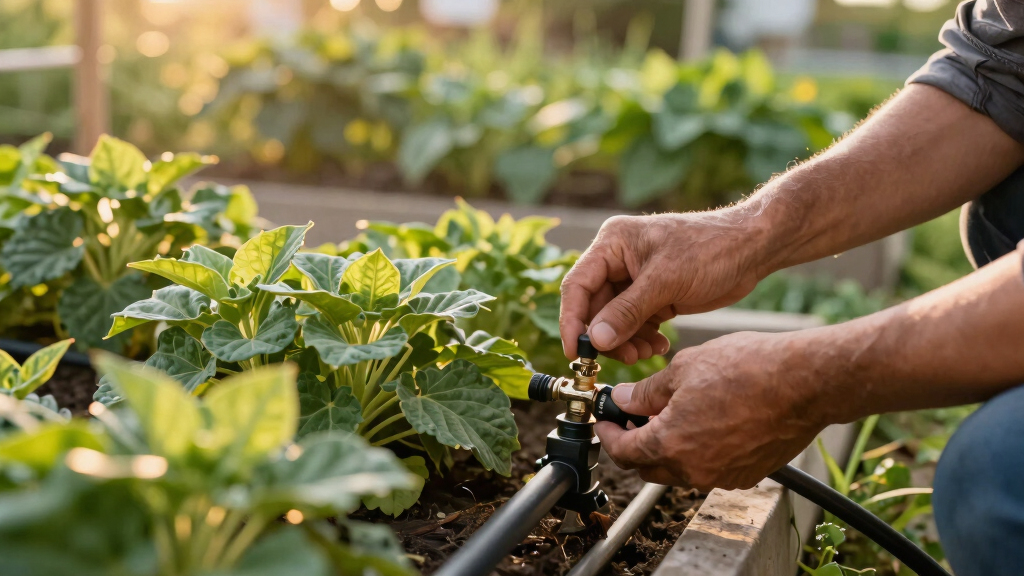
A single valve can typically feed 10-15 emitters with 0.5 GPH at standard pressure. To size your drip zone, match total emitter flow to the valve’s capacity, considering pressure and layout for even watering.
Ever set up a drip system and found some plants getting more water than others? That’s because sizing your drip zone isn’t just about plugging in emitters. It’s about matching your valve’s flow capacity with your emitters’ demands. Get this right, and your garden drinks evenly, conserves water, and stays lush — even in the desert heat.
In this guide, you’ll learn how to figure out how many emitters one valve can support. Whether you’re installing a new system or fixing an existing one, understanding these basics keeps your plants happy and your water bills in check.
A typical valve supports about 10-15 emitters at 0.5 GPH without pressure issues.
Calculate total flow capacity by multiplying your valve’s GPM by 60 and dividing by emitter GPH to find maximum emitters.
Using pressure regulators and splitting zones prevents uneven watering caused by pressure drops.
Choose emitter flow rates carefully to match your zone size and pressure conditions.
Always test your system after installation, adjusting emitter count or pressure as needed.
What exactly is a valve’s flow capacity, and why does it matter?
The flow capacity of a valve is how much water it can deliver per minute, usually measured in GPM (gallons per minute). For example, a common residential valve might deliver 2 GPM at 30 PSI. If you connect too many emitters or outlets, pressure drops, and watering becomes uneven. Knowing your valve’s maximum flow helps you avoid overloading it, which can lead to low pressure and inconsistent watering.
Understanding this is crucial because exceeding your valve’s flow capacity leads to pressure drops, which directly impact how evenly your plants are watered. When pressure drops, some emitters may dribble or stop working altogether, causing dry spots and overwatered areas. This not only wastes water but also stresses your plants, hindering growth and health. By knowing your valve’s limits, you can design zones that deliver consistent moisture, maximize water efficiency, and prevent costly repairs or adjustments down the line.
Furthermore, understanding flow capacity allows you to make informed decisions about zone sizing and emitter selection. For instance, choosing emitters with lower flow rates can help you support more plants per zone without exceeding your valve’s capacity. Conversely, if you need to water larger plants or areas, selecting higher flow emitters or multiple zones ensures your system remains effective and reliable. This balance is essential for avoiding pressure-related issues that compromise plant health and water conservation efforts.
As an affiliate, we earn on qualifying purchases.
How to calculate the number of emitters your valve can support
- Determine your valve’s maximum flow rate (GPM). For most residential valves, 2 GPM is common.
- Pick your emitter flow rate — most are between 0.5 GPH and 2 GPH. Let’s say you choose 0.5 GPH for water efficiency.
- Convert your emitter flow to GPM: 0.5 GPH = 0.5 / 60 = 0.0083 GPM.
- Calculate the theoretical maximum number of emitters: Total emitters = (Valve flow rate in GPM) / (Emitter flow rate in GPM). For 2 GPM / 0.0083 GPM = approx. 240 emitters.
However, this theoretical number doesn’t account for real-world factors like pressure loss, friction, and elevation changes. These factors reduce the actual number you can support without performance issues. For example, if your system experiences significant pressure drops when adding multiple emitters, the flow rate at each emitter decreases, leading to uneven watering or emitter clogging. Therefore, it’s wise to build in a safety margin—support fewer emitters than the theoretical maximum—to maintain consistent pressure and performance.
Typically, for a 2 GPM valve with 0.5 GPH emitters, supporting around 10-15 emitters per zone ensures stable pressure and reliable watering. This conservative approach balances the need for adequate coverage with the system’s physical limitations, preventing pressure drops that could leave some plants dry or overwatered. In essence, understanding these tradeoffs helps you design a system that is both efficient and resilient, avoiding costly adjustments later on.
As an affiliate, we earn on qualifying purchases.
Comparison table: How emitter flow rate impacts zone size
| Emitter Flow Rate | Number of Emitters Supported per 2 GPM Valve | Ideal Zone Size |
|---|---|---|
| 0.5 GPH | 10-15 | Small garden beds, individual plants |
| 1 GPH | 8-10 | Medium-sized garden sections |
| 2 GPH | 4-6 | Large patches or trees |
This table illustrates how choosing different emitter flow rates influences your zone capacity and coverage. Lower flow emitters support more plants per zone, which is especially beneficial in water-scarce environments like deserts. Conversely, higher flow emitters are suitable for larger plants or areas where watering frequency is less critical. Balancing emitter flow rate with zone size helps ensure each plant receives adequate water without overtaxing your system’s capacity, preventing pressure issues and promoting healthy growth.
Keep in mind that these are guidelines; actual results depend on your specific system, pressure stability, and plant needs. Adjusting emitter flow rates and zone sizes based on real-world testing ensures optimal performance and water efficiency.
pressure regulator for drip system
As an affiliate, we earn on qualifying purchases.
As an affiliate, we earn on qualifying purchases.
Why pressure drops ruin your watering and how to fix it
Pressure drops occur when too many emitters are connected, or when elevation changes cause water to lose momentum. When pressure falls below about 20 PSI, emitters can’t deliver water evenly, leading to dry spots or overwatering in some areas. This inconsistency stresses plants and wastes water, defeating the purpose of a well-designed drip system.
Imagine watering a hillside: water tends to rush downhill, leaving the top dry and over-saturating the bottom. To prevent this, you can install pressure regulators, which maintain a steady pressure regardless of flow variations. Reducing the number of emitters per zone or splitting large areas into smaller zones also helps mitigate pressure loss. Additionally, elevating the system or adding pressure-boosting devices ensures uniform distribution. Maintaining a consistent pressure of around 20-30 PSI across your entire system is key to avoiding dry patches and ensuring all plants receive a steady, even supply of water.
In addition to pressure regulators, employing pressure-compensating emitters can significantly improve uniformity, especially on uneven terrain. These emitters automatically adjust their flow to compensate for pressure variations, ensuring each plant receives a consistent amount of water regardless of elevation or pressure fluctuations. Understanding and managing pressure drops is essential for creating a reliable, water-efficient drip system that keeps every plant healthy and minimizes waste.
As an affiliate, we earn on qualifying purchases.
How to avoid common sizing mistakes and keep your system reliable
Many gardeners make the mistake of overloading their zones with too many emitters, thinking more coverage equals better results. However, this often leads to pressure drops, uneven watering, and stressed plants. Proper sizing is about balancing your valve’s flow capacity with your emitters’ demands to ensure consistent moisture delivery.
To avoid these pitfalls, consider the following tips:
- Always measure your system’s pressure before adding emitters to understand your baseline.
- Use pressure regulators and flow meters to monitor and control flow rates, preventing overloads.
- Split large zones into smaller, manageable sections to maintain pressure stability.
- Test your system with a small number of emitters first, then expand gradually, observing performance and adjusting as needed.
If you notice uneven watering or pressure fluctuations, reduce the number of emitters or upgrade to a larger valve designed for higher flow. Investing in proper sizing upfront saves water, reduces maintenance, and ensures your plants thrive.
Remember, the goal is to create a balanced system where each component works harmoniously. Overloading your system may seem efficient initially, but it often results in costly fixes down the line. Careful planning, regular testing, and incremental adjustments are key to maintaining system reliability and plant health.
Frequently Asked Questions
How do I know my valve’s maximum flow rate?
Check the manufacturer’s specs — most residential valves list their flow rate at a given pressure. Use a flow meter if you need precise measurements, especially in older systems.Can I add more emitters later if I need to expand?
Yes, but only if your current valve can support the extra flow. Otherwise, upgrade to a larger valve or split your zone into smaller sections to avoid pressure drops.What if my plants get uneven watering even after sizing correctly?
Check for pressure drops, leaks, or clogging. Installing pressure regulators and flow sensors can help maintain even distribution across your zone.Conclusion
Getting your drip zone sizing right isn’t just math — it’s about giving your plants a steady, even drink. Take the time to match your valve’s flow with your emitters, and watch your garden thrive with less water waste.
Think of your drip system as a well-tuned orchestra: each part must work in harmony. When you do, your desert garden stays lush, resilient, and smart with water.
Columbus Day / Indigenous Peoples' Day Picks
long weekend sales
As an affiliate, we earn on qualifying purchases.